Moving Crypto Between Wallets and Exchanges
Understand deposit addresses, network selection, transaction records and the checks that connect a crypto transfer to its intended destination.
DTCC Trading Editorial

Moving crypto starts with identifying exactly what is being sent and where it belongs. A Bitcoin transfer, for example, needs a compatible destination address. Understanding the asset, network and receiving service turns an unfamiliar string of characters into a transfer you can review.
The same preparation matters when moving Ethereum or interacting with a DeFi application. A wallet confirmation, a network transaction and a credited platform balance are separate stages. Following each stage helps explain where a transfer is and which details matter if something goes wrong.
What a Crypto Deposit Actually Does
A deposit transfers a digital asset from a wallet or an exchange to a destination accepted by the receiving service. The destination can be an address you control or one operated for your account. Those arrangements differ in who controls the keys and who records your balance.
The transfer is submitted to a blockchain network. Its transaction record describes the operation that the network processed. A receiving platform may then apply its own confirmation and crediting requirements before showing the funds as available in your account.
Names and symbols alone do not establish compatibility. Assets can exist across different networks, including Solana and the ecosystem associated with Ripple. A receiving service must support the particular asset and network combination being used.
Why the Details Matter
A deposit crosses several boundaries: the sending application, the network, and the receiving service. Each can display a different status. A completed withdrawal request is not necessarily the same thing as a confirmed transaction or an available account balance.
Before proceeding, establish the network, asset identifier, destination and any required memo or tag. Then check minimum amounts, fees and deposit availability. A compatible-looking address is not enough to establish that the receiving service can credit the intended asset.
Common Sources of Deposit Problems
Most confusing deposits can be investigated by separating asset compatibility, destination details, transaction costs and the receiving service’s crediting rules.
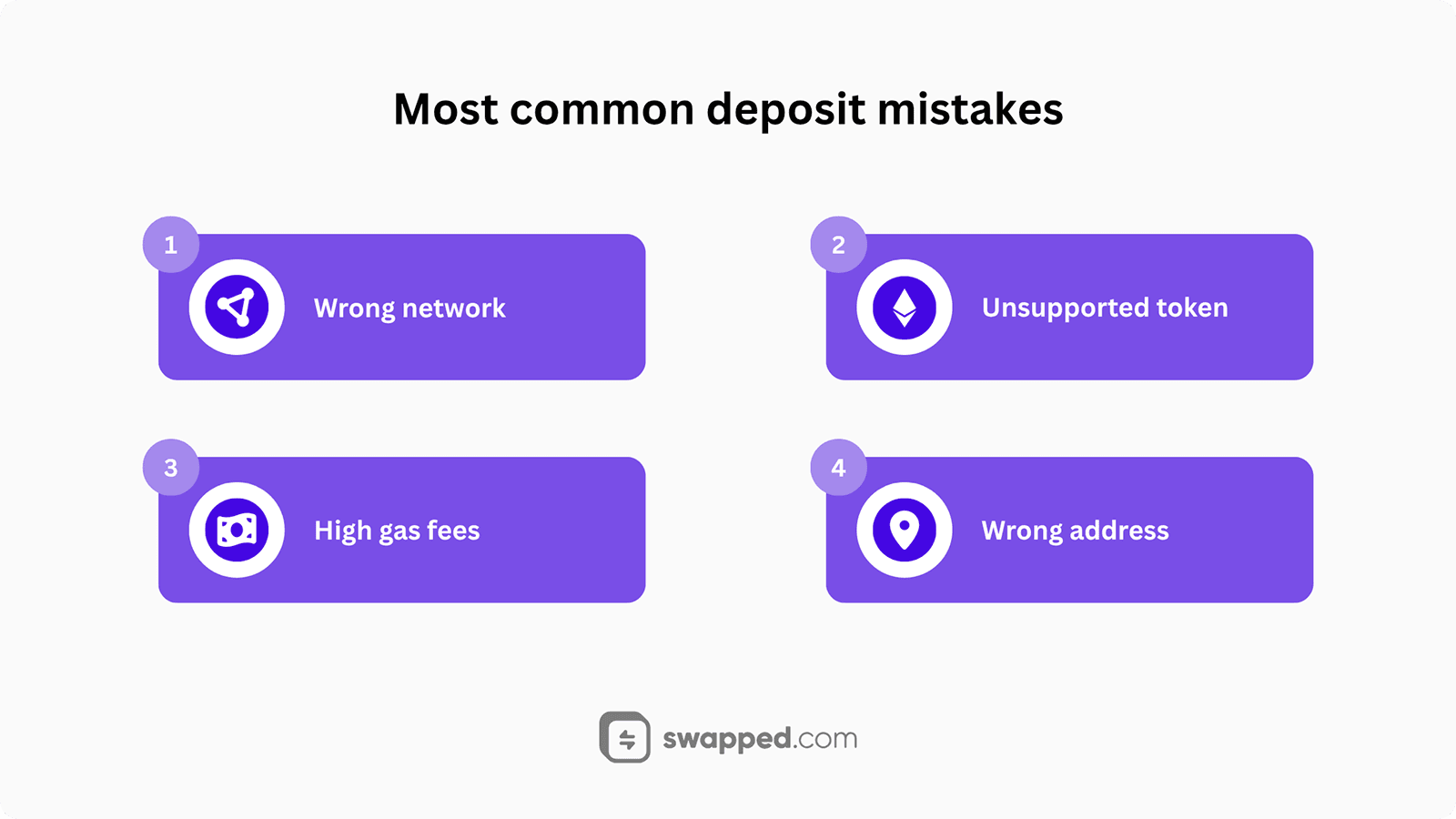
Asset, network and destination details need to agree before a transfer.
Matching the Sending Network
An asset symbol can appear on several networks without making those balances interchangeable. A service may accept a token on one network while offering no deposit route for another. Check the receiving instructions first, then confirm that the sender offers that same route.
Moving between networks can require a separate bridge or withdrawal route. That introduces additional operations and dependencies; changing the network selector alone does not convert an asset.
Identifying the Exact Asset
Different tokens can share a name, symbol or logo. Where a network uses token contracts or issuer accounts, compare those identifiers with the receiving service’s current instructions. A familiar display name does not prove that an asset is accepted.
If the asset is unsupported, pause the deposit. Exchanging it first is a separate financial decision with its own quote, costs and risks. Do not assume an unsupported deposit will be converted automatically.
Accounting for Transfer Costs
The amount leaving a wallet can differ from the amount credited to a destination. Network fees, exchange withdrawal charges and receiving minimums affect that difference. Read which charges are deducted from the transfer and which are paid separately.
For a small transfer, a fixed charge can represent a substantial share of the amount. Compare the expected destination amount with the receiving minimum before proceeding. A lower quoted fee is useful only when the route itself is compatible.
A Practical Deposit Review
Review the transfer as a sequence of checks. A deposit interface should make the asset, network, destination and expected result clear before authorization.
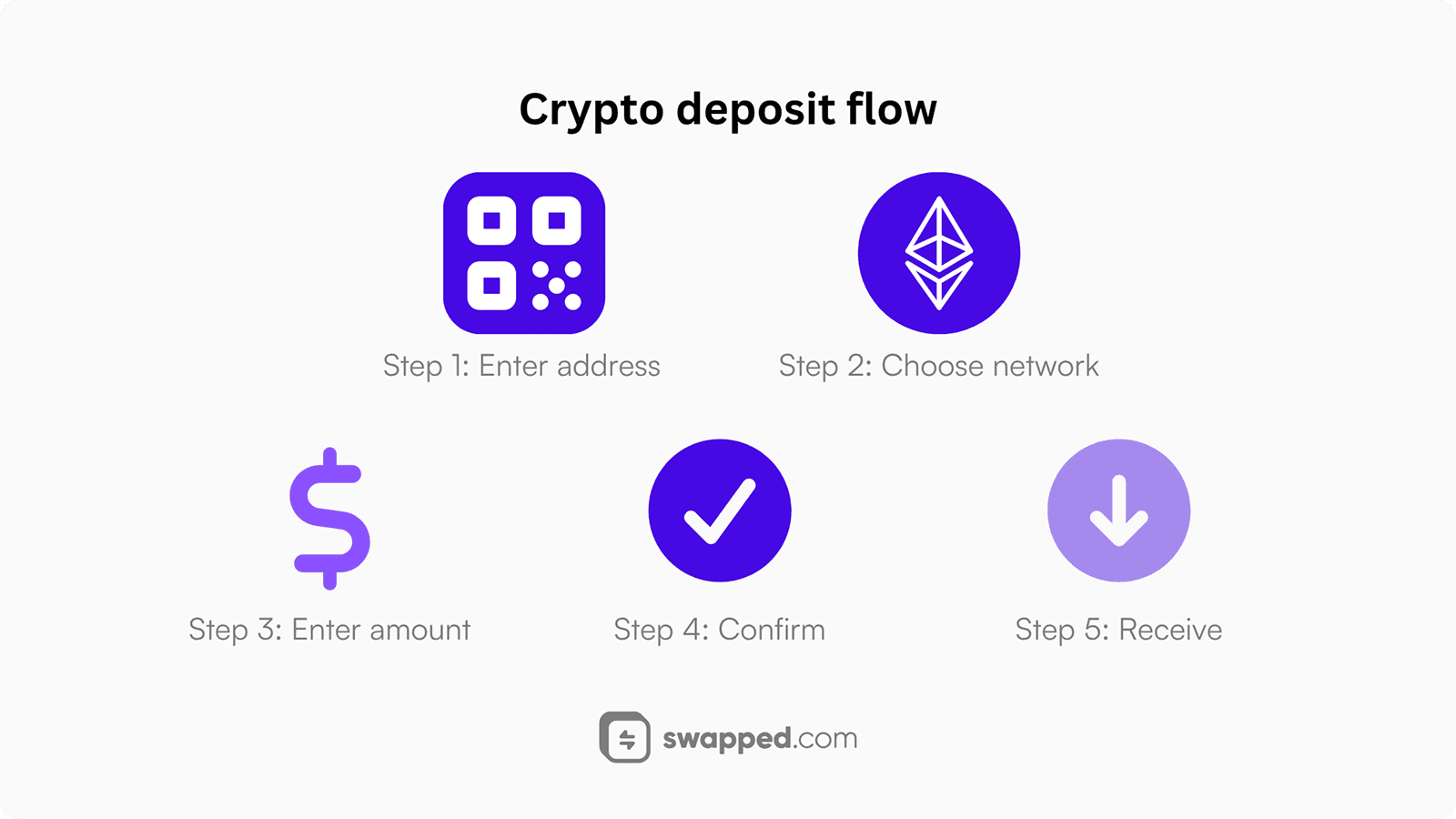
A useful deposit review follows the transfer from preparation to crediting.
Read the Receiving Instructions
Open the receiving service through a trusted bookmark or its verified application. Find the asset’s current deposit instructions and check whether deposits are enabled. Record the supported network, minimum amount and any account-specific requirements.
Next review the sender’s fee requirements and available balance. Some transfers require the network’s fee asset; an exchange may instead deduct a withdrawal charge. The sending application should explain the actual amount and fee arrangement.
Check the Destination Details
Obtain the destination from the receiving account’s current deposit screen. Some services also require a memo or destination tag to identify the customer behind a shared address. Treat that additional field as part of the complete destination.
Compare the entire address after pasting it and again on the signing screen. Avoid copying destinations from unsolicited transaction history. Address poisoning can place a similar-looking address beside legitimate activity.
Review Before Authorization
The send or withdraw screen should identify the exact asset, amount, destination and network. Confirm that any memo or tag survived the transfer between applications. Review the expected deduction and the amount the destination should receive.
Only authorize an operation you understand. If the displayed address, permissions or network differs from the intended transfer, stop and resolve the mismatch before signing.
Understanding More Complex Deposit Routes
Some applications combine a transfer with a swap or bridge. A shorter interface can still represent several underlying operations. Understanding those operations is useful even when software prepares the route and fills in the fields for you.
Separate Transfers, Swaps and Bridges
A transfer changes the destination of an asset on its network. A swap exchanges one asset for another. A bridge connects activity across networks using its own design and security assumptions. These actions have different failure modes.
For a route that combines them, identify the starting asset, intermediate operations and final asset. Review the quoted output, route expiry and conditions for failure or refund. A successful first transaction does not prove that the complete route reached its intended destination.
Review Automatically Filled Fields
Saved addresses and prefilled forms reduce typing, but the saved information can be outdated or selected for the wrong account. Confirm that the destination is still valid for the asset and network in the current transfer.
Automation changes how details are entered; it does not remove the need to review them. The final wallet or exchange confirmation should match the destination and amount you intended.
Understand Sponsored Network Fees
A sponsored transaction has another party cover a network charge under particular conditions. Check what is actually sponsored, which assets and routes qualify, and whether another service charge or price spread remains in the quote.
A sponsored fee does not establish that every transaction is free or that a deposit route is safe. If sponsorship is unavailable, the application should clearly show what changes before requesting another authorization.
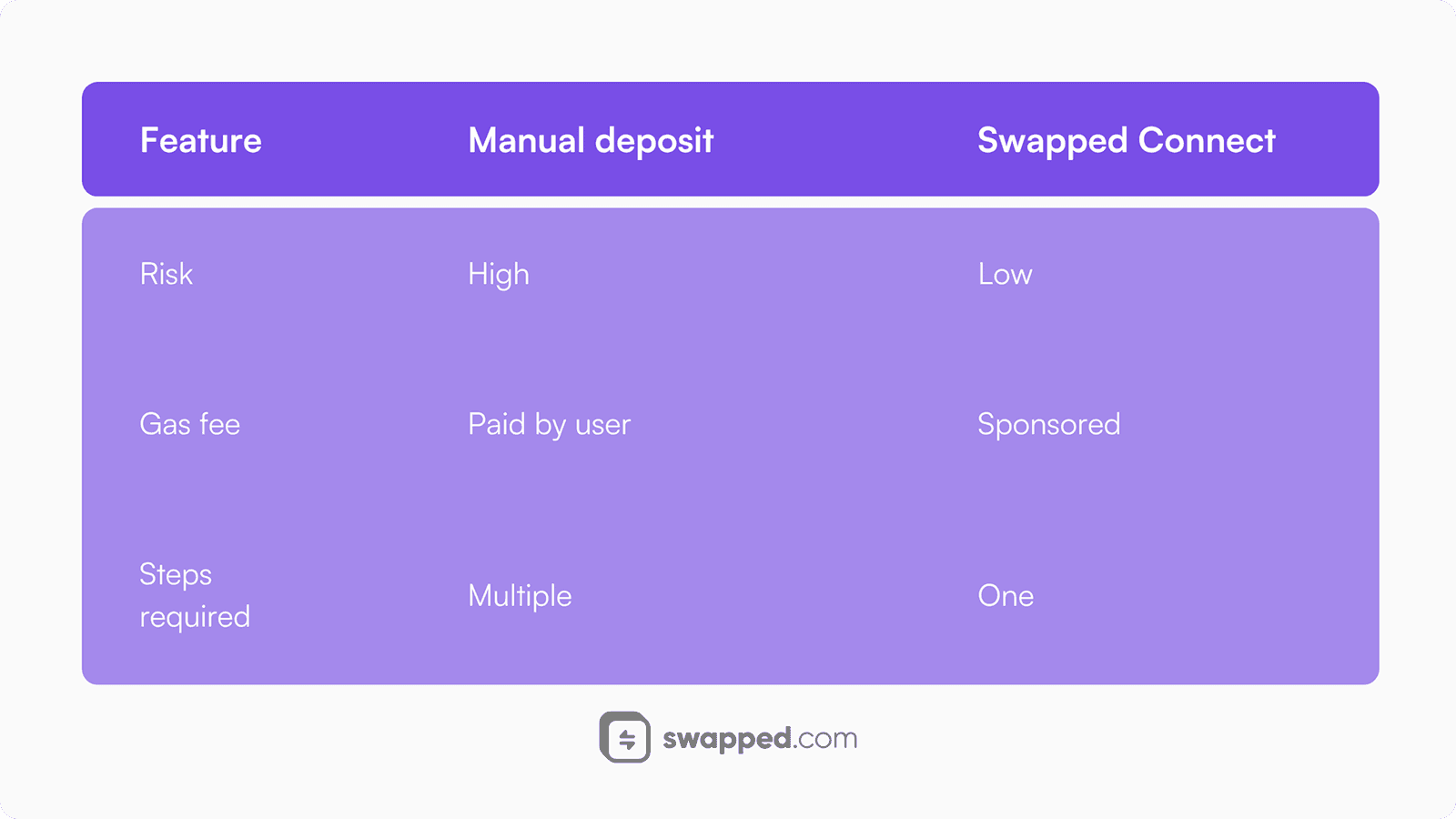
Convenient interfaces still need clear transaction details and status.
Designing Clear Deposit Experiences
Applications that receive deposits need a reliable connection between user intent, network evidence and account crediting. The interface should expose relevant details without requiring the user to guess which system is responsible for the next step.
Show the Complete Deposit Route
A useful integration identifies supported assets and networks before creating a destination. It explains memos, fees, minimums and the expected result. If a provider prepares a swap or bridge, that dependency belongs in the transaction explanation rather than remaining invisible.
Validation should catch missing or inconsistent information before authorization. Clear error messages should distinguish an invalid destination, unavailable route, insufficient fee balance and a transaction that has already been submitted.
Track Status With Evidence
A status screen should distinguish request creation, submission, network confirmation and account crediting. Where available, a transaction identifier gives the user an independent reference for the network stage.
Support instructions should identify the service responsible for crediting or investigating the deposit. A support request should use public transaction details, never a wallet recovery phrase or private key.
Habits That Improve Deposit Reviews
The same review habits apply to a simple transfer and a route with several operations. They help expose uncertainty before authorization and preserve evidence afterward.
Verify Each New Destination
Check a newly obtained destination through the receiving account itself. Confirm the complete address, network and memo or tag. Repeat that check if the service changes its instructions, even when an older transfer succeeded.
Where practical, a small test transfer can check the route and crediting process. It still needs to meet fees and minimums, and it cannot guarantee that a later transfer will have the same outcome.
Keep a Useful Transfer Record
Save the asset and network, public transaction identifier, destination, time and expected amount. These details let you compare the sender’s record, the network result and the receiving account without exposing signing secrets.
A screenshot can supplement the record, but the transaction identifier and receiving account status are stronger evidence than a success animation alone.
Interpret Delays Carefully
A delay can occur before submission, while the network processes the transaction, or while the receiving service credits it. Identify the stage first. Network congestion is one possible explanation, not a diagnosis for every missing balance.
Do not repeat a transfer solely because a balance has not updated. Check the original transaction and the receiving instructions before deciding what action, if any, is needed.
A Clearer Way to Follow Deposits
A well-understood deposit has an identifiable asset, a compatible route and a complete destination. Its progress can be followed from authorization through network confirmation to the result shown by the receiving service.
This approach also makes a problem easier to describe. Instead of reporting that a deposit disappeared, you can identify the last confirmed stage and provide the relevant public reference to the service responsible for the next step.
DTCC Trading focuses on Stellar tokenization and multichain interoperability. These general deposit concepts explain how to assess transfers; they do not establish that a particular asset, network, wallet or deposit route is available through DTCC Trading.
Related Reading
Use the linked transfer and deposit explainers as additional context, then check the current instructions of the service involved in your own transfer.