Ripple, XRP and the XRP Ledger Explained
Learn how Ripple the company differs from XRP and the XRP Ledger, and how payments, consensus, reserves and destination tags fit together.
DTCC Trading Editorial
Ripple, XRP and the XRP Ledger are related names for different things. Comparing them with Bitcoin is easier once the company, asset and network are separated. A company can build payment products; a public network records transactions; its native asset serves particular functions within that network.
This distinction matters when reading a partnership announcement or reviewing a transfer. A bank using a company’s software does not automatically mean that it holds or uses the network’s native asset. Follow the actual product and payment route behind each claim.
Ripple, XRP and XRPL
Ripple is a technology company. XRP is the native digital asset of the XRP Ledger, often abbreviated XRPL. The XRP Ledger is an open-source network with its own transaction rules and consensus process. These names should not be treated as interchangeable.
Calling XRP a cryptocurrency describes the asset. It does not make ownership of XRP equivalent to a share in Ripple, nor does it make every Ripple product a transaction on the XRP Ledger. The relevant documentation needs to identify which technology and asset are actually involved.
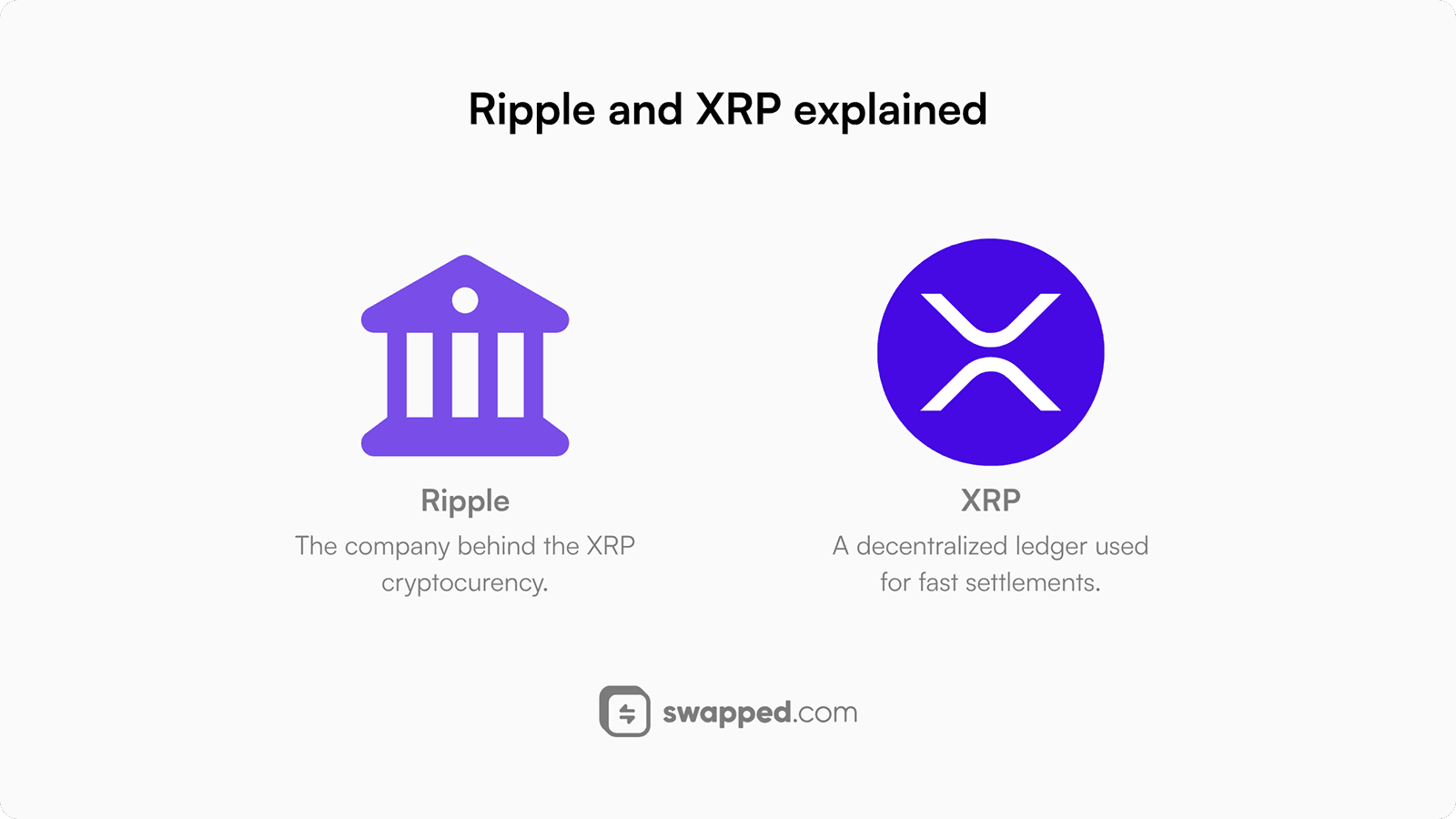
Separate the company, the digital asset and the network when reading about Ripple.
What the Company Builds
Ripple develops products for financial infrastructure and payments. Product descriptions belong to the company offering them; network rules belong to the relevant protocol. A feature marketed by a company is not automatically available to every user of a public network.
For a partnership claim, read the dated announcement and identify its scope. A pilot, software agreement and active payment route are different arrangements. Historical announcements do not establish that a particular relationship or service remains available today.
What XRP Does
XRP is used for transaction costs and account reserves on the XRP Ledger. It can also be transferred and traded. In some payment arrangements it serves as an intermediate asset between currencies, depending on the route and the services involved.
XRP is not created through Bitcoin-style mining. Its issuance model differs from proof-of-work assets, and transaction costs consume a small amount of XRP. Supply figures and distribution should be checked against current ledger and issuer disclosures rather than inferred from the asset’s name.
How the Ledger Processes Transactions
The XRP Ledger uses a consensus protocol to agree on transactions and their resulting state. A server evaluates transactions under the network’s rules and tracks agreement among validators. This is different from selecting blocks through proof-of-work mining.
Consensus and Validation
Validators participate in reaching agreement on the next ledger. Their trusted-validator lists influence which statements each server considers when judging consensus. The system’s security depends on its protocol assumptions and the relationships among those lists.
For users, the important status is a validated transaction with its actual result. Submission alone is not completion. A transaction can be included with a failure result, so check both validation and the outcome rather than treating a transaction identifier as proof of payment.
Using an Intermediate Asset
An intermediate asset can connect two currency markets. A hypothetical route converts the payer’s currency into that asset and then converts it into the recipient’s currency. Each conversion requires available liquidity and an acceptable price.
The complete route also depends on payment providers, local payout systems, fees and eligibility. Fast network processing does not by itself determine the time or cost of the recipient’s bank credit. Evaluate the end-to-end payment rather than one stage.
Comparisons That Need Context
Networks and payment products differ in confirmation rules, operating assumptions, costs and supported operations. Those differences are more useful than a single headline ranking of speed or capacity.
Network Performance
Throughput claims need a defined test environment and transaction mix. A theoretical capacity, a laboratory benchmark and sustained public-network activity measure different things. Compare like-for-like conditions before using a number to judge a payment route.
Consensus design also affects resource use. The XRP Ledger does not use proof-of-work mining, but that does not mean operating its infrastructure requires no energy. Any environmental comparison needs a clear boundary and a stated measurement method.
Reading Partnership Claims
A company can sell infrastructure to financial institutions without those institutions using every available product or asset. Identify the named service, the announced deployment and the jurisdiction involved before drawing conclusions about adoption.
The distinction also limits investment claims. A software customer count cannot be translated directly into demand for XRP. Evidence about a specific asset flow is needed to support a claim about that asset’s use.
Legal and Service Context
Legal treatment varies by jurisdiction, product and transaction. Statements about the company, a token sale or a particular service can address different questions. Read the actual decision or official service terms when the distinction affects an action.
A dated legal article can become incomplete after later rulings or policy changes. This introduction does not summarize current litigation or assign a universal legal status to XRP. Those questions require current primary sources for the relevant jurisdiction.
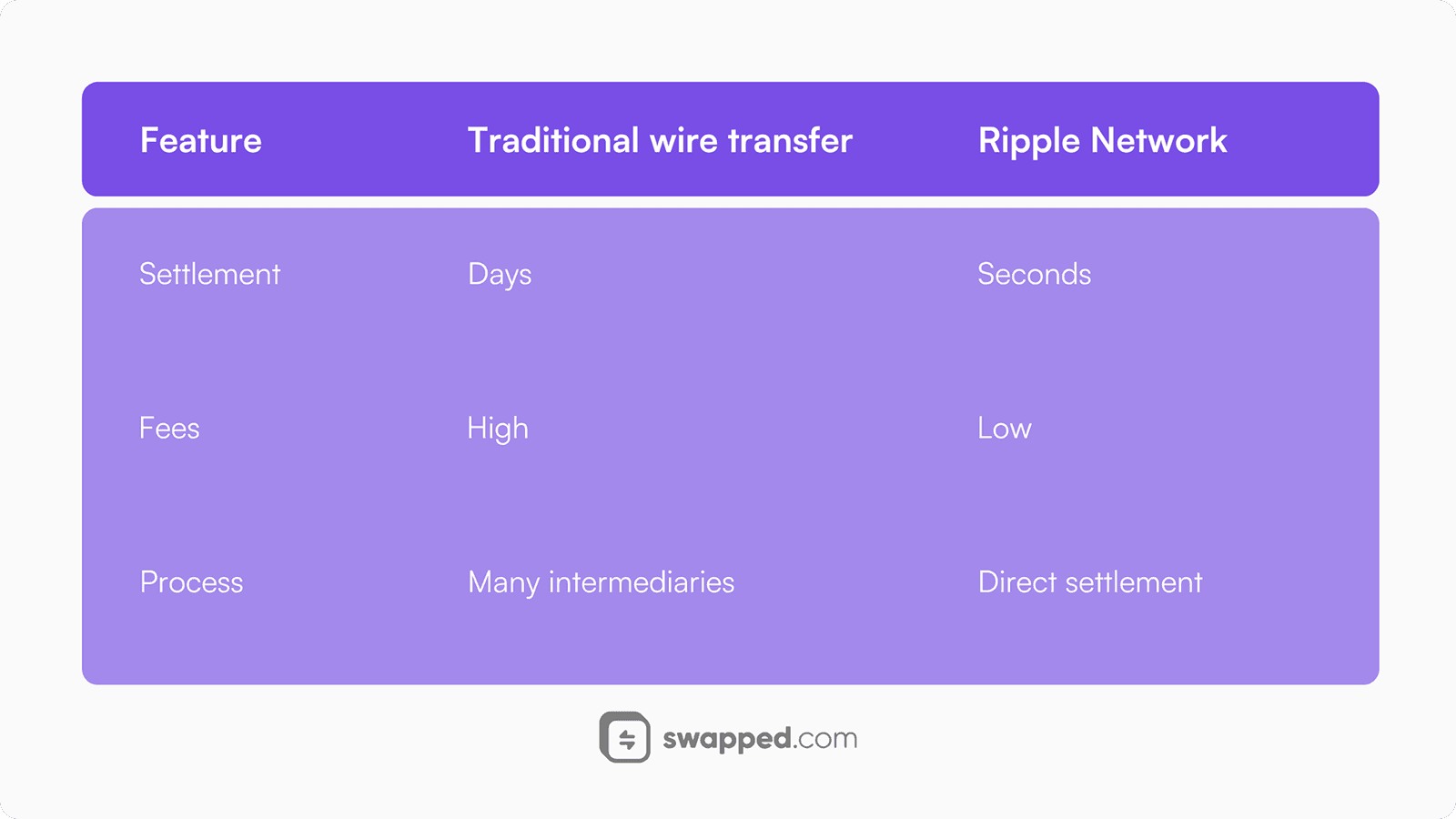
Assess the full payment route, including conversion, network processing and payout.
Where the Concepts Apply
Payment infrastructure combines software with liquidity, operating procedures and account relationships. Understanding those layers helps explain both the possible uses of a ledger and the limits of a general description.
Cross-Border Transfers
A cross-border transfer may involve conversion and payout in addition to an on-chain transaction. Identify who receives the initial payment, who exchanges the asset and who delivers the final currency. The responsible entities can differ at each stage.
Compare the final amount received and the complete processing conditions. An attractive network fee does not include every service charge or exchange spread. A route is useful only when its destination and required payout method are supported.
Financial Infrastructure
Institutions can use distributed-ledger software for recording or coordinating financial activity. The exact arrangement determines whether it uses a public ledger, a separate system or a particular digital asset. The label blockchain is not enough to answer those questions.
Public Digital-Money Projects
A central bank digital currency is defined by its issuer and legal claim, not by a particular vendor or token. A technology experiment does not establish a public launch or imply that the project uses XRP. Consult the central bank’s own description.
Understanding Access and Custody
Before evaluating an XRP service, identify the legal entity, supported network, custody arrangement and withdrawal conditions. A displayed trading balance and control of an on-ledger account are different forms of access.
A page offering to buy XRP should clearly explain its quote and destination. Review the provider’s terms for eligibility, charges and delivery. This guide does not verify a particular purchase provider or imply that DTCC Trading offers that route.
A self-custody wallet manages the keys needed to authorize account operations. A custodial service controls the relevant keys and maintains its own customer records. Choose the arrangement only after understanding recovery, access and the responsibilities it creates.
Reserves and Destination Tags
The XRP Ledger applies reserve requirements to accounts and certain ledger objects. The required amount can change through network rules, so consult current reserve documentation. It is inaccurate to treat a historical reserve figure as a permanent fee for every wallet.
Some custodial destinations also require a destination tag to credit the correct customer. Read the receiving service’s current instructions and verify the complete address and tag before authorization. An otherwise valid transfer can still be difficult for a service to reconcile.
A Practical Learning Path
Start by distinguishing an account from a service balance and a submitted transaction from a validated result. Read a public transaction record and identify the sender, destination, asset, outcome and ledger reference without making a financial commitment.
Then study the feature relevant to your purpose: payments, token issuance, exchange operations or account controls. Use the protocol documentation for network behavior and the service’s own documentation for its application-specific requirements.
DTCC Trading works with Stellar tokenization and multichain interoperability. This XRP overview provides broader network context; it does not establish an XRP purchase route, wallet integration or payment partnership within DTCC Trading.
Keeping the company, asset and ledger distinct makes future announcements easier to evaluate. It also prevents a claim about one part of the ecosystem from being mistaken for a claim about all of it.
Related Reading
Use the linked introductory material as context, and verify operational details against current protocol and service documentation.