Solana: Accounts, Transactions and Applications
Explore Solana’s account model, proof-of-history design, transaction costs and application ecosystem, with clear distinctions between network capability and user outcomes.
DTCC Trading Editorial
Blockchain networks make different choices about execution, consensus and resource requirements. Solana is a programmable network designed to process substantial activity through a shared execution environment. Its native asset, SOL, is used for network fees and staking.
Understanding Solana means looking beyond a headline speed figure. Accounts, programs, transaction instructions and confirmation stages explain how an application actually operates and where costs or delays can arise.
Designing for Throughput
A network’s throughput depends on how it orders activity, executes operations and communicates results. Solana combines several mechanisms to coordinate that work. No single component explains every aspect of its observed performance.
Anatoly Yakovenko’s original Solana paper proposed proof of history as a way to establish a verifiable ordering and passage of time. That proposal was one part of a broader network design involving consensus and data processing.
The application ecosystem includes DeFi, payments, digital collectibles and memecoins. These are different workloads with different requirements. The presence of an application category does not show that every application in it is reliable or useful.
How the Architecture Fits Together
The Role of Proof of History
Proof of history provides a cryptographic sequence used to establish ordering and elapsed computational work. It is not, by itself, the entire consensus mechanism. Solana also relies on validator participation and stake-based consensus rules.
A common sequence helps participants reason about the order of events without treating every timestamp as an independent claim. Validators still need to verify transactions and agree on accepted history. Ordering evidence does not replace those responsibilities.
Comparisons with Ethereum or another network should use equivalent definitions. Total transaction counts can include different kinds of activity, and fast initial processing is distinct from finality. The workload, observation period and confirmation level belong beside any performance number.
Transaction Costs
Solana transactions require fees paid in SOL, including a base fee and possible prioritization fees. Creating or using accounts can involve additional balance requirements. Review the complete operation instead of assuming a quoted network average is the cost of every application interaction.
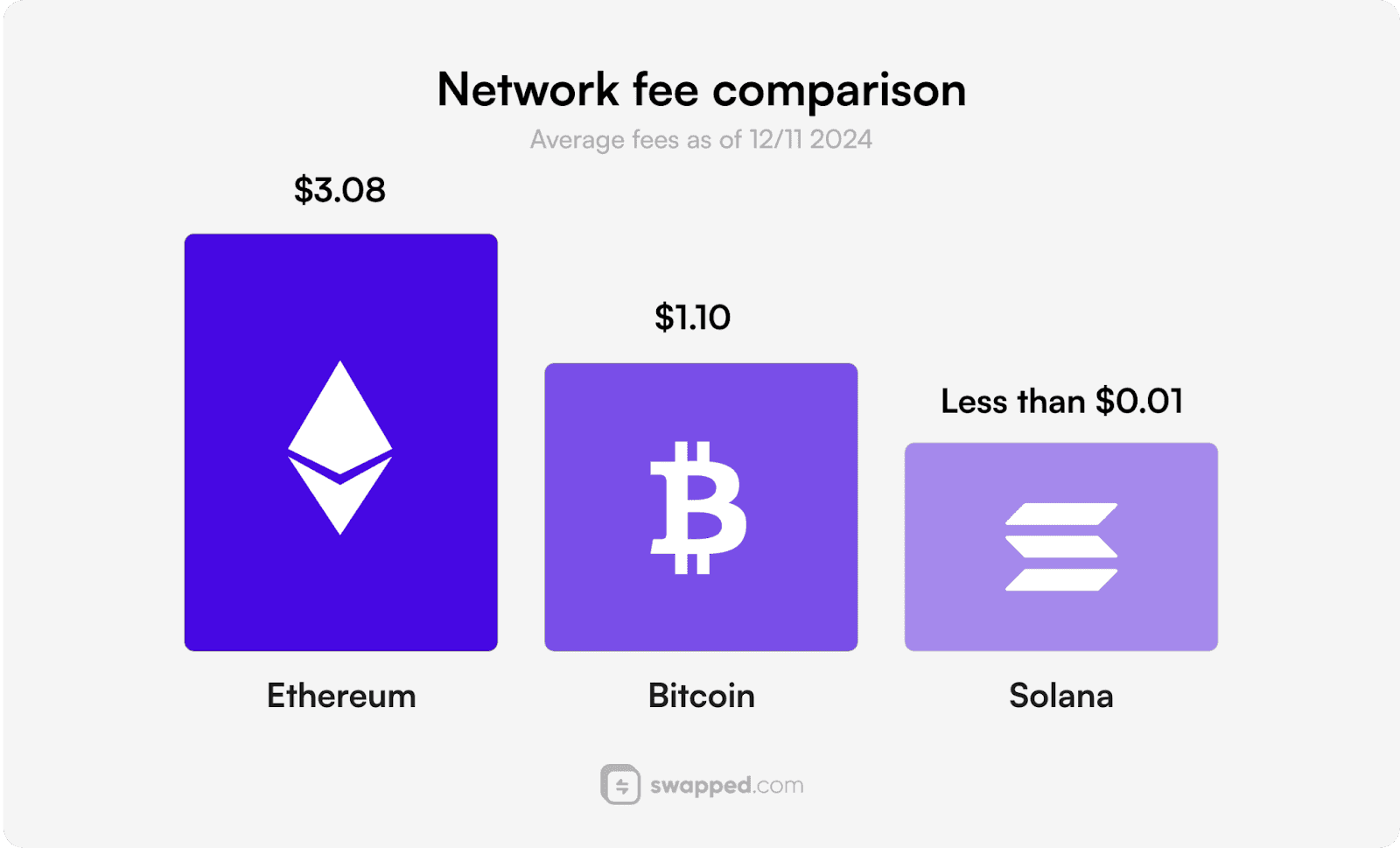
Fee comparisons are time-specific and depend on the operation being measured.
Culture and Application Activity
Fast interfaces and active markets can attract speculative use, but they are only part of the ecosystem. A network can support both useful applications and risky promotions. Technical capability does not endorse the tokens issued on it.
Attention and Market Narratives
Memes and online communities can spread awareness quickly. They can also make a token’s social visibility appear larger than its practical use or liquidity. Separate network adoption claims from the trading activity of a particular asset.
Operational Tradeoffs
Network reliability depends on client software, validator operations and resource demands. Applications also depend on RPC providers, indexers and frontends. A problem in one of those services can resemble a network problem, so identify the failing layer before drawing a conclusion.
Assess a network through current operating evidence and its design requirements. Hardware demands, software diversity, participation and recovery procedures matter alongside fees. No network can be evaluated completely through a single favorable benchmark.
Market Events and External Exposure
A network’s native asset can be affected by events involving exchanges, investors and other cryptocurrency businesses. Such exposure is distinct from whether the network’s transaction rules are functioning. Price movement alone does not diagnose a protocol failure.
Separating Recovery Claims
A recovery in price, a recovery in application usage and the resolution of a software incident are different events. Evaluate each with appropriate evidence. Combining them into one comeback narrative can hide unresolved dependencies or changing conditions.
Historical market charts describe a period rather than a future price path.
Reading the Application Ecosystem
Solana applications share network infrastructure while implementing different business and technical rules. Follow the account and program identities involved in a particular operation rather than assuming the network name explains the whole product.
Wallet Interfaces
A wallet can help manage SOL, tokens and application permissions. It can also display NFTs and other records. Verify the supported network and exact asset identifiers, and read transaction details before authorizing an operation.
Swap Routing
An aggregator such as Jupiter can compare routes across decentralized exchange liquidity. A quote depends on the input amount, route and current market state. Review price impact, minimum output, fees and expiry; an aggregator cannot guarantee the best possible outcome under every changing condition.
Token Distributions
Airdrops can allocate tokens according to a project’s rules, but eligibility and value are uncertain until the actual distribution is known. Unsolicited tokens or claim links can also be used for phishing. Receiving a token does not require approving unrelated asset transfers.

Distribution rules and safe claim permissions matter more than promotional amounts.
Mobile Access
Solana Mobile has developed devices and software intended to support mobile crypto interactions. Device features, application support and availability change over time. Evaluate a device through its current documentation and recovery model rather than a general Web3 label.
A mobile interface still needs to explain the account, operation and permission being authorized. Convenience is valuable when it preserves that clarity. A dedicated device cannot make an unverified application or misleading transaction safe.
Obtaining and Holding SOL
A route to obtain SOL can involve an exchange or onramp service. Confirm availability, total cost and delivery on the Solana network. A purchase quote, a submitted withdrawal and a confirmed destination balance are separate stages.
Choose a custody arrangement with an understood recovery process. A custodial account relies on the provider’s controls; a self-managed wallet requires protecting signing and recovery material. Verify destination details and fees before moving funds between them.
Evaluating Solana Over Time
Track implemented changes, current network behavior and application-specific evidence. New software or a roadmap milestone should be assessed through its actual deployment. A forecast about future demand is separate from a technical description of the network.
For tokenization and interoperability work, the practical questions concern asset standards, authority, settlement and compatible routes. Solana offers one set of design choices in that wider landscape; this overview does not establish a particular DTCC Trading integration.
Related Reading
Use the linked introductions as context and Solana’s current documentation for account, transaction and fee behavior.