Ethereum: Programmable Accounts and Shared State
Understand Ethereum, ether, gas and smart contracts, including how applications use the network and how proof of stake and scaling layers fit into its design.
DTCC Trading Editorial

After Bitcoin demonstrated a public digital-cash system, Ethereum developed a broader programmable blockchain environment. Its shared execution rules let applications maintain state and coordinate operations through code. Understanding that capability is more useful than treating the network as a single application.
A Shared Execution Environment
Ethereum nodes apply common rules to transactions and account state. That creates an agreed record of balances and contract behavior. Agreement on state does not automatically verify external facts, which applications may obtain through separate data providers.
The Original Proposal
Vitalik Buterin published the original Ethereum proposal, and multiple co-founders and contributors helped develop the network. Ethereum launched in 2015. Its ongoing changes involve proposals, client implementations and coordination among participants.
What Programmability Adds
A contract can define rules for a token, exchange or other application. Participants submit transactions that invoke those rules. The network executes code; it does not decide whether the code represents a fair bargain or a complete legal agreement.
Applications can combine contracts and build on shared interfaces. This composability can make new services easier to create while also linking their risks. A failure in a widely used component can affect several applications.
Ethereum and Ether
Ether, commonly shown as ETH, is Ethereum’s native cryptocurrency. It is used for transaction fees and staking. Creating a token or transferring an NFT can involve execution costs paid in ETH at the protocol level, even when an application arranges for another party to pay on the user’s behalf.
The network and its asset are related but distinct. Ethereum describes the system; ether is one asset within it. An application token deployed on Ethereum has its own rules and is not automatically backed or endorsed by the network.
Accounts, Transactions and Contracts
Applications in DeFi and other categories build on accounts and transactions. A wallet helps prepare and authorize operations, while the network applies the resulting state changes according to protocol and contract rules.
Understanding Gas
Gas measures execution work. The fee depends on gas consumed and applicable pricing rules, while the transaction’s gas limit bounds the permitted work. Wallets estimate those requirements, but a failed execution can still consume gas. Review the intended operation and the estimated cost together.
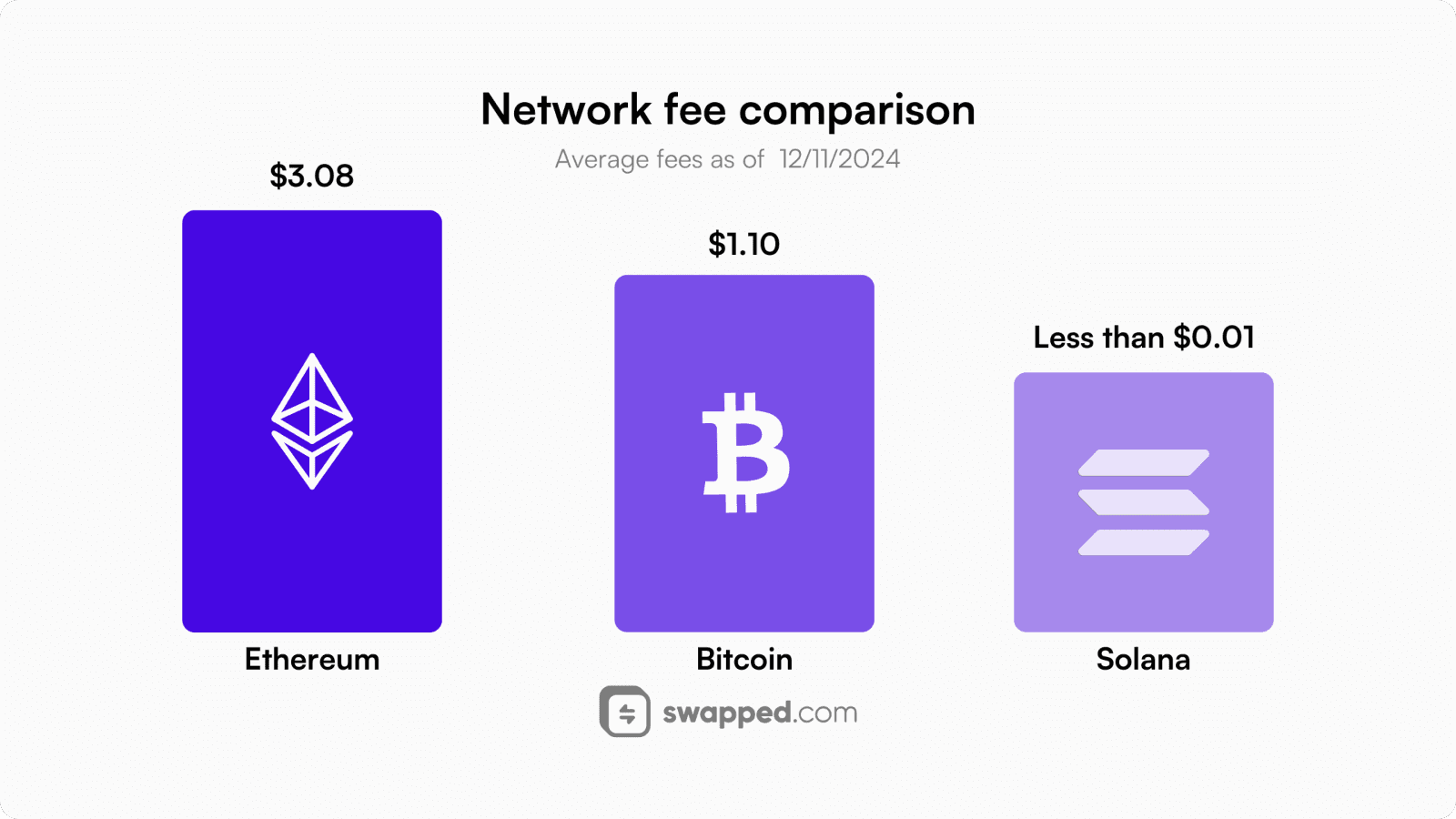
A fee comparison needs the operation, network and observation date.
Smart-Contract Behavior
A smart contract executes the instructions deployed for its account. It can maintain storage, transfer assets or call other contracts. Some contracts include privileged roles or upgrade mechanisms, so their behavior is not necessarily fixed forever.
Decentralized Applications
A decentralized application uses on-chain components for part of its operation. It can also rely on a hosted frontend, indexer, storage provider and RPC service. The word decentralized does not establish that every component has the same control model.
Following an Application Request
A frontend prepares an operation, a wallet presents it for authorization and the network processes the submitted transaction. The application then interprets the result. Confirming the network record is useful when a frontend status is delayed or unclear.
The Move to Proof of Stake
Ethereum originally used proof of work. Changing consensus required coordination across implementations and participants while preserving the existing transaction history and application state.
The Merge completed on September 15, 2022, moving Ethereum to proof of stake. Validators now perform consensus duties with ETH at stake. The Merge changed how consensus was secured; it was not itself a promise to remove congestion or make every transaction inexpensive.
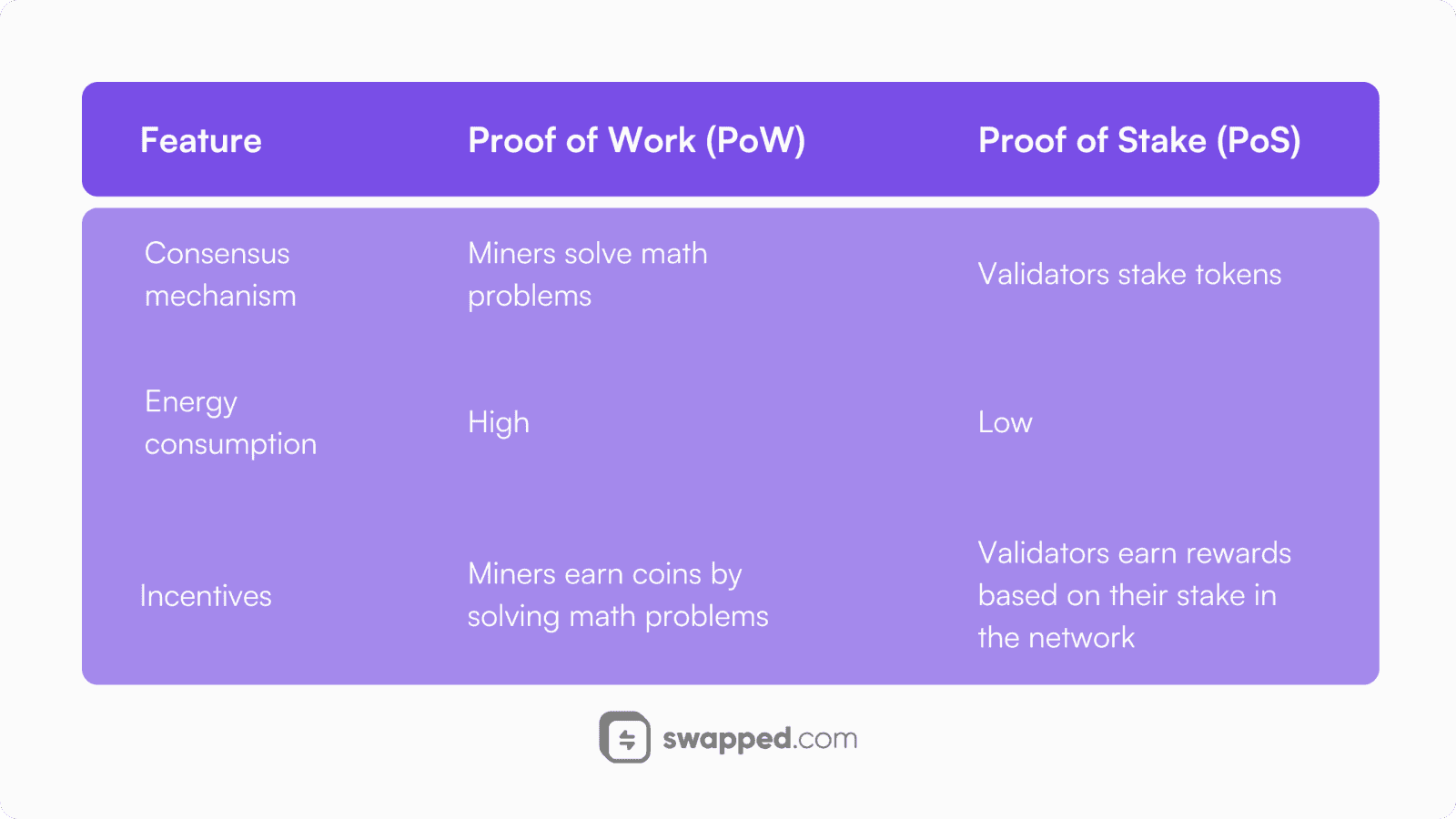
Proof of work and proof of stake commit different resources to consensus.
Scaling and Other Networks
Networks such as Solana make different execution and resource choices. Ethereum also supports Layer 2 designs, including rollups that use zero-knowledge or validity-proof techniques. Compare complete settlement and withdrawal assumptions as well as execution fees and speed.
Obtaining and Holding ETH
A route to obtain ETH can involve an exchange or onramp service. Confirm the destination network because ETH representations and balances can exist across several systems. Review the net amount delivered and the receiving service’s support before authorizing a purchase or withdrawal.
A custodial service controls assets under its account terms, while a self-managed wallet places signing and recovery responsibilities with the user. Hardware signing can protect keys from some device threats, but careful transaction review and backups remain necessary.
Reading the Roadmap
Ethereum’s roadmap includes work on scaling, usability and security. Completed upgrades should be distinguished from proposals and research. For example, blob-based data mechanisms support rollup scaling, but the behavior of a particular layer 2 still depends on its own implementation.
For tokenization applications, focus on asset standards, issuer powers, account permissions and the source of external claims. Ethereum supplies programmable infrastructure; the quality and rights of a tokenized product must be established separately.
Related Reading
The linked introductions provide context. Ethereum’s current technical documentation explains the live account, execution, consensus and scaling rules.