Understanding Decentralized Trading
Explore how decentralized trading handles custody, swaps, order execution and derivatives, with attention to permissions, costs and transaction evidence.
DTCC Trading Editorial

Decentralized cryptocurrency trading changes how orders and assets interact with a market. It is distinct from an investing strategy: understanding a venue does not determine whether buying Bitcoin or Ethereum suits anyone’s circumstances. Start with the mechanism, the permissions it needs and the evidence it produces.
A decentralized interface can connect a wallet to protocols that execute swaps or manage positions. It does not make every component trustless or every asset remain inside the wallet. Contracts, operators, price feeds and network rules still determine what happens after an operation is authorized.
How Decentralized Trading Works
Decentralized trading uses network-based mechanisms to execute or settle an exchange. The design varies: one venue may use a liquidity pool, another an order book, and another a combination of offchain matching and onchain settlement. The label alone does not describe the custody model.
Connecting a wallet does not itself transfer assets, but later approvals, deposits and trades can give contracts permissions or move funds. Unlike an internal balance on some crypto exchanges, a protocol position may be represented by onchain state. Read what each action changes before signing.
Custody, Execution and Settlement
A centralized venue commonly records trades within its own account system and manages deposits and withdrawals separately. Users rely on the operator for those records and for access to funds it holds. The relevant terms explain the account relationship and restrictions.
Decentralized Finance can expose parts of execution and settlement directly through blockchain records. Public records improve inspectability, but they do not prove that a contract is safe, an asset is legitimate or every part of a trading system is decentralized.
What the Design Changes
Self-custody can give users control over signing keys, while a trade can still place assets in a contract or grant spending authority. Token rules, protocol controls and interface restrictions can also affect access or transfers.
A useful review separates the wallet, interface, contracts, validators and any administrators. Identify what each component can do and what the user relies on it to do correctly. Access requirements and legal restrictions remain relevant even when a protocol is publicly accessible.
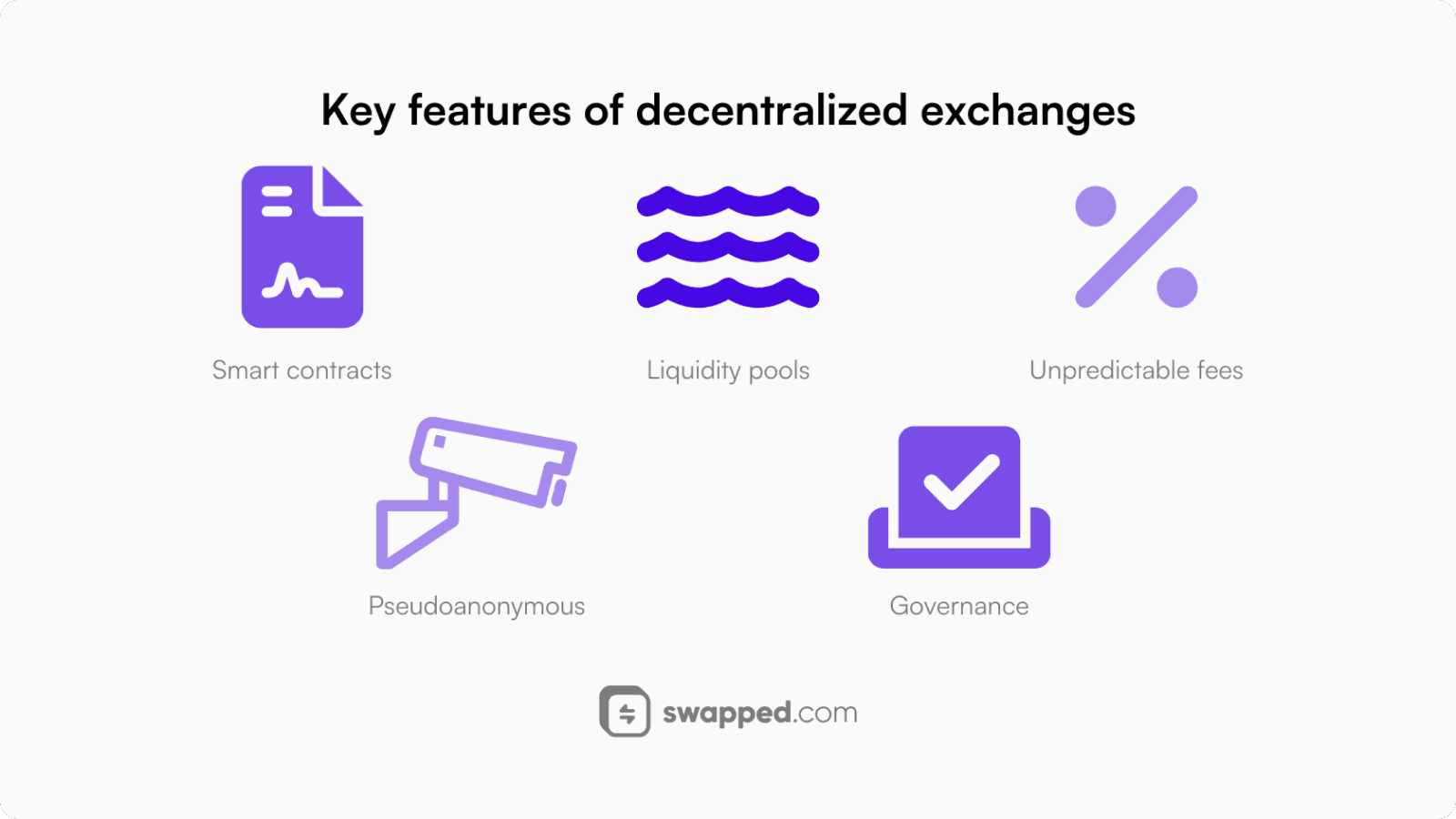
Trading design determines custody, permissions, costs and settlement evidence.
The Building Blocks of a Trade
The main pieces are the asset being exchanged, the market that supplies a price, the execution rules and the settlement transaction. Derivatives add a separate position, collateral and valuation rules that need their own review.
Before connecting funds, identify the network and the exact assets the protocol uses. Obtaining an asset is a separate step from establishing that a trading route supports it. Read the venue’s official documentation and contract references; a shared symbol or a familiar wallet interface is not sufficient evidence.
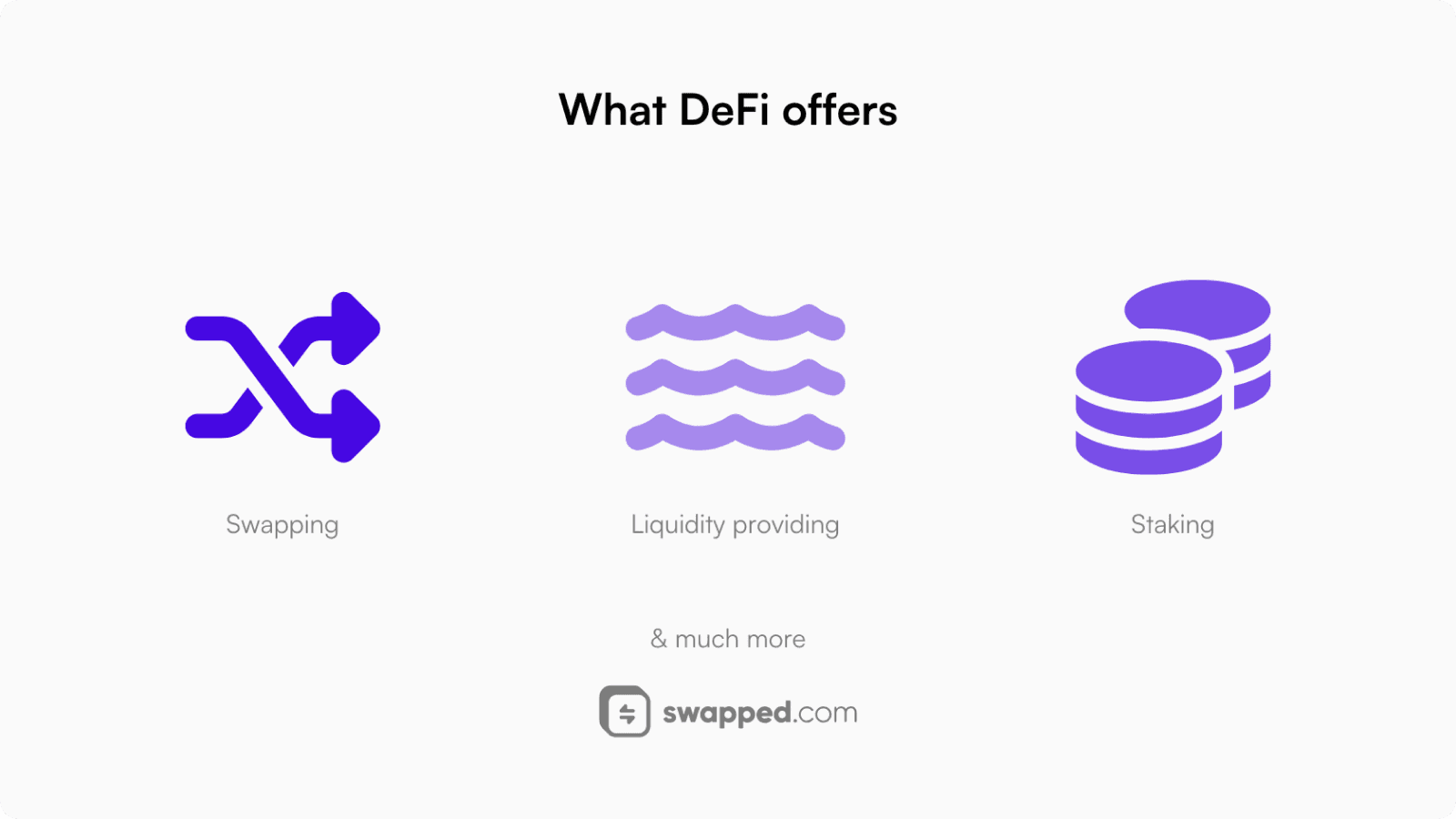
Understand a market’s mechanics before interpreting its trading interface.
Spot Exchanges and Liquidity
A spot exchange trades one asset for another under the venue’s execution rules. The displayed quote estimates the result for a particular amount and route. The final transaction record is needed to establish what actually settled.
An automated market maker uses assets in liquidity pools and a pricing mechanism. Other decentralized venues use order books. A pool quote and an order-book quote depend on different market details, so compare the amount, route and execution conditions rather than the displayed token price alone.
Execution costs can include trading charges and network fees. Price impact describes the effect of a trade on the available market, while slippage describes a change between a quoted and executed outcome. Review these alongside the minimum acceptable output.
What Derivatives Add
A derivative provides exposure defined by a contract rather than necessarily delivering the underlying asset. Its payoff, collateral, settlement method and valuation rules determine the position that a trader actually holds.
A position may gain or lose value as its reference price changes. Margin rules can require collateral and trigger liquidation before a trader chooses to close. Using a derivative to offset another exposure also introduces basis, timing and execution risks.
Eligibility, market availability and account requirements depend on the venue and jurisdiction. Public access to a webpage does not establish permission to trade. Derivatives require separate study because their loss and liquidation mechanics differ from a simple asset exchange.
Reading More Complex Positions
A complex position should be understandable without relying on a projected profit figure. Identify the exposure, collateral, fees and events that can close or change it. An attractive interface does not remove those dependencies.
Work through a documented example or simulation before interpreting a live position. Include adverse price changes and costs, then compare the result with the venue’s stated rules. If the outcome cannot be explained, the missing detail deserves further research.
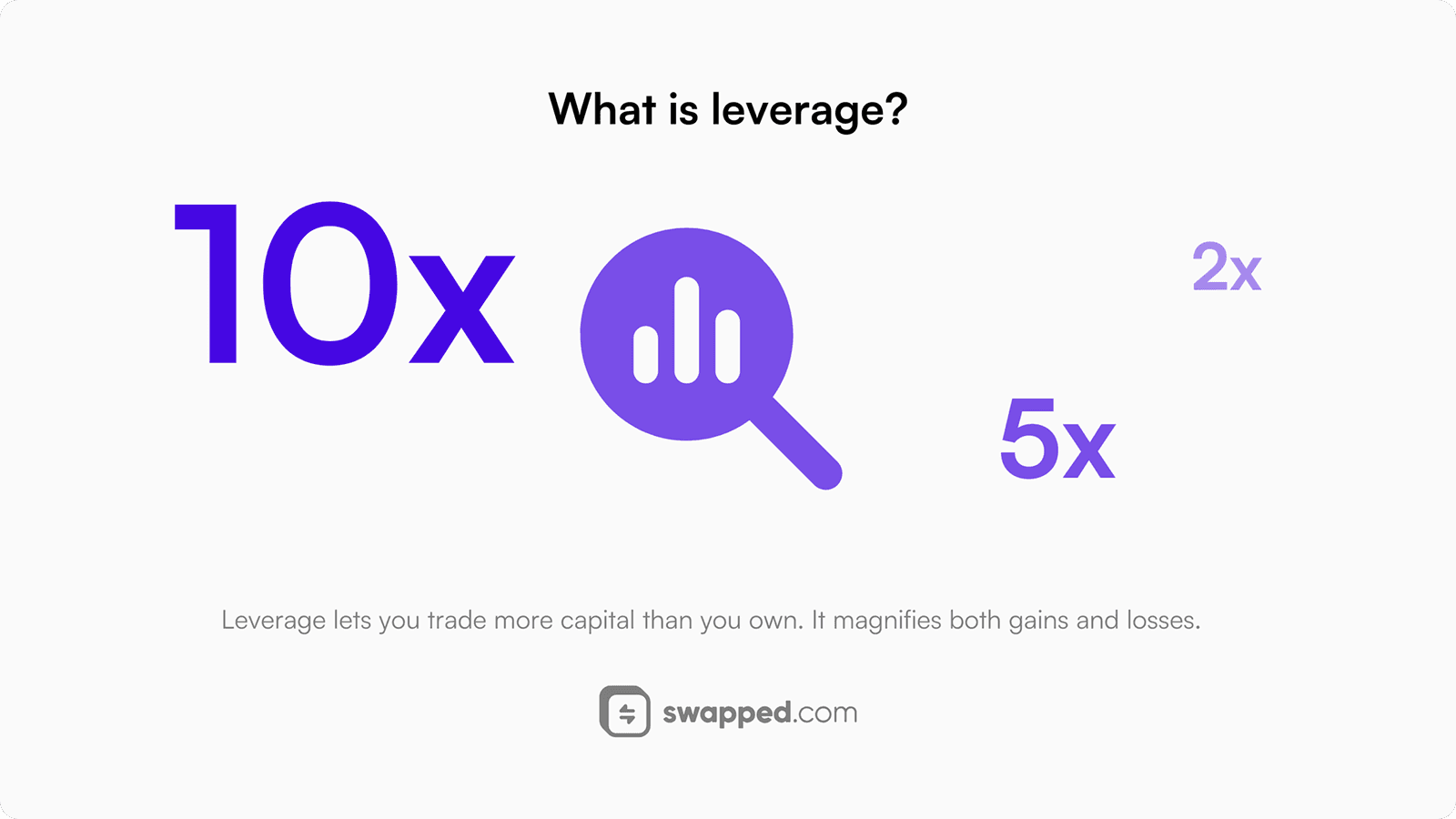
Leverage increases exposure relative to collateral, including adverse exposure.
Exposure and Leverage
Leverage compares a position’s economic exposure with the collateral supporting it. A hypothetical position with 1,000 units of exposure and 500 units of collateral has two times exposure. The venue’s design determines whether that involves borrowing or a margined contract.
In a simplified linear example, a five percent adverse change on 1,000 units of exposure represents a 50-unit loss before costs. That is ten percent of 500 units of starting collateral. This arithmetic illustrates sensitivity; it does not calculate an actual account’s liquidation level.
Funding, fees, other positions and collateral valuation can change the real result. Liquidation rules can close a position before the starting collateral is exhausted, and execution can differ from an estimate.
Perpetual Contract Mechanics
A perpetual contract is a derivative without a scheduled expiry. It provides price exposure under the venue’s contract rules rather than ordinary ownership of the referenced asset. The collateral and settlement asset must be identified separately.
Many perpetual markets use funding payments between positions to help align the contract price with a reference market. Funding can create a continuing cost or receipt, and its rate and direction can change.
Maintaining a position depends on the margin rules, available collateral and other contract conditions. An absence of scheduled expiry is not a guarantee that the position can remain open indefinitely. Liquidation or market changes can close it.
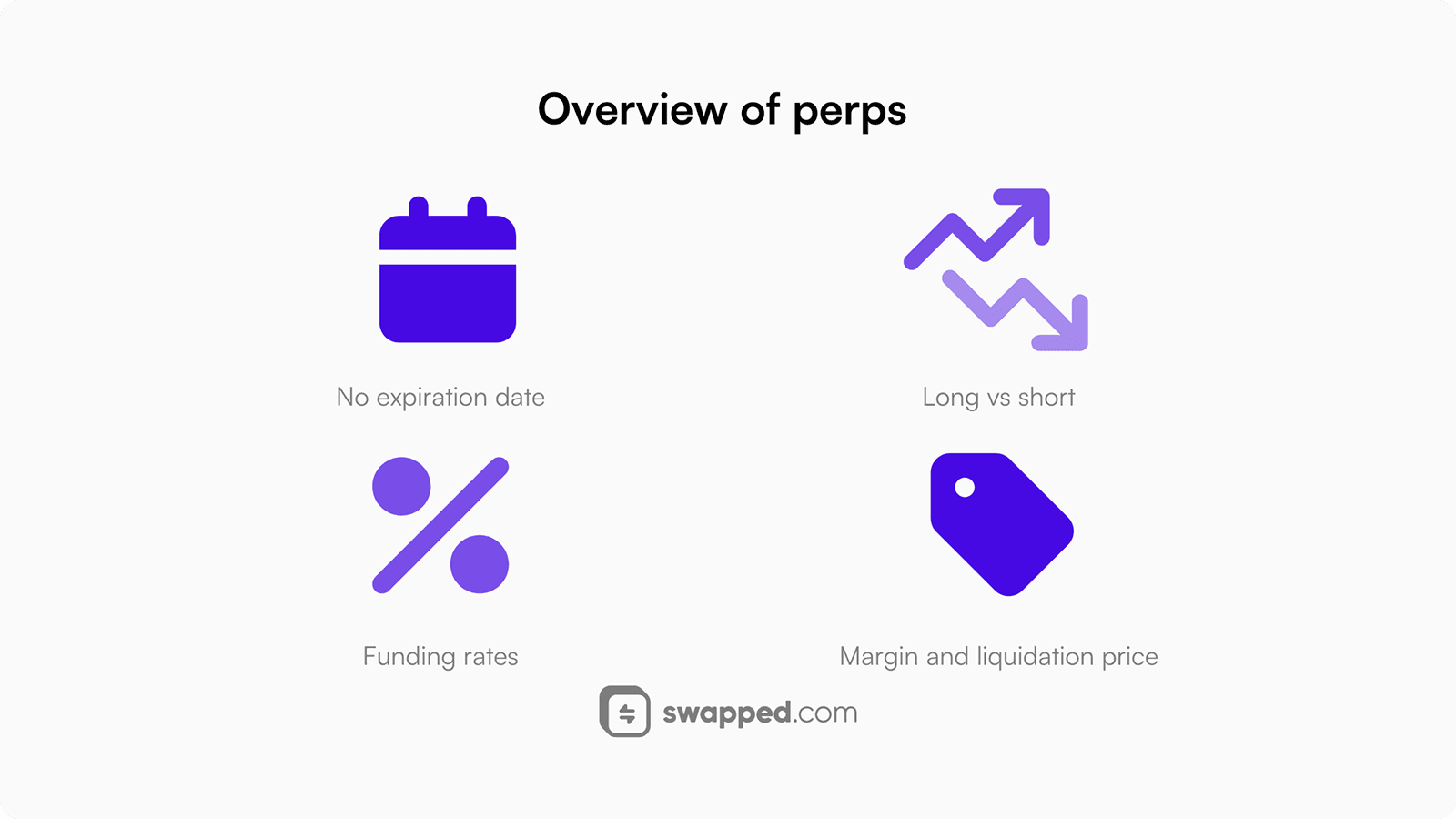
A perpetual position has contract exposure, margin requirements and funding rules.
Dated Futures and Settlement
A dated futures contract has an expiry or settlement date and a defined payoff. It may settle through delivery or a cash calculation. The relevant contract specification establishes which outcome applies.
A quoted futures price is the price of that contract, not a promise about the future spot market. Evaluating the position requires the contract size, settlement asset, expiry, margin rules and relationship between the reference market and the traded instrument.
Futures are used for several purposes, including hedging and speculation. Either use requires monitoring the contract’s rules and costs; a hedge can reduce one exposure while introducing another.
Evaluating a Trading Venue
Review venues by their actual mechanism. Identify whether the interface offers spot swaps, an order book, derivatives or several products. Similar charts can represent different assets, claims and settlement processes.
Read current documentation for fees, contract addresses, custody, price feeds, upgrade controls and withdrawal rules. Security reviews are useful evidence with a defined scope and date. They do not guarantee that a protocol, interface or connected dependency is free of defects.
Reading Hyperliquid Documentation
Hyperliquid’s documentation provides a concrete example of how a derivatives venue describes its contract specifications, margining, funding and liquidation mechanics. Those documents are more useful for understanding a position than a general claim about sophistication or speed.
Compare the documented order types and market rules with the product actually displayed. Identify the collateral and the price used to evaluate a position. A limit order, a trigger order and a liquidation estimate each answer a different question.
The relevant lesson applies beyond any one venue: read the conditions that can change a position, and verify how the system records the result. A public trade history offers evidence about activity, but cannot by itself establish a venue’s suitability or complete security.
Learning about an ecosystem token such as Hyperliquid is separate from understanding a venue’s required collateral and supported operations. Token ownership alone does not establish trading access or a DTCC Trading integration.
Review a Trade Before Signing
Start with a clear description of the intended operation. Identify what leaves the account, what should arrive or be created, what permissions are requested and what costs apply. A simulation can help inspect the mechanism without assuming a live outcome.
For a swap, read the exact assets, route and minimum output. For an approval, inspect the spender and allowance. For a position, identify collateral, exposure and liquidation conditions. These are different authorizations even when they appear in one flow.
After submission, use transaction evidence to determine what succeeded. A wallet prompt closing or a page displaying success is not sufficient proof of settlement. Preserve the transaction reference and inspect the resulting balances or position state.
DTCC Trading focuses on Stellar tokenization and multichain interoperability. This introduction explains general trading concepts and named documentation examples. It does not claim support for a listed token, wallet, chain or trading venue. A clear understanding of permissions, execution and settlement is the basis for evaluating any specific implementation.
Related Reading
The linked introductory material offers additional perspectives on decentralized exchanges. Check current primary documentation for the mechanics of any specific venue.