Eight Checks for Crypto Onramps and Offramps
Compare crypto onramps and offramps through eligibility, total cost, custody, network compatibility, processing stages and support.
DTCC Trading Editorial

Choosing among crypto onramps starts with the transaction you need to understand: money moving into a digital asset, or a digital asset moving back into a local currency. The right comparison depends on that complete route.
A ranked list can hide important differences between countries, payment methods and transaction sizes. This guide uses eight practical checks to make those differences visible. It does not claim that a provider has been independently tested or approved.
Build a Comparable Set of Quotes
Compare the same amount, payment method, destination asset and network at roughly the same time. Record the quote’s expiry and any requirements that remain unresolved. Otherwise, apparently cheaper results may describe different transactions.
Begin with the conditions that determine whether the route is available at all.
Then compare the full amount paid with the amount expected at the destination. A headline service fee can omit the price spread, payment-provider charges or the cost of a later withdrawal.
Review the service’s identity and terms alongside its interface. A familiar logo or a smooth checkout does not establish where your funds are held, which entity provides the service or what happens if a transaction fails.
Check whether the instructions explain the cryptocurrency and network being delivered. An intuitive form helps only when it accurately describes the transaction, its permissions and the conditions that apply.
Locate the support and complaint channels before relying on a route. Note which company handles the payment, conversion and delivery, especially when several brands appear in one checkout.
Finally, compare the processing stages. Payment authorization, completed payment, asset delivery and bank settlement are different events. A single speed claim may cover only one of them.
Record Evidence, Not Impressions
A useful comparison sheet records the date, service entity, route, quote, expected output, requirements and support reference. That creates a reviewable snapshot. It is more informative than a star rating with no explanation of the amount, country or payment method tested.
Eight Checks Before Choosing a Route
Work through these eight criteria for each service. An unavailable or unclear essential requirement deserves attention before a small difference in price.
1. Total Amount Received
Start with the final output for the exact transaction you are comparing. An onramp quote should make the destination asset and network clear; an offramp quote should identify the payout currency and method.
List each deduction and identify whether it is included in the quote or charged separately. A service fee, conversion spread, network charge and payment fee can affect the same transaction. Compare the result at the destination, rather than treating one advertised percentage as the complete cost.
A useful cost comparison records:
The total amount charged to the payer
The quoted asset and network or payout currency
Service and payment fees included in the quote
Any separate network or withdrawal charges
The expected destination amount and quote expiry
Review the cryptocurrency, payment method and destination wallet address together. If any one of those changes, obtain a fresh quote. A cheaper result for a different route is not directly comparable.
Compare: net output
Check for: Every charge between the starting balance and the final destination amount.
Compare complete routes using the same amount and destination.
2. Eligibility and Local Access
A cryptocurrency exchange or payment provider may limit access by location, account status or transaction type. Check the exact service terms rather than assuming that a global website offers every route everywhere.
Confirm the legal entity providing the route and the requirements for your account. A payment method can appear in a general help page while remaining unavailable for a particular region, currency or verification level.
Compare: availability
Check for: A route that is explicitly available for your location and account.
3. Payment and Payout Methods
Buying with a card and receiving a bank payout are different processes. An onramp may offer one without offering the other. Compare the actual input and output methods for the direction you intend to use.
Read limits, payment ownership requirements, processing windows and failure conditions. A bank or card issuer can apply its own rules in addition to the crypto service’s terms. Save the payment reference so it can be matched to the corresponding conversion or payout record.
Compare: payment route
Check for: The accepted funding method and the actual payout destination.
4. Custody and Delivery
Determine who controls the asset at each stage. Some services credit an internal account balance; others deliver to an external address. Those arrangements create different dependencies and different steps before the user can transfer the asset.
For an external delivery, verify the destination and understand who prepares the transfer. For an internal balance, read the withdrawal conditions. An available trading balance does not by itself establish that an immediate external withdrawal is possible.
Direct delivery can reduce the time an asset remains with a service, but it does not eliminate payment, execution, destination or wallet risks. Describe custody precisely rather than equating it with guaranteed safety.
Compare: control
Check for: Who holds the asset and what is required to withdraw it.
5. Asset and Network Matching
Check the exact asset identifier and delivery network. A token name or symbol may appear on several networks, while the receiving wallet or service accepts only a particular version.
An offramp also needs a compatible incoming deposit route. Review memos, destination tags, minimums and supported networks before sending. The existence of a buy option does not prove that the same asset can be sold through the same route.
Compare: compatibility
Check for: Matching asset, network and destination requirements in both directions.
6. Verification and Data Handling
Read the service’s verification requirements before beginning a payment. Understand which company collects the information, why it is requested and how to reach its privacy and support channels.
An embedded checkout can involve both the host application and a separate provider. Check the displayed entity and domain before entering information. Never provide a wallet recovery phrase or private key as part of identity verification.
Compare: requirements
Check for: Clear verification steps and the identity of the data recipient.
7. Processing and Failure States
Ask what each status means. A payment authorization can precede settlement, and a submitted network transfer can precede confirmation or account crediting. A useful service separates these stages in its transaction record.
Read what happens if a quote expires, payment is declined or delivery cannot complete. Identify the refund method, possible deductions and support process from current terms. Do not infer a guaranteed completion time from a general marketing statement.
Compare: status detail
Check for: Traceable stages and an explained failure process.
8. Support and Records
Locate support from the provider’s own verified website or application. A transaction receipt should include a reference that lets support identify the payment or conversion without requesting signing credentials.
If a partner widget is involved, establish which party can investigate each stage. The host application may not control payment settlement or an external provider’s delivery queue.
Preserve quotes, receipts and public network identifiers where available. These records support an investigation and help distinguish a missing payment, delayed transfer and uncredited balance.
Compare: traceability
Check for: A clear responsible provider and records for each transaction stage.
Read the Comparison in Context
The best-looking quote can change when the amount, region, payment method or network changes. Use your recorded conditions to explain the result. Avoid turning one transaction snapshot into a universal claim about a provider.
Separate essential requirements from preferences. An incompatible delivery network or unavailable payout method prevents the route from meeting its purpose. Once those requirements are resolved, compare costs, clarity and processing details.
Recheck material conditions before a later transaction. A previous successful route is useful experience, but it does not establish that fees, limits or availability remain unchanged.
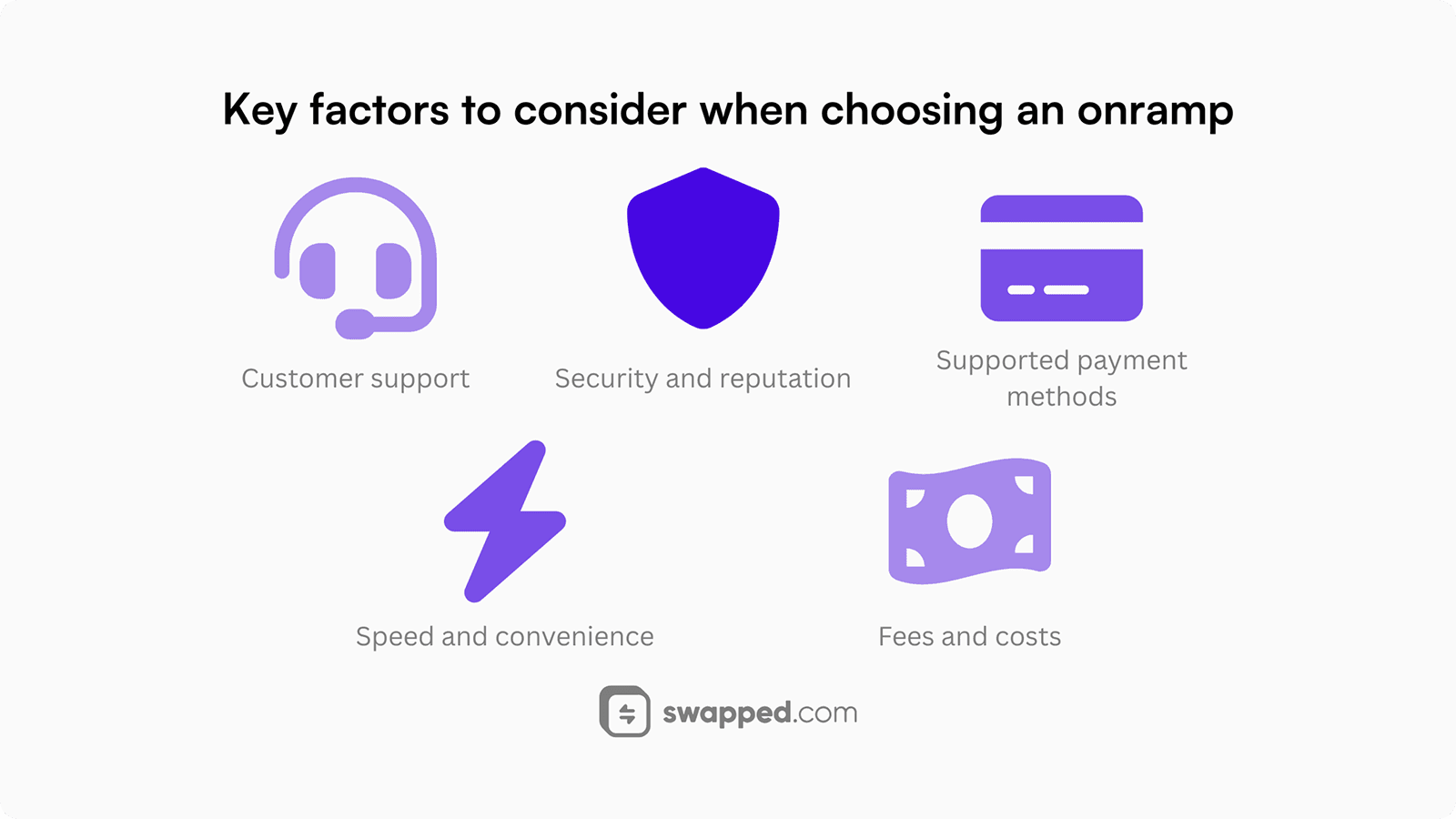
Evaluate the whole route: access, cost, compatibility and accountable support.
Make the Choice Reviewable
Before authorizing a transaction, make sure the current screen matches the route you evaluated. Review the final quote and destination, and resolve any new verification, permission or payment requirement that appears.
DTCC Trading is a Stellar tokenization platform with multichain interoperability. This comparison framework is educational. A provider, asset, payment method or network mentioned in related reading should not be treated as an available DTCC Trading integration without its own product documentation.
A careful comparison cannot guarantee a transaction’s outcome, but it makes the decision easier to explain. You should be able to state what is being paid, what should arrive, where it should arrive and which service is responsible.
Use these eight checks as a repeatable worksheet whenever the route changes. The purpose is to make differences visible and identify unresolved requirements before proceeding, rather than to assign an unsupported winner across many different services and locations.
Related Comparison Topics
These inherited comparison links provide additional reading topics. Assess any provider-specific claim against the provider’s current documentation and your exact route.
DTCC Trading editorial: a comparison framework, with no provider ranking or claimed transaction testing.