Bitcoin: Transactions, Supply and Shared Verification
Learn how Bitcoin uses transaction outputs, signatures, proof of work and network rules, and distinguish its technical properties from price and custody claims.
DTCC Trading Editorial
Bitcoin combines a native digital asset with a network for recording and validating transfers. The asset is commonly written as bitcoin or BTC, while Bitcoin can refer to the protocol and network. Understanding both helps explain what a wallet balance represents.
Begin with the transaction model, then look at how participants agree on history. Price, custody and service availability are separate questions. A working protocol does not guarantee a favorable market outcome or a reliable intermediary.
The Original Proposal
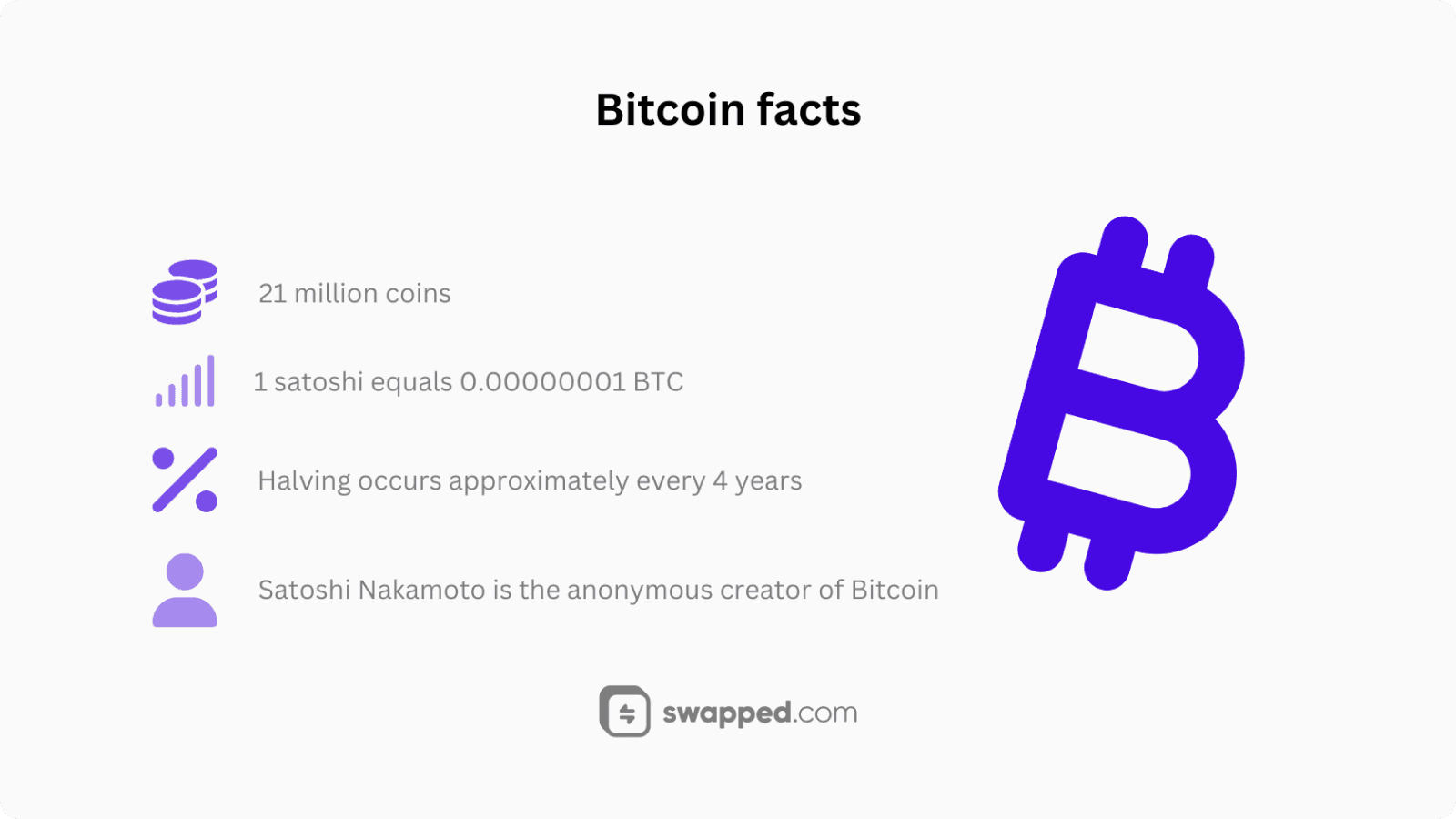
In 2008, a paper published under the name Satoshi Nakamoto described a peer-to-peer electronic cash system. The software and network followed in 2009. The proposal addressed how participants could agree on transfers without relying on one central transaction processor.
Its design combined existing cryptographic and networking ideas with proof of work and incentives. The resulting system has specific validation rules. It does not eliminate every form of trust in the wallets, exchanges or infrastructure people choose to use.
Satoshi Nakamoto
Satoshi Nakamoto is the name associated with Bitcoin’s original publication and early development. A conclusively established public identity is not required to validate current transactions. Nodes check protocol rules rather than relying on the creator’s approval.
Claims about Satoshi’s holdings often depend on interpretations of early mining patterns. Those estimates should not be presented as a verified personal balance. Public addresses do not automatically reveal who controlled every coin.

Satoshi Nakamoto is the name associated with Bitcoin’s original proposal.
What the Asset Represents
Bitcoin is a native asset recorded through transaction outputs on its network. It is divisible into smaller units called satoshis, with one bitcoin equal to one hundred million satoshis. Users can transfer fractions without acquiring a whole bitcoin.
There is no single issuer maintaining customer balances for the entire network. Participants run software enforcing the rules they accept. Exchanges and custodians, however, can still maintain internal customer balances and control withdrawals within their services.
The Shared Transaction History
Bitcoin’s blockchain organizes accepted transactions into linked blocks. Nodes verify that blocks and transactions satisfy the rules. Replication helps participants inspect history, while consensus determines how competing valid histories are resolved.
A transaction first appearing in a pending pool is not yet confirmed. Once included in a block, later blocks add confirmations. Reorganizations remain possible, so confidence in a payment depends on its context and the confirmation policy being used.
Following a Bitcoin Transfer
A transfer starts with spendable outputs and a complete destination. The wallet prepares a transaction, authorized parties sign it and the network checks it. These stages explain why a send button is only the beginning of the process.
The Wallet’s Role
A wallet manages signing material or connects to a signer and helps identify spendable outputs. The coins remain represented by network records. A custodial account is different because the service controls the underlying keys and presents an internal balance.
A receiving address encodes information used to create output spending conditions. Protect the private keys or recovery material needed to satisfy those conditions. A backup can support recovery, but a leaked backup can also give another party control.
Preparing the Payment
The wallet selects inputs and creates payment outputs, often including change. The input value covers the outputs plus the fee. Confirm the recipient’s complete address, amount and fee before authorization, and use current receiving instructions.
After broadcast, nodes can relay a valid transaction and miners can include it in a block. Inclusion timing depends on factors such as the offered fee and competing demand. A pending transaction should be investigated before an uncertain payment is repeated.
Mining and Validation
Miners assemble candidate blocks and repeatedly hash block data to find a result satisfying the proof-of-work target. The block can include a subsidy and transaction fees under the rules. Other nodes independently reject blocks that violate those rules.
Proof of work makes producing competing history costly, while validation limits what miners can include. More machines alone do not describe decentralization; hash-power concentration, software choices and network conditions also matter.
Outputs, authorization, inclusion and confirmations are distinct parts of a payment.
Technical Properties and Market Value
A market price reflects trading demand and available supply under particular conditions. Technical properties can influence why people hold bitcoin, but they do not mathematically determine its price.
Supply Rules
Bitcoin’s accepted issuance schedule limits total creation to approximately 21 million BTC, with block subsidies decreasing at defined intervals. This rule constrains issuance; it does not guarantee demand, stable purchasing power or recovery from a price decline.
Distributed Verification
Independent nodes can verify transactions without asking a central account operator. That does not mean every access route is immune to disruption. Custodians, websites and network connections can fail or restrict service, and users still need secure control of their keys.
Using Bitcoin for Payments
A recipient that accepts bitcoin can specify an amount and receiving route. Base-chain transfers and payment-channel systems have different mechanics. Confirm the agreed asset, timing and payment status instead of assuming every bitcoin-related service settles in the same way.
Risks Beyond the Protocol
A practical assessment includes the market, custody arrangement and intended operation. The strength of one part does not remove weaknesses elsewhere.
Price Volatility
Bitcoin’s market price can change substantially. A transfer can be technically successful while its value in another currency changes before or after settlement. Distinguish the asset amount from the currency value used to budget or measure a position.
Service and Access Conditions
The ability to buy, sell, hold or use a service depends on its terms and applicable local requirements. A global network does not imply universal access to every exchange or payment route. Check the arrangement actually involved.
Fraud and Authorization
Phishing, fake recovery services and misleading investment offers can target bitcoin users. No receiving instruction requires your private key or recovery phrase. Verify software sources, transaction details and account protections before relying on a service.
Obtaining and Holding BTC
A route to obtain bitcoin can involve an exchange or onramp service. Compare the full quote and verify delivery on the intended network or payment system. A completed card payment and confirmed BTC delivery are separate events.
A wallet choice should reflect how signing and recovery will work. Hardware devices can isolate keys from some computer threats, while custodial services offer different recovery arrangements. Neither choice removes the need to understand permissions and access conditions.

Bitcoin introduced a widely used model for public digital-asset verification.
Comparing It With Other Money
Government-issued currencies and Bitcoin have different issuance and institutional arrangements. Fiat systems rely on monetary and legal institutions, while Bitcoin nodes enforce protocol rules. The differences should be described precisely rather than reduced to claims that one system has no risk or trust.
Direct network access can reduce reliance on a particular payment intermediary. Using an exchange or custodian reintroduces service-specific dependencies. The user’s practical experience depends on that complete setup, not solely on the base protocol.
Evaluating Future Claims
Predictions that bitcoin will replace money or become a universal store of value remain forecasts. Adoption, market demand and infrastructure can develop in different ways. Historical price performance cannot establish a guaranteed future role.
Some participants view bitcoin as a scarce asset or potential hedge. Those interpretations do not mean it will track inflation, gold or other markets consistently. Assess the evidence and time horizon behind any comparison.
The most useful foundation is understanding what Bitcoin verifies, how transactions settle and who controls the keys in a chosen setup. Those facts make later discussions about products and market claims easier to evaluate.
Related Reading
The linked introductions offer broader context. Protocol documentation and the original paper explain the transaction and consensus mechanisms in greater detail.