Centralized and Decentralized Crypto Exchanges
Compare exchange models through custody, order execution, liquidity, fees, permissions and withdrawal arrangements instead of relying on a platform label.
DTCC Trading Editorial

Two services can both offer a buy or sell button while handling assets very differently. An exchange comparison should begin with where the assets sit, how a trade is matched and which party or program settles the result.
What an Exchange Does
A cryptocurrency exchange provides a mechanism for exchanging one asset for another. The transaction can involve local currency, digital assets or both. Different venues combine matching, custody, settlement and user access in different ways.
Matching and Settlement
An order book matches compatible buy and sell orders. Other systems quote prices through liquidity pools or request-for-quote mechanisms. Matching a trade determines its terms; settlement changes the relevant balances. Those events need not happen on the same infrastructure.
The Safety Question
A platform’s category does not establish its safety. Review custody arrangements, permissions, operational history and relevant technical evidence. An audit covers a stated scope and date; it is not a guarantee that a service cannot fail.
The failure of Mt. Gox, an early Bitcoin exchange, illustrates the importance of custody and recovery arrangements. A customer-facing balance and active trading interface can exist without proving that the operator can meet every withdrawal obligation.
Exchange applications within DeFi expose a different set of dependencies, including contracts, token permissions and external infrastructure. Keeping control of a wallet key does not prevent an authorized contract from exercising a permission the user has granted.
Centralized Exchanges
A centralized exchange is operated by an organization that defines account access, trading and withdrawal rules. Depositing to its wallet usually gives the operator control of the deposited assets while the customer receives an account balance governed by the service’s terms. Popularity alone does not establish solvency or appropriate custody.
How Orders Are Handled
Many centralized venues maintain an order book and update customer balances in an internal ledger. A market order takes available prices, potentially across several levels. A limit order restricts price but may remain unfilled. Neither order type guarantees a particular trading outcome.
Different Products
Access and identity requirements depend on the service, location and product. Read the requirements for the exact account being used. A completed verification process establishes eligibility under that service’s rules, not an endorsement of every product it offers.
A venue can offer spot trading, derivatives, borrowing or custodial staking. Each product has separate terms and risks. A spot balance is not equivalent to collateral in a leveraged position, and a staking product can introduce additional operator and withdrawal conditions.
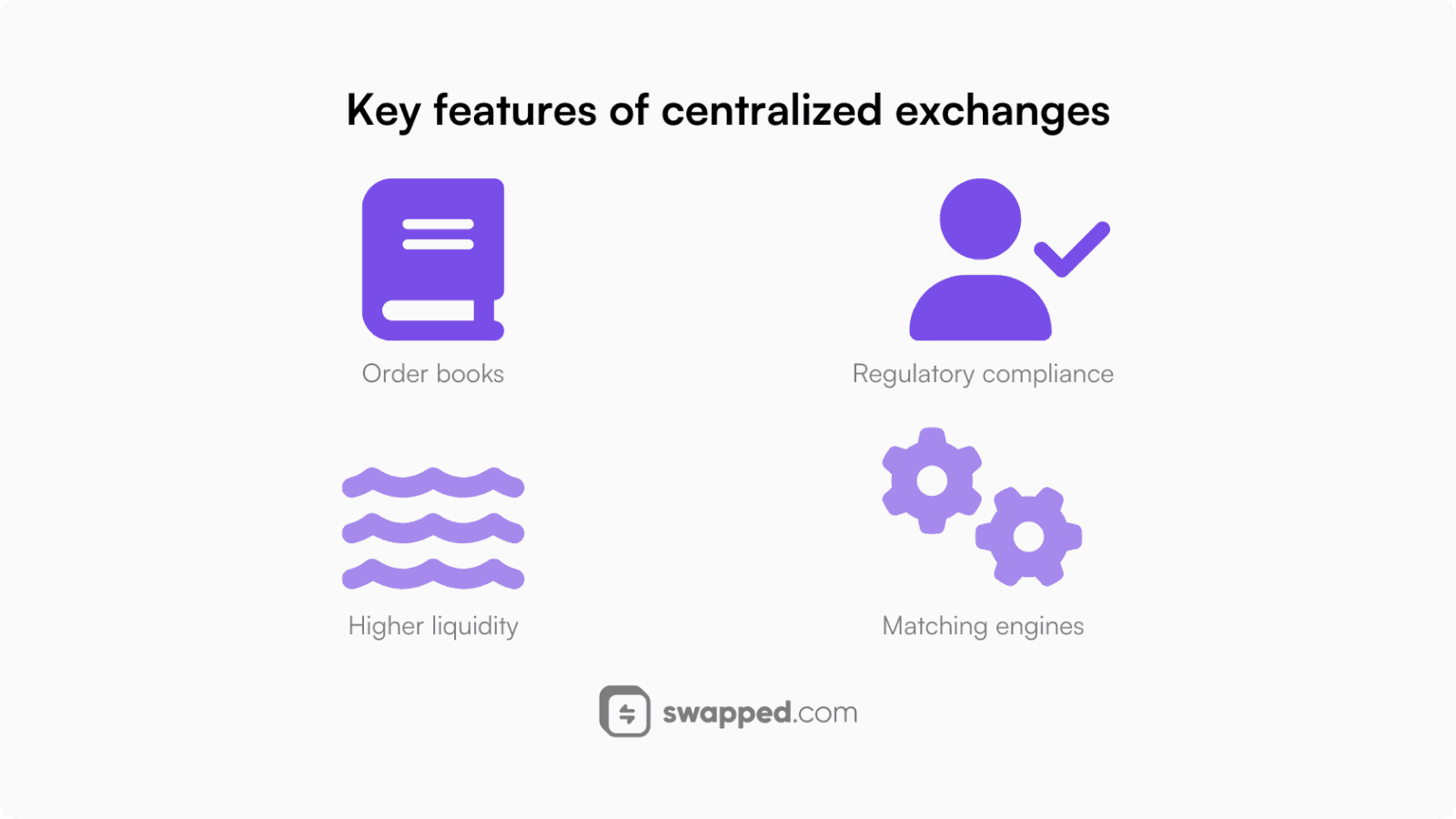
A centralized venue controls its account, trading and withdrawal systems.
Decentralized Exchanges
A decentralized exchange uses on-chain mechanisms for some or all of its trading and settlement. Designs vary: a frontend can be company-operated, contracts can have administrators and some systems require deposits. Review the actual implementation instead of assuming complete decentralization.
How On-Chain Trades Execute
A trade can be settled through rules on a blockchain. Some decentralized exchanges use automated market makers and liquidity pools; others use order books or combined designs. The settlement mechanism, ordering process and permissions determine what happens when a trade is submitted.
An automated market maker calculates execution according to its pool rules and available liquidity. A large trade relative to usable liquidity can move the execution price substantially. The pool’s total displayed value is not always a good measure of depth for the intended trade.
Governance can involve token voting, delegated roles or a controlling organization. The powers being governed matter more than the existence of a vote. Check who can upgrade contracts, change fees, pause activity or move assets.
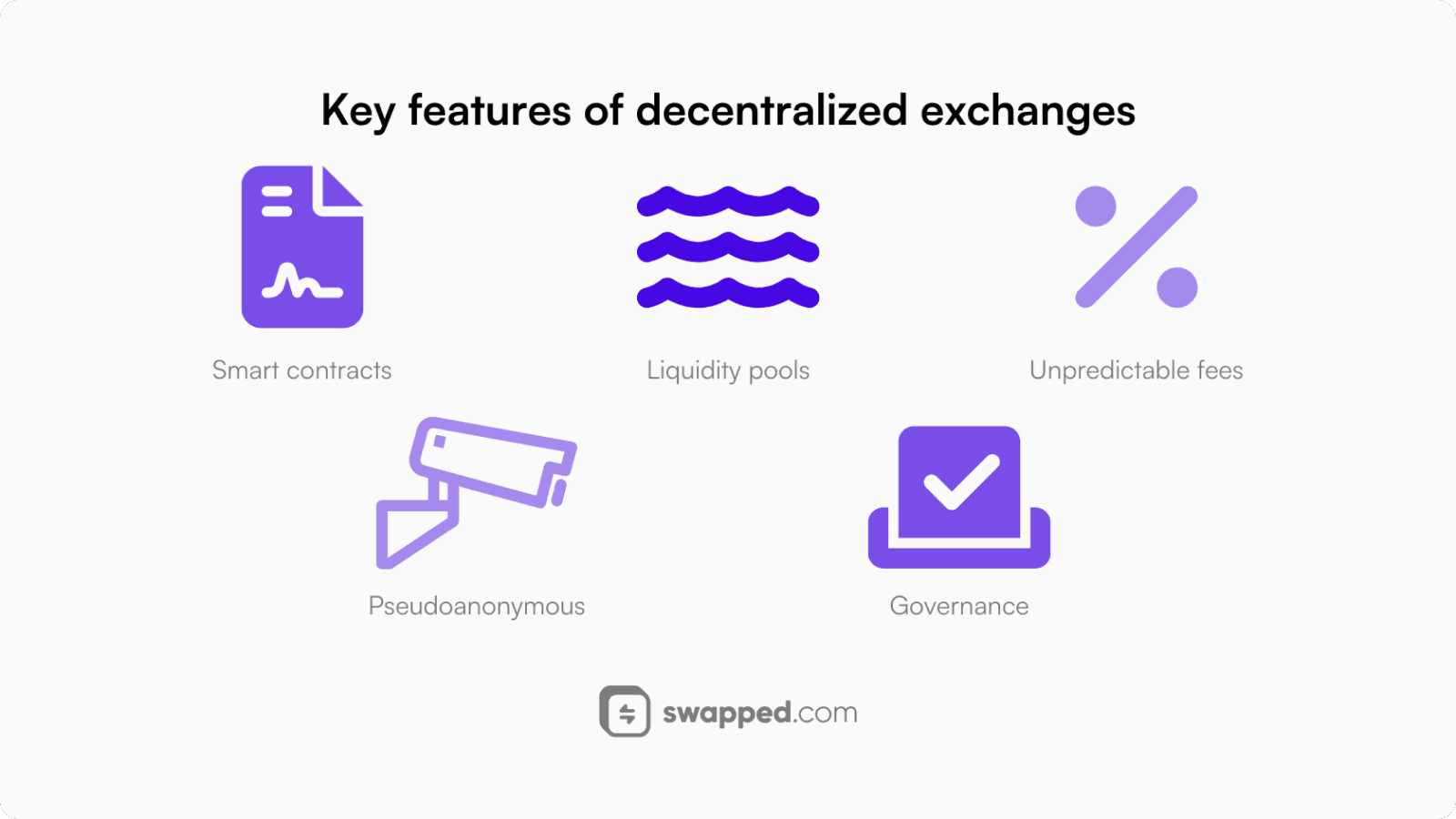
On-chain settlement still depends on contracts, permissions and supporting infrastructure.
Comparing the Two Models
The most useful comparison follows a single transaction from funding to withdrawal. It shows which responsibilities belong to the user, the operator, the network and any intermediary service.
Custody and Authority
With a custodial exchange balance, the operator normally controls the underlying keys. The user relies on account access and withdrawal processing. Understand how customer assets are held and what the terms say about restrictions or insolvency.
With direct on-chain trading, the user authorizes transactions from a wallet, but assets may enter contracts and tokens may require spending approvals. Review those approvals and the contract’s powers. Self-custody does not make every interaction safe.
Security Evidence
Assess security through the actual system: account protections and custody controls for an operator, and contract logic, upgrade powers and transaction permissions for an on-chain application. Independent reviews help only when their scope and unresolved findings are understood.
Privacy and Eligibility
A centralized service commonly collects identity and account information. Check the entity receiving that information, the reason it is required and the applicable privacy terms. An apparent lack of verification is not enough to establish either legitimacy or fraud.
A decentralized protocol can expose transaction activity publicly even when a website does not request identity documents. Frontends and related providers may also impose access requirements. Pseudonymous addresses should not be treated as a guarantee of anonymity.
Liquidity for the Actual Trade
Depth varies by asset, pair, venue and time. Thin markets, including some memecoins, can produce substantial price impact. Compare the expected result for the proposed amount instead of assuming one exchange category always has deeper liquidity.
The Complete Cost
Costs can include a price spread, trading fees, network charges and withdrawal or bridge fees. A venue can also offer different pricing in a simple-buy interface and its order book. Compare the final asset amount after the complete route.

Choose comparison criteria before choosing a platform name.
Matching a Service to a Task
Identify the asset, network, amount, input method and intended destination first. A service can be suitable for one route and unavailable or costly for another. The comparison should use the current terms for that exact route.
When Custodial Features Matter
An account-based venue can offer familiar recovery, statements and local payment methods. Those features come with reliance on the operator’s account and withdrawal systems. Confirm that the required asset and network are supported at both entry and exit.
When Direct Settlement Matters
An on-chain venue can provide direct interaction with a protocol and a public transaction record. That requires understanding network fees, token identity, contract permissions and the available liquidity. A wallet connection alone does not validate the application.
Assessing New Features
New custody models, execution tools and interoperability mechanisms can change the division of responsibility. Ask which problem a feature solves and what new dependency it introduces. A technical novelty should be evaluated through its implemented behavior.
Automated monitoring can help detect unusual activity, but it depends on data quality and operational response. Claims about artificial intelligence or advanced analytics do not replace transparent withdrawal rules, controlled permissions and tested recovery procedures.

Monitoring tools support controls; their names do not prove effectiveness.
Using Named Platforms as Examples
Recognizable services illustrate different architectures, but a list of names is not a ranking. Product availability, terms and infrastructure can change. Verify the specific service and network through its current official documentation.
Centralized Venue Examples
Coinbase, Kraken and Binance operate centralized exchange services under their respective arrangements. Their products and availability differ by jurisdiction and account. These examples identify a category; they do not establish suitability, solvency or equal access.
On-Chain Protocol Examples
Uniswap illustrates automated-market-maker designs associated with Ethereum and other supported networks. Other protocols use different execution models and market types. Verify the deployment and token contracts actually involved rather than rely on a familiar protocol name.
Buy Interfaces and Onramps
A simplified purchase interface can combine payment, conversion and delivery through multiple providers. Read the complete quote and identify which entity performs each stage. Simplicity in the interface does not remove the need to verify the destination asset and network.
Follow the Asset and the Obligation
A clear exchange review explains who holds assets, how prices are formed, what permissions are granted and how the user exits. Those details make different platforms comparable without treating centralized or decentralized as a complete answer.
Related Reading
Use the linked comparisons as introductions, then consult the venue’s terms and protocol documentation for the specific transaction you are evaluating.