Why Some Workers Consider Crypto Payments
Crypto payments can offer another way to receive cross-border earnings. Compare the complete route, settlement asset, costs, custody and records before evaluating the benefits.
DTCC Trading Editorial

Receiving cryptocurrency for work changes the payment route and the asset received. A freelancer might value access to a particular network, while a client might already hold digital assets. Understanding the attraction begins with the actual payment problem each party is trying to solve.
Being paid in Bitcoin or Ethereum is different from being paid a currency-denominated amount through a stablecoin route. The choice affects valuation, recordkeeping and exposure after receipt. This article examines common reasons people consider crypto payments alongside the conditions that determine the result.
Comparing the Complete Cost
A digital asset transfer can provide a different set of costs from a bank or payment-service route. The useful comparison is the amount the payer spends against the amount the recipient can actually use.
For cross-border work, list conversion charges, payment fees and receiving deductions on each available route. If the recipient ultimately needs local currency, include the conversion and payout stage as well. Comparing only the initial transfer charge can omit much of the cost.
Network choice affects costs, but there is no universal fee advantage for every transaction. Ecosystems associated with Ripple or Solana use different mechanisms from other networks. Check the current route, amount and destination rather than applying a headline network fee to the entire payment.
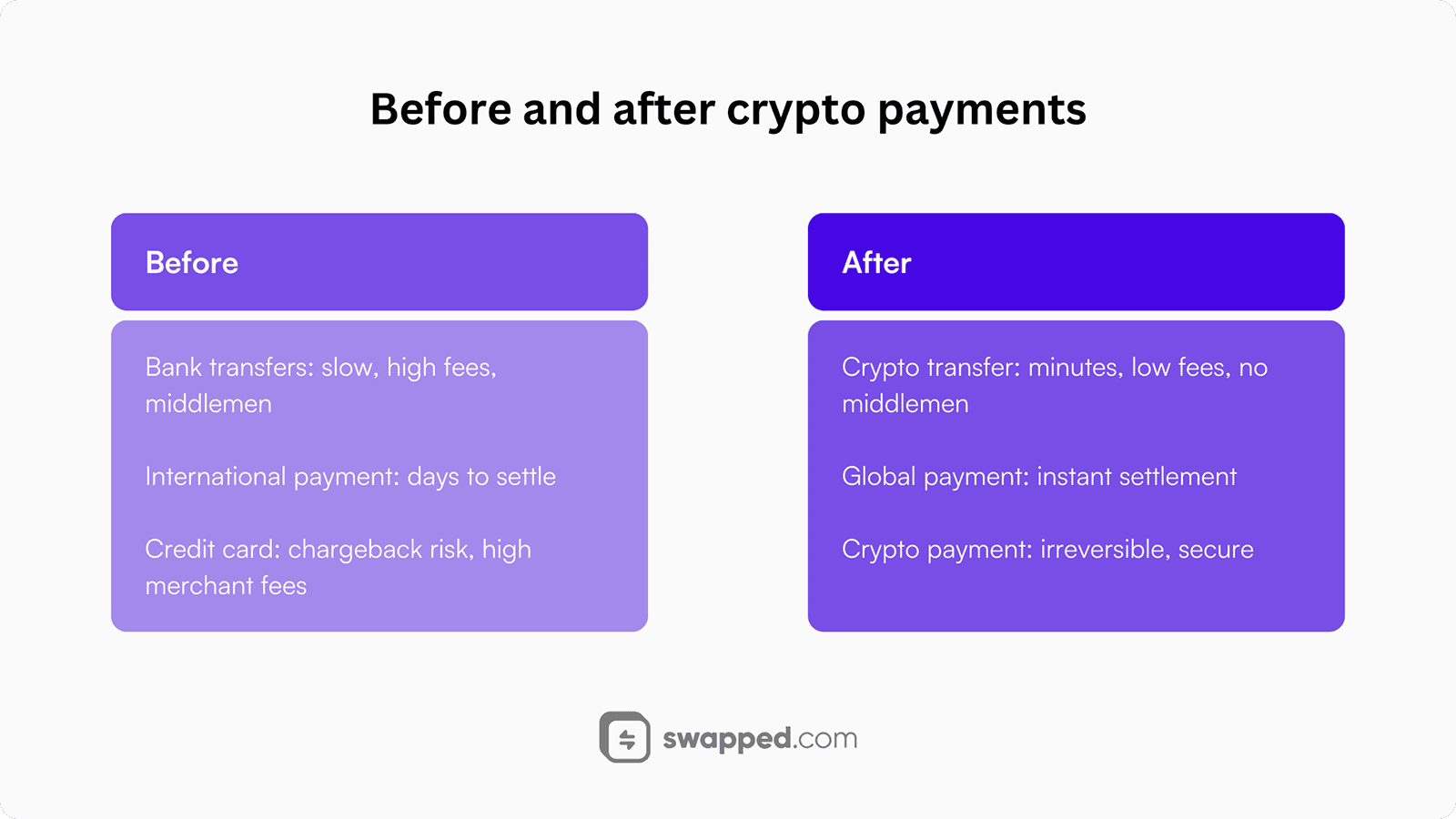
Payment costs need to include the route from payer to usable proceeds.
Make the Comparison Reproducible
Use the same invoice amount, currencies and timing when comparing quotes. Record the expected output and every separate deduction. A hypothetical saving becomes a demonstrated saving only when the completed payment and any conversion are reconciled against that record.
Understanding Cross-Border Timing
A public network can operate outside ordinary banking hours, which is one reason a recipient may consider it. However, network availability describes only one part of a payment that also involves applications, providers or currency conversion.
Distinguish initiation, network confirmation and access to spendable proceeds. A token reaching an address may be useful immediately within its network, while reaching a local bank account can require additional processing. The relevant completion point depends on what the recipient needs.
For an international invoice, agree which event counts as payment completion and how each side will verify it. A transaction identifier can document the network stage, while a payment provider or bank supplies evidence for its own stage.
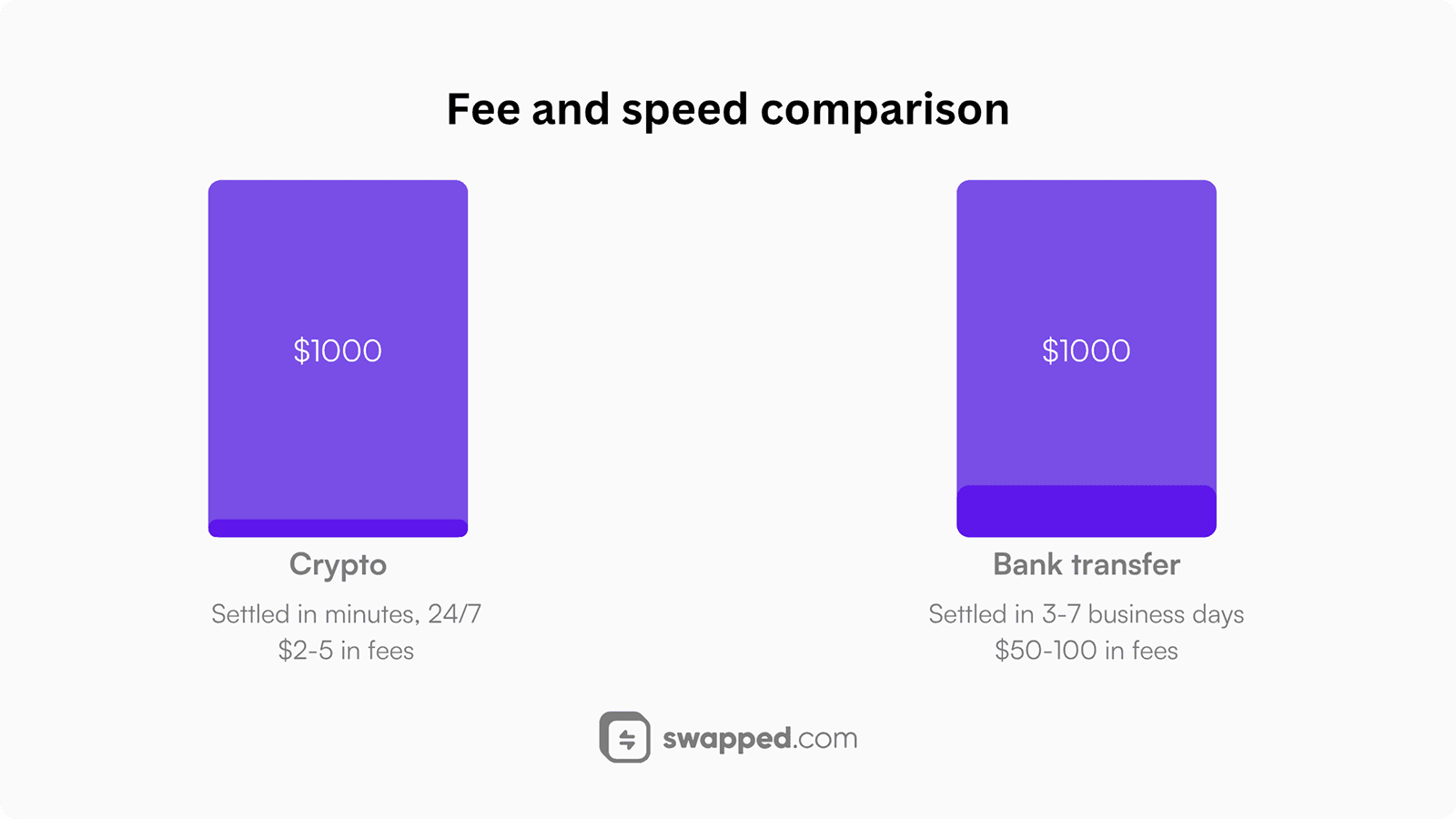
Network confirmation and access to local-currency proceeds are separate milestones.
Choosing a Custody Arrangement
A self-custody wallet lets the recipient control signing keys rather than relying on a service to authorize every transfer. That changes the responsibility for recovery, destination review and key protection. It does not remove every dependency behind the asset.
The token itself can have issuer controls, and an application or exchange can apply access restrictions. Separate control of the wallet from the rules governing the asset. A payment route should explain both before describing the recipient as having unrestricted control.
A hosted account offers a different arrangement, with recovery and transaction handling managed by a provider. Evaluate that provider’s terms and withdrawal process. The same asset received into a hosted balance and a self-custody address creates different practical responsibilities.
Currency Exposure After Receipt
Currency-linked stablecoins can provide exposure to a reference currency through a digital token. They still depend on their stabilization and redemption arrangements. A reference-currency balance can also change in value relative to the recipient’s local expenses; it is not universal protection from inflation.
Agreeing on Payment With Clients
A shared payment route can make collaboration possible where a preferred traditional method is unavailable to one party. Confirm that both sides can access and use the chosen route legally and practically. A wallet address alone does not establish those conditions.
Web3 jobs and other remote roles may include digital-asset payment arrangements, but the job category does not guarantee a particular compensation method or benefit. Read the actual contract, employer identity and payment obligations rather than relying on a recruitment label.
Specify the invoicing currency, settlement asset, network, valuation time and who pays each fee. A written agreement reduces ambiguity if the token price changes between the work, invoice and payment dates. Employment and contractor obligations require their own local review.
Receiving Income and Holding an Asset
A payment completes an obligation under agreed terms; holding the received asset afterward is a separate exposure. Keeping those decisions distinct helps explain whether the recipient is choosing a payment mechanism, an ongoing asset position or both.
A volatile asset can rise or fall after receipt. Even when the invoice is denominated in a familiar currency, delayed conversion can change the amount available for expenses. The quoted value at payment time is not a guarantee of purchasing power later.
Record the quantity and relevant valuation evidence at each stage. That makes the payment understandable independently of any later decision to retain, transfer or convert the asset.
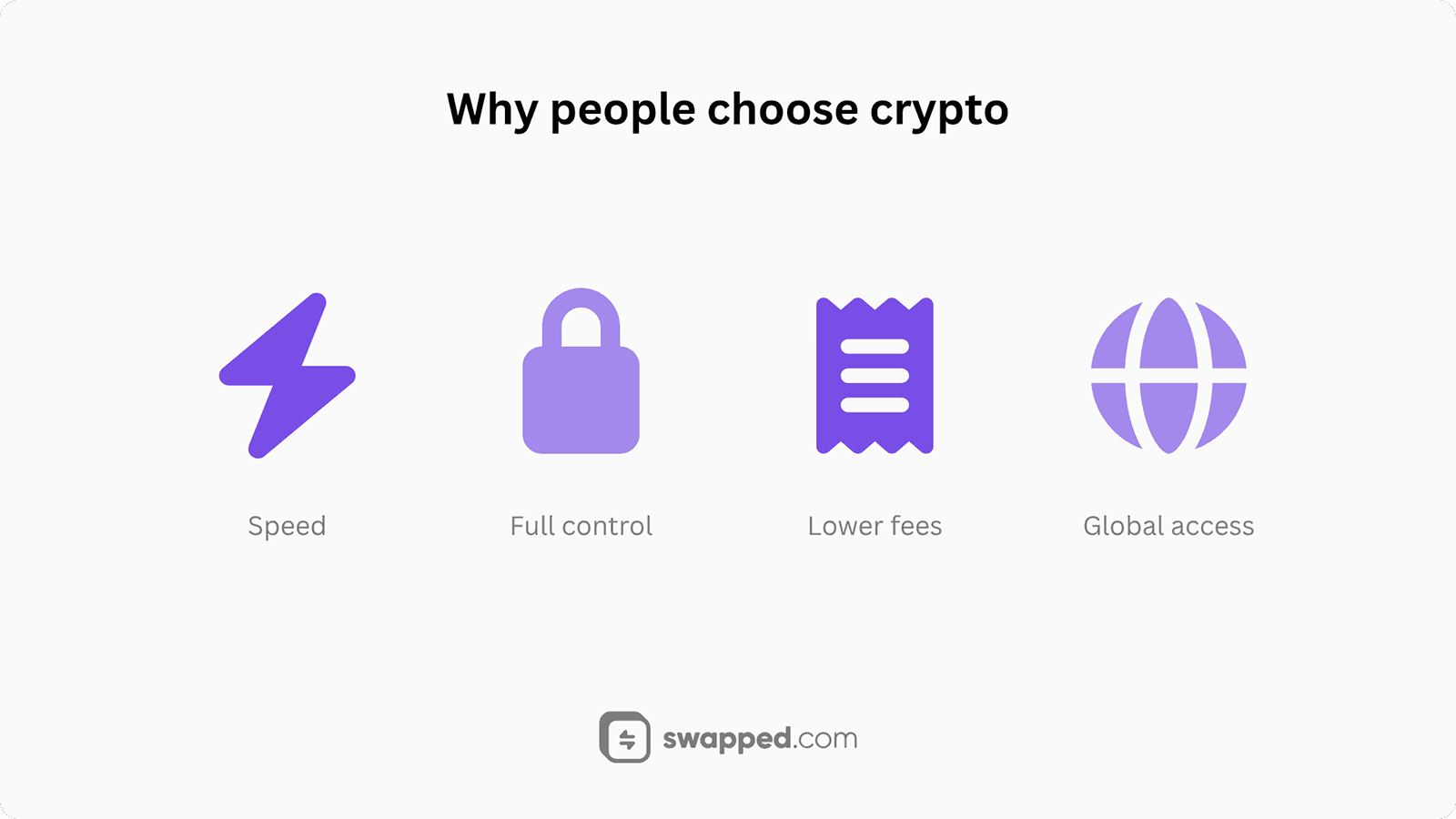
The payment method and the decision to keep the received asset are separate choices.
Privacy and Payment Evidence
Public blockchains can expose transaction amounts and address activity. Using an address instead of bank details changes what information is shared, but does not make the payment anonymous. Repeated use and offchain records can connect activity to a person or business.
A payment address should be obtained through the agreed trusted channel and checked before use. Reusing a destination can simplify administration while increasing the visibility of related activity. The right process depends on the wallet and the accounting arrangement.
Network settlement and a commercial dispute are separate matters. A processed transfer does not eliminate contractual obligations or every route to legal recourse. Avoid treating technical finality as a complete answer to payment disputes.
Preparing an Understandable Payment Flow
Before accepting a new route, identify the asset, network, custody arrangement and intended use of the proceeds. Review the sender’s and recipient’s requirements together. Preparation should resolve compatibility and recordkeeping before a real invoice is settled.
Businesses may use payment infrastructure to prepare requests, match transactions to invoices and reconcile results. Those capabilities need verification for the actual provider. An embedded widget or payment link is an interface, not proof that every accounting, settlement or refund requirement has been met.
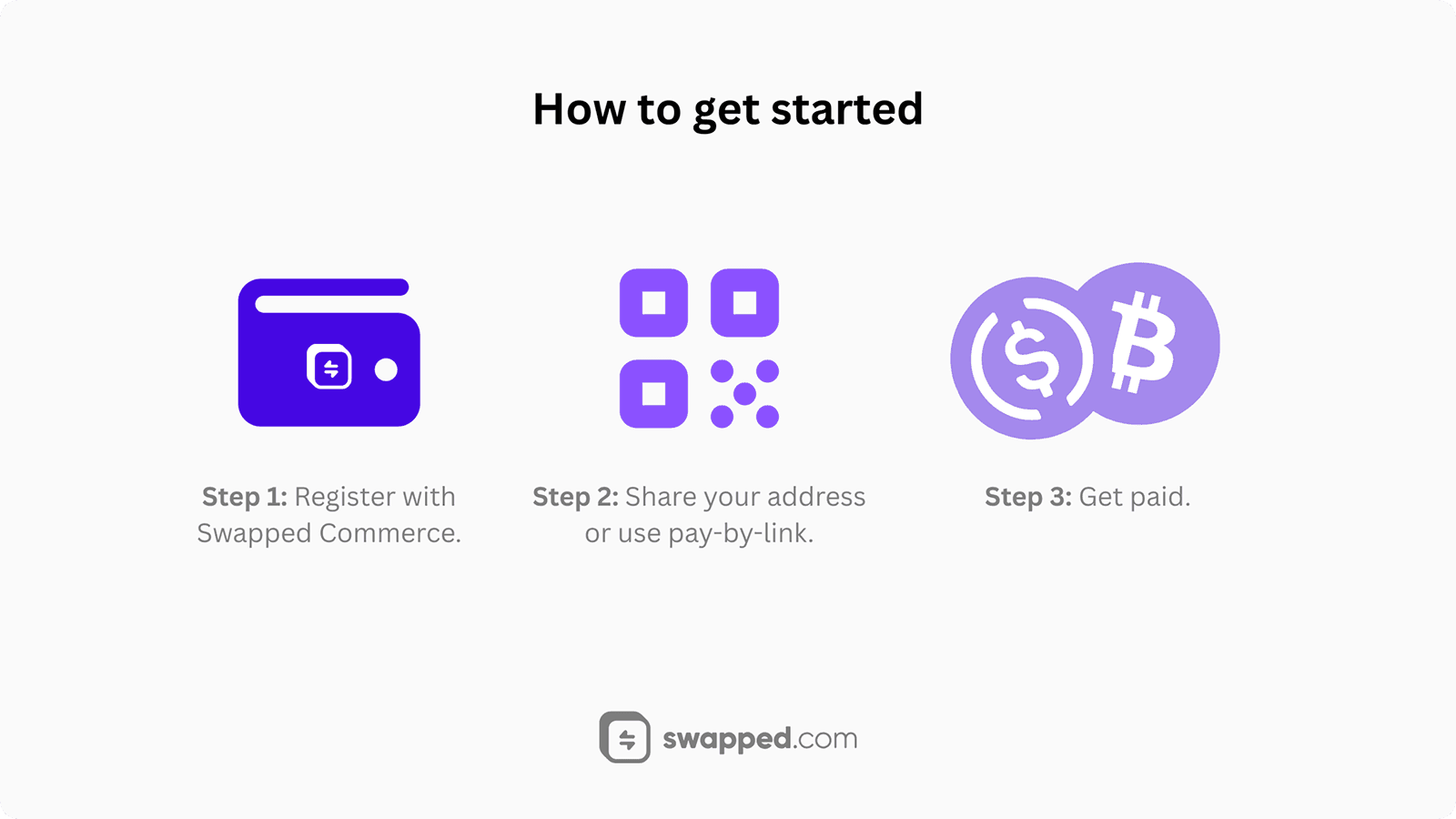
A working payment process connects the invoice, transfer and reconciled result.
Understand Settlement Choices
A provider may offer settlement in a token, a currency or another asset under specific terms. Compare the quote, conversion timing and destination requirements. The existence of a crypto payment option does not establish that every recipient can choose every payout method.
Reconciliation should preserve the invoice reference, asset quantity, fees and transaction evidence. If a payment is delayed, identify which stage remains incomplete before requesting another transfer. Repeating an uncertain payment can create a duplicate rather than resolve the first one.
DTCC Trading focuses on Stellar tokenization and multichain interoperability. These payment concepts explain why a worker or business might consider a digital-asset route; they do not announce a DTCC payroll, merchant-processing or local-currency payout service. A specific arrangement needs its own verified terms and operating evidence.