Crypto Whales and the Limits of On-Chain Tracking
Understand large crypto holdings, transaction alerts and address labels without mistaking a transfer for a sale or a market forecast.
DTCC Trading Editorial

A large cryptocurrency transfer can attract attention, especially in markets such as Bitcoin and Ethereum. But the transfer alone does not explain a price move. It may represent a trade-related deposit, internal custody activity or another operation whose purpose is not visible in the transaction.
Whale tracking is best understood as a form of transaction research. For anyone studying investing, its value depends on distinguishing public evidence from interpretation. A large holder is not automatically better informed, and copying an address does not reproduce its complete financial position.
What People Mean by a Whale
A crypto whale is an informal label for a holder considered large relative to a particular asset or market. There is no universal threshold. A balance that is significant in a small token market may be ordinary in a much larger one.
The relevant scale can include circulating supply, available liquidity and trading volume. Even then, an address balance does not necessarily identify one person. Several customers can share a custodian, while one owner can control many addresses.
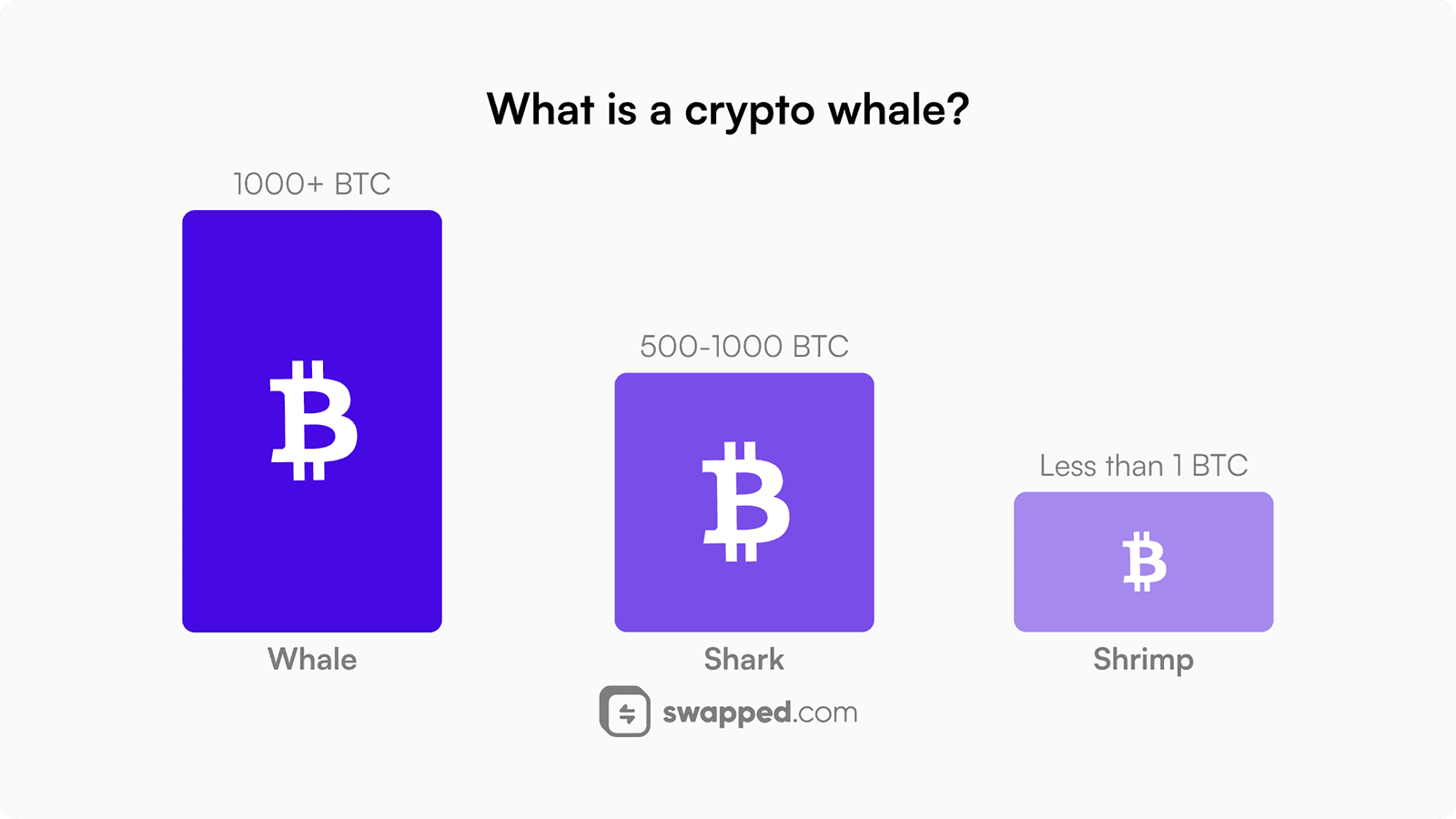
A large address balance does not establish who owns the funds or why they moved.
Different Sources of Large Balances
Large balances can belong to early participants, funds, company treasuries, protocol contracts or custodians. These categories have different operating needs. A treasury transfer and an investment purchase should not be interpreted as the same event.
An exchange address can aggregate assets held for many customers. Movement between its hot and cold storage can produce a large transaction without any customer deciding to sell. Address labels are therefore context, not a complete description of beneficial ownership.
Why Large Holdings Draw Attention
Large orders can affect market prices when they consume available liquidity. The effect depends on the venue, execution method and order size relative to the market. A large on-chain transfer is a different observation from a large executed order.
Wealth does not establish forecasting skill or access to reliable information. A visible holder may be hedged elsewhere, operating under a mandate or making an operational transfer. Those missing details limit conclusions drawn from one public address.
Transfers and Price Effects
An aggressive order can trade through multiple price levels and move the execution price. Splitting orders, using different venues or arranging an over-the-counter trade can change the visible pattern. The blockchain may show only a settlement step.
Public alerts can also influence attention and sentiment. That does not prove that an alert caused a subsequent market move. News, leverage, broader market conditions and unrelated trades can occur at the same time.
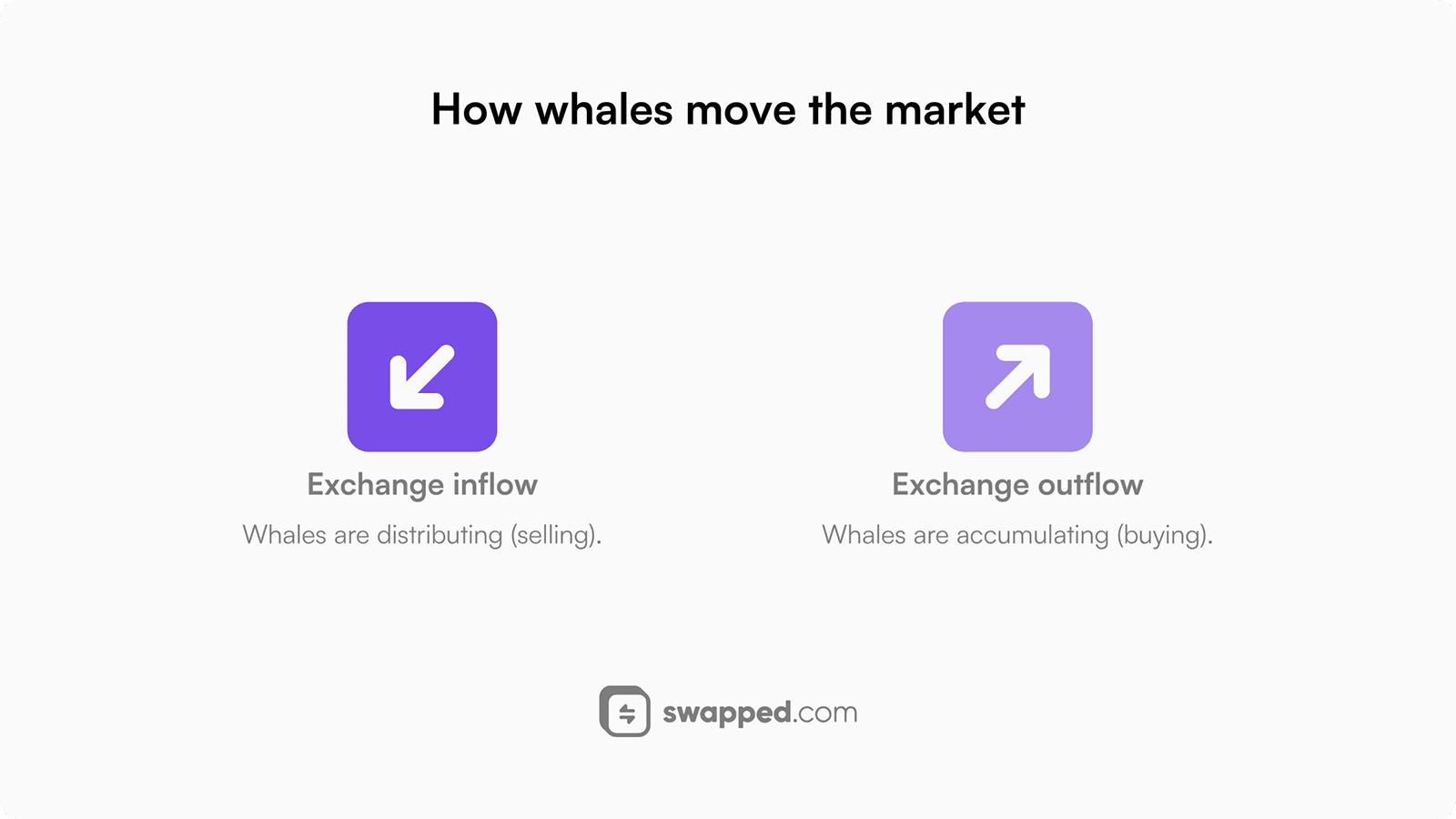
Exchange inflows and outflows need context; neither direction proves a buy or sell decision.
Tools for Investigating Large Transfers
A public blockchain exposes transaction records, but the available information depends on the network and operation. Public visibility should not be confused with complete identity, intent or financial history. Some activity also occurs within private service ledgers.
Use blockchain explorers to inspect the underlying record and analytics tools to organize it. Check the network, transaction status, asset identifier and measurement unit before comparing an alert with a chart.
Transaction Alerts
Services such as Whale Alert publish or deliver information about large transfers. The alert’s value lies in the transaction reference, asset, amount and stated address labels. It is a starting point for inspection rather than a trading recommendation.
Read the alert timestamp and verify the underlying transaction. A repeated post may concern an old event, and a quoted currency value depends on the price used at the time. Label changes can also alter how an earlier movement is described.
Explorers and Address History
An explorer lets you inspect a wallet address, its visible balances and related transactions. Multiple addresses can belong to one operator, while contract and custodial addresses can represent many users. That makes address-level and owner-level analysis different tasks.
Labels for exchanges and other entities can be helpful, but their source and confidence matter. Transaction frequency alone does not reliably identify an owner. Avoid presenting an inferred address classification as a confirmed identity.
Separating Observation From Interpretation
Write down what the transaction directly shows before proposing an explanation. The evidence may establish that an asset moved from one address to another, while leaving the ownership relationship and commercial purpose unresolved.
Balance Changes Over Time
A rising address balance can result from purchases, transfers between related accounts, customer deposits or contract operations. A falling balance has similarly varied explanations. The balance series itself does not choose among them.
When describing accumulation or distribution, state the asset, address set and period. Explain how related-address transfers were handled and what remains uncertain. Otherwise, a change in storage arrangement can be mistaken for a change in economic exposure.
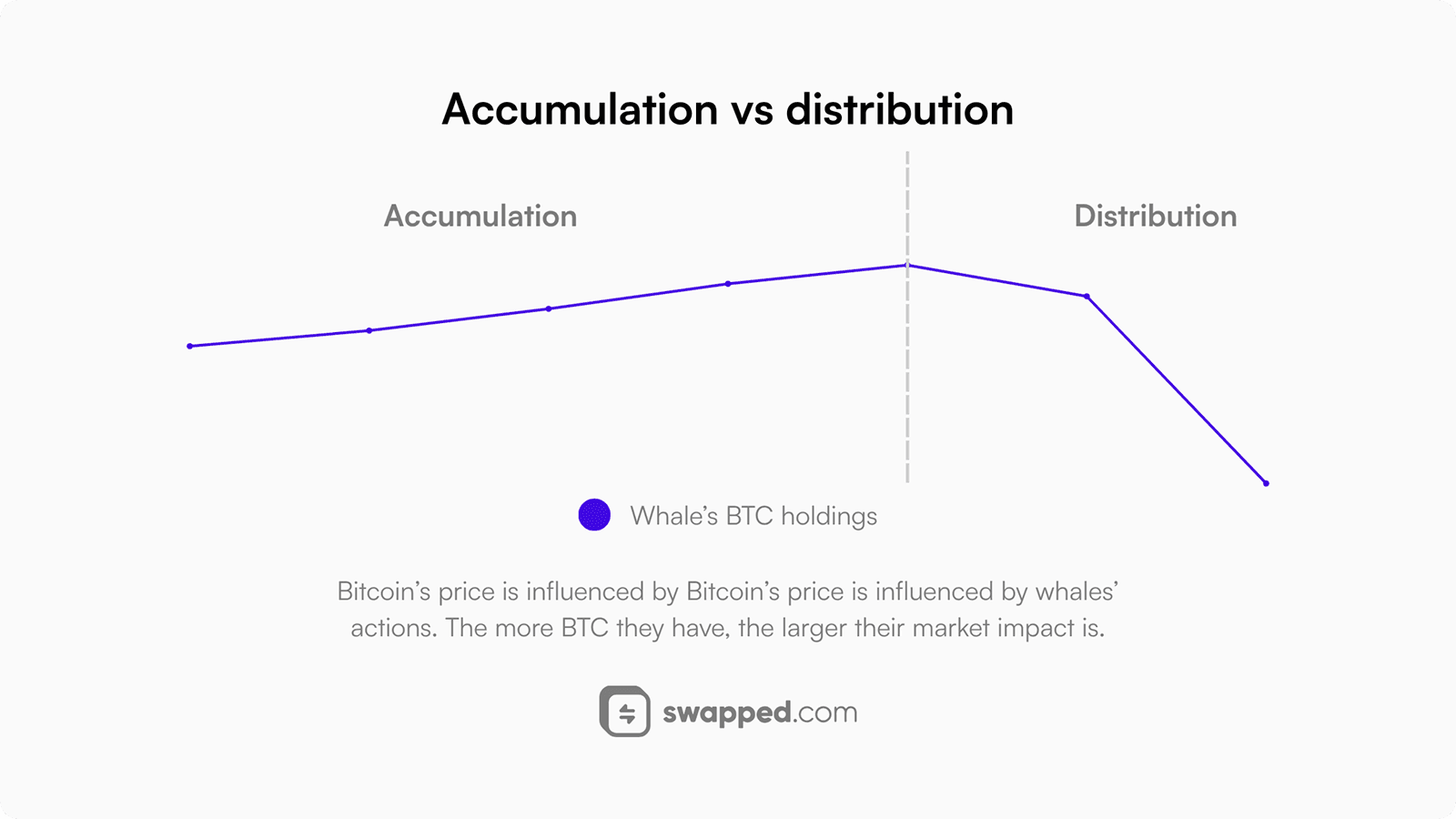
A balance trend describes the observed address set; motive remains a separate question.
Exchange-Related Flows
A deposit to an exchange can make assets available for several activities, including trading, collateral or custody. It does not prove that a sale occurred. An exchange withdrawal can likewise reflect storage preferences or settlement after earlier activity.
Consider internal wallet maintenance and batching before treating a large flow as a market signal. If the service’s own explanation is available, distinguish that statement from the inference an observer makes from the transaction alone.
Working With Aggregated Data
Broader analysis combines many records, but aggregation introduces choices about labels, thresholds and entity grouping. Those choices need to be understood before a chart can support a meaningful conclusion.
Analytics Methodology
On-chain analytics providers can group addresses and construct metrics such as exchange balances or entity-adjusted flows. Their methodologies may use heuristics. Read how the provider defines its entities and handles changes to the dataset.
A paid subscription does not eliminate those limitations. Compare definitions across providers and note whether historical values can be revised. Different charts may disagree because they measure different address sets rather than because one network recorded different transactions.
Testing a Claimed Relationship
If studying a relationship between flows and prices, specify the hypothesis, period and measurement before reviewing results. Include cases where the expected move did not occur. Selecting only memorable successes creates a misleading pattern.
A historical correlation does not establish causation or a reliable forecast. Publication delays, execution costs and market changes can make a visually convincing relationship unusable in practice. Treat the result as research with defined limitations.
Common Interpretation Errors
The easiest mistakes arise when an alert supplies a simple story for an uncertain event. Keeping a clear boundary between observation, labeling and inference helps prevent that story from becoming an unsupported fact.
Avoid Reacting to Size Alone
A large number can be operationally routine for the sender. Read the asset denomination and destination carefully: a million low-priced tokens is not the same exposure as a million units of the quote currency.
A single transfer should also be compared with its surrounding history. Repeated internal movements can inflate apparent activity without increasing external demand. Investigate the pattern before interpreting its economic meaning.
Keep the Time and Market Context
The time of an on-chain settlement may differ from the time a trade was agreed or executed. An alert can therefore arrive after the economic decision it appears to reveal. That limits claims about being early to a market move.
Record competing explanations and the information needed to distinguish them. Broader price moves, liquidity changes and service maintenance can all affect interpretation. Uncertainty belongs in the conclusion when the public record cannot resolve it.
Using Whale Research Responsibly
Whale tracking can teach you how assets move and how public data is organized. It becomes misleading when address labels are treated as identities or transfer direction is treated as a complete investment strategy.
Deciding to sell crypto or make any other trade requires a separate assessment of the instrument, costs, access and personal circumstances. This educational overview does not validate a trading signal or establish a purchase or sale service through DTCC Trading.
A Repeatable Research Routine
Keep a short record containing the transaction reference, network, asset, amount, time, labels and source. Add an explicit observation and a separate interpretation. Revisit the interpretation if a label or operational explanation changes.
Use other relevant evidence to test a claim, and preserve cases that contradict it. A useful routine improves the quality of the question being asked; it does not need to produce a trade from every large transaction.
The practical lesson is to follow evidence without assuming that public visibility makes the whole financial picture public. Large holders matter in some contexts, but their visible transfers rarely tell a complete story on their own.
Related Reading
The linked material offers further discussion of address activity and analytics. Check each provider’s methodology before relying on its labels or metrics.