A Beginner’s Framework for Evaluating Crypto
Learn how to distinguish assets, custody, trading instruments and market claims before making a crypto decision, including the limits of common strategies.
DTCC Trading Editorial

A useful first step in crypto is learning how to evaluate an asset and the service through which it is held. Price charts come later. Start with what the asset represents, who can change its rules and what would happen if its market or provider failed.
Different Assets, Different Claims
Cryptocurrencies are not a single uniform product. A blockchain network’s native coin, an issuer-backed token and a leveraged contract have different purposes and risks. A shared trading symbol format does not make them economically equivalent.
Comparing Market Structures
Experience with other markets can help with concepts such as orders and diversification, but custody, trading hours and investor protections can differ. Identify the actual product and service arrangement instead of assuming familiar labels carry identical terms.
Sources of Risk
Prices can move sharply, market depth can disappear and service providers can restrict withdrawals or fail. Tokens can also have concentrated ownership or powerful administrators. These risks can interact rather than occur independently.
What Open Networks Enable
Some digital assets can be transferred directly between compatible accounts and inspected through public records. Many markets operate around the clock. Continuous access can be useful, but it also means prices and collateral requirements can change while a user is unavailable.
Understanding Dollar-Cost Averaging
Dollar-cost averaging means investing a fixed amount at regular intervals. For example, equal weekly purchases of Bitcoin would buy different quantities as its price changes. This describes a purchase schedule; it does not establish that bitcoin or any other asset is suitable for a particular person.
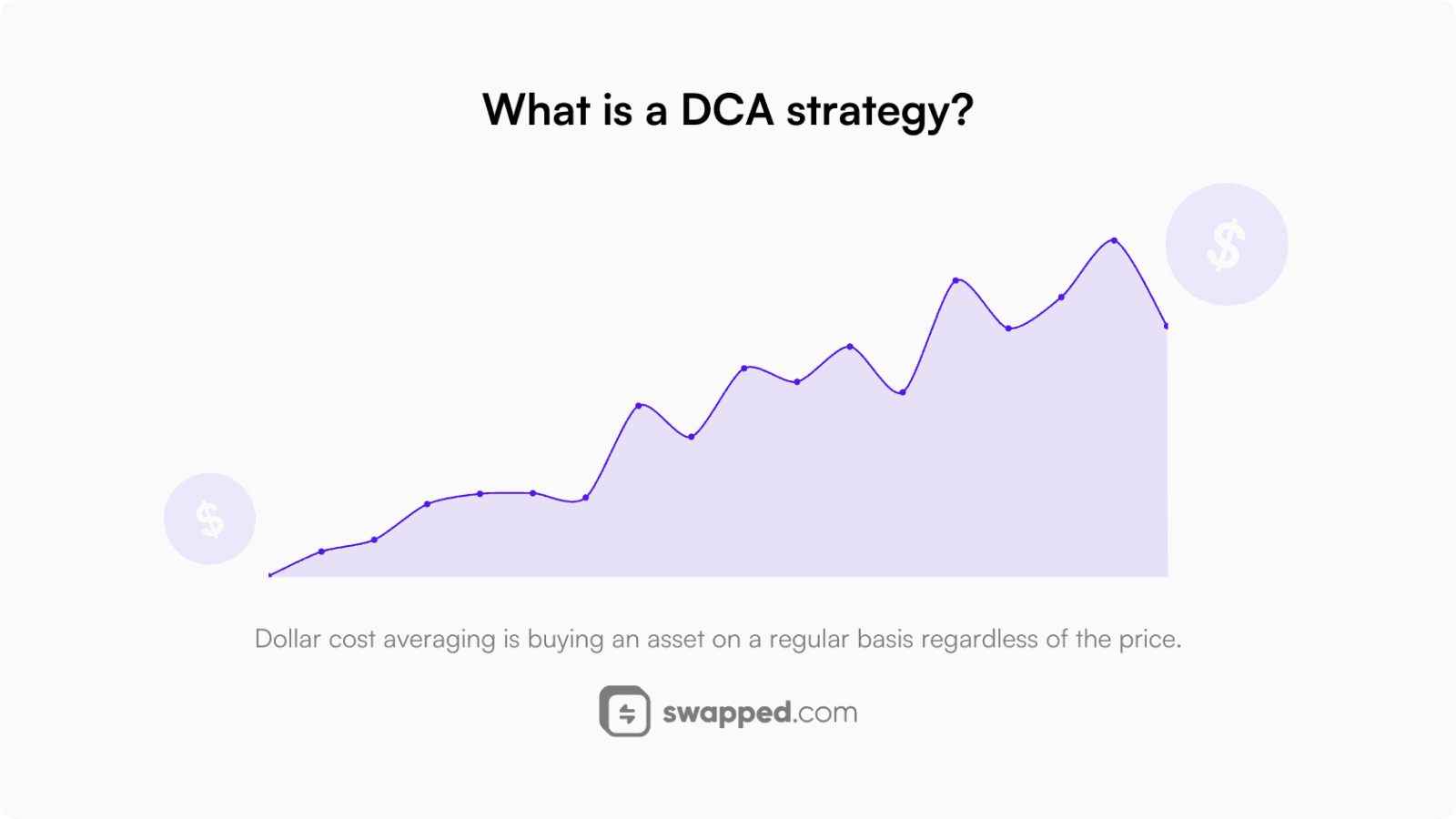
A regular purchase schedule changes timing exposure, not the asset’s underlying risk.
Separating a Plan From an Impulse
A written decision process can specify the purpose, amount, time horizon and conditions for review. That makes it easier to identify when a decision is being driven by a price spike or social pressure. The process should allow new evidence to change the conclusion.
Limits of a Regular Schedule
Regular purchases can still accumulate an asset that keeps declining or loses its usefulness. Transaction fees can also consume a meaningful share of small purchases. Compare the complete cost and resulting exposure instead of assuming a schedule makes a position safe.
Neither repeated buying nor a long holding period guarantees a profit. A plan needs to account for liquidity needs and changing circumstances. Continuing a strategy automatically can be harmful when the assumptions behind it no longer hold.
Holding Through Volatility
HODL is slang for continuing to hold an asset despite price changes. A long horizon and a refusal to reconsider are different things. Review the asset’s actual condition, custody arrangement and relevance to the original purpose rather than relying on a slogan.
What Trading Involves
Trading seeks to benefit from changes in relative prices through buying and selling. The result depends on execution, costs and risk management as well as the direction of a price move. Activity by itself does not create an advantage.
Spot and Leveraged Instruments
A spot purchase acquires the asset under the venue’s settlement arrangement. Margin and derivative positions add borrowing, collateral or contract exposure. Funding charges, liquidation rules and counterparty arrangements can materially change the outcome.
Measuring Results
A useful trading record includes fees, funding, slippage and losses, not just successful trades. Compare results with the risk taken and the capital committed. Screenshots of isolated wins do not establish a repeatable method.
Bull and Bear Markets
These labels describe broad rising or falling market conditions. They do not guarantee that every asset behaves the same way. The label applied today can also change after later data reveals a different pattern.
Market narratives can encourage people to treat a trend as inevitable. Test the assumptions behind a claim and consider what evidence would contradict it. A convincing story about a cycle is not the same as a reliable forecast.
The Four-Year Narrative
Bitcoin’s block subsidy halves at defined block intervals, often described as roughly every four years. That protocol rule is observable. A repeating four-year pattern in market prices is a separate hypothesis, not a rule enforced by Bitcoin.
A small number of historical cycles cannot guarantee future returns or establish fixed numbers of up and down years. Demand, liquidity, market structure and broader conditions also change. Treat cycle charts as descriptions of selected data rather than promises.
Common Decision Errors
Several errors recur because they make a complicated market feel simpler than it is. Recognizing them helps frame a more complete investigation.
Acting Under Pressure
Urgent promotions and fear of missing out can shorten the time available for verification. A deadline does not reduce uncertainty about the asset or seller. Record the claim, check its source and understand the transaction before committing funds.
Misunderstanding Leverage
Leverage magnifies exposure relative to collateral and can trigger liquidation before an anticipated long-term move occurs. A position can be closed by the venue’s rules even if the market later recovers. Understand those mechanics before considering a leveraged product.
Ignoring Custody and Permissions
Good security begins with knowing who controls the assets and what each authorization permits. Verify the destination address, network and any memo or tag. Protect recovery material and review spending approvals; a favorable market move cannot repair an avoidable loss of access.
Confusing Visibility With Quality
A widely discussed token can still have weak documentation or concentrated control. Research the issuer or protocol, supply rules, major permissions, market liquidity and the evidence behind its purpose. If important details cannot be verified, preserve that uncertainty in the assessment.
Building Reliable Knowledge
Start with primary documentation, transaction records and clearly scoped independent analysis. Separate factual claims from forecasts and paid promotion. Learning improves the quality of a decision process, but it does not guarantee positive investment returns.

Patience is useful only when paired with a sound reason to maintain an exposure.
Understanding a Purchase Route
A purchase route can involve an exchange or onramp service. Compare the full quote, eligibility and destination before deciding to buy a digital asset. A convenient checkout is one part of the decision, not a substitute for understanding what is being acquired.
A Review Before Any Decision
Write down the asset’s purpose, the custody arrangement, the amount at risk and the conditions for exiting. Include fees and plausible failure scenarios. That record makes the decision easier to evaluate without relying on excitement or a promised return.
This framework explains concepts rather than selecting an investment. A decision depends on personal circumstances and the actual product. There is no requirement to buy an asset simply because its technology is interesting or its market is active.
Related Reading
The linked introductory resources provide additional perspectives. Check the source date and distinguish general education from a recommendation about a specific product.