Web3: Applications, Ownership and Trust
Understand the ideas behind Web3, how wallets and smart contracts fit together, and why each application needs a specific review of control and dependencies.
DTCC Trading Editorial

Web3 is a broad label for applications that use blockchain networks, digital assets and cryptographic accounts to coordinate activity. The term expresses a set of ideas about participation and control rather than a single technical standard.
A useful introduction separates those ideas from product claims. An application can use a blockchain while relying on a conventional website, company-operated server or privileged administrator. Understanding the whole arrangement reveals what users actually control.
How the Web Developed
Descriptions such as Web 1.0, Web 2.0 and Web3 summarize broad patterns. They overlap and are not official version upgrades installed across the internet. Older and newer approaches continue to exist together.
The Internet and the Web
The internet is the network infrastructure connecting systems. The World Wide Web is one way to use it through linked resources and browsers. Tim Berners-Lee developed the Web at CERN beginning in 1989; it built on existing networking rather than creating the internet itself.
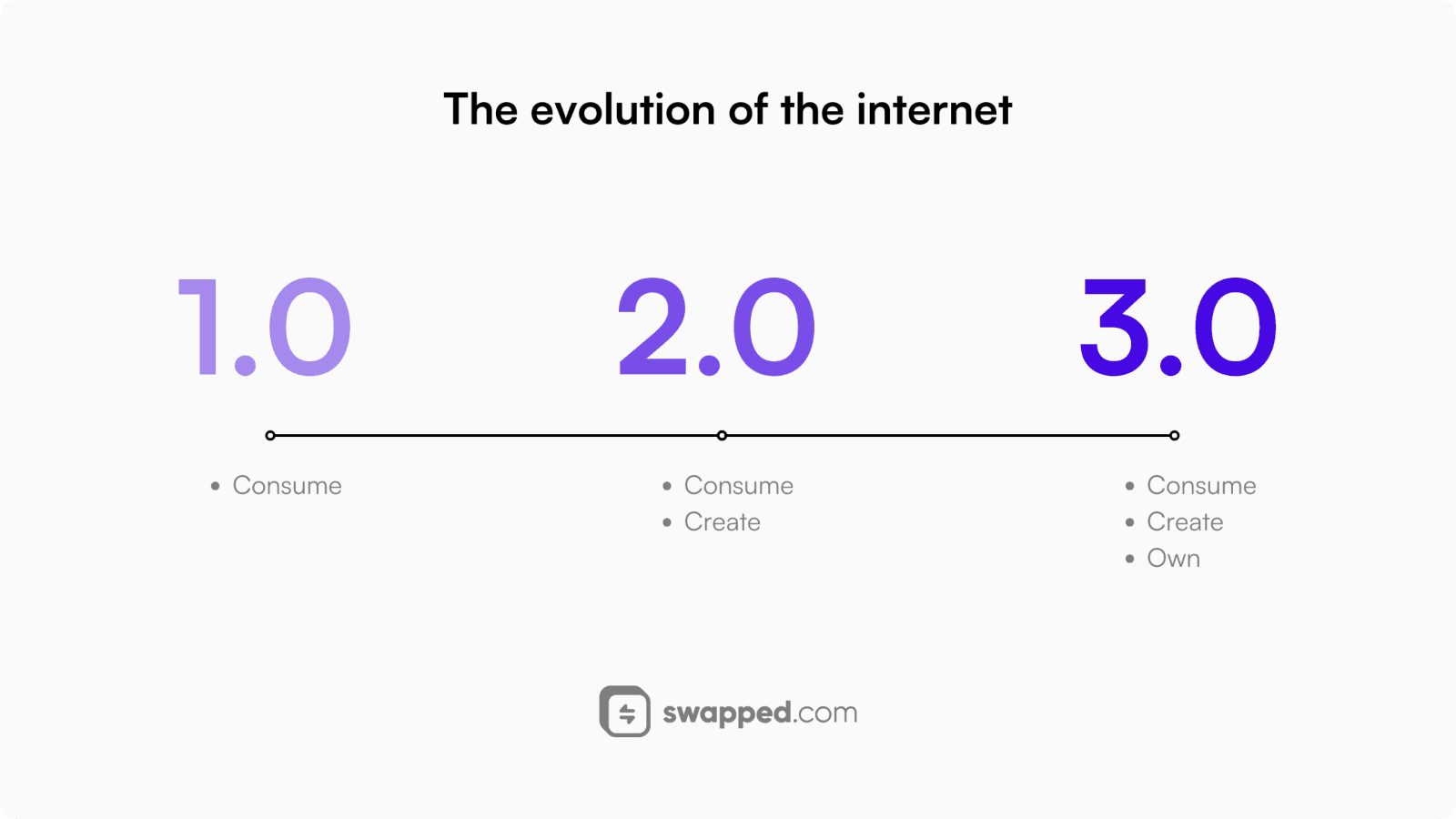
Web eras describe overlapping approaches to publishing and participation.
Early Web Publishing
Web 1.0 commonly describes early websites centered on publishing pages for visitors to read. That shorthand should not erase the interactive services and user-created communities that also existed. It is a broad description of emphasis, not an absolute technical boundary.
Platforms and User Contributions
Web 2.0 is associated with interactive services, social platforms and user-generated content. Operators commonly manage accounts, databases and moderation. Users can create valuable work within those services while depending on the operator’s access and portability rules.
The Web3 Proposal
Web3 adds models involving user-controlled accounts and shared programmable records. DeFi, NFTs and token-based communities are common examples. Their presence does not mean an application has solved governance, privacy or the legal meaning of ownership.
A Practical Definition
A Web3 application uses blockchain systems for some part of its state, permissions or value transfer. To understand it, identify that part precisely and then map the conventional services it still needs.
What Users Can Control
A user can control signing keys for an account instead of relying exclusively on a platform password. That allows direct authorization of some operations. It also creates responsibilities for recovery, device security and understanding what a signature permits.
Control over a token does not necessarily mean control over a website, access to private data or ownership of an associated physical object. Those rights depend on application rules and relevant agreements, not on the presence of a wallet button.
Common Design Goals
Web3 projects often aim for open access, shared verification, portability and reduced dependence on a single operator. Whether a deployed system achieves those goals depends on its permissions, infrastructure, governance and exit options.
The Components Behind an Application
A typical application combines a frontend, a wallet connection, network access and contracts or other on-chain rules. It can also depend on off-chain storage, indexing, pricing services and administrators. Each component contributes a different part of the experience.
Shared Records
A blockchain can maintain an agreed history and apply rules to state changes. Public visibility helps independent inspection, but recorded data can still refer to inaccurate external information. Consensus on a record does not automatically establish the truth of everything it describes.
Digital Assets
Cryptocurrencies and issued tokens can pay network fees, represent application units or record other rights. Their usefulness depends on the design and actual acceptance. An application can also use blockchain records without promising that a token will increase in value.
Financial Applications
DeFi applications can provide trading, lending or other programmed financial operations. Some also interact with assets that users stake. These mechanisms introduce contract, collateral, liquidity and market dependencies; an open interface does not eliminate them.
Smart Contracts
A smart contract is code executed under a network’s rules. It can automate defined operations, but it is not automatically a complete legal agreement or a guarantee of fair behavior. Privileged roles and upgrade mechanisms can also change how an application operates.
Non-Fungible Tokens
An NFT identifies a distinct token record within a contract or collection. It can refer to art, access or another item, but the associated rights and content storage must be established separately. Token ownership alone does not transfer copyright or guarantee continued access to a service.
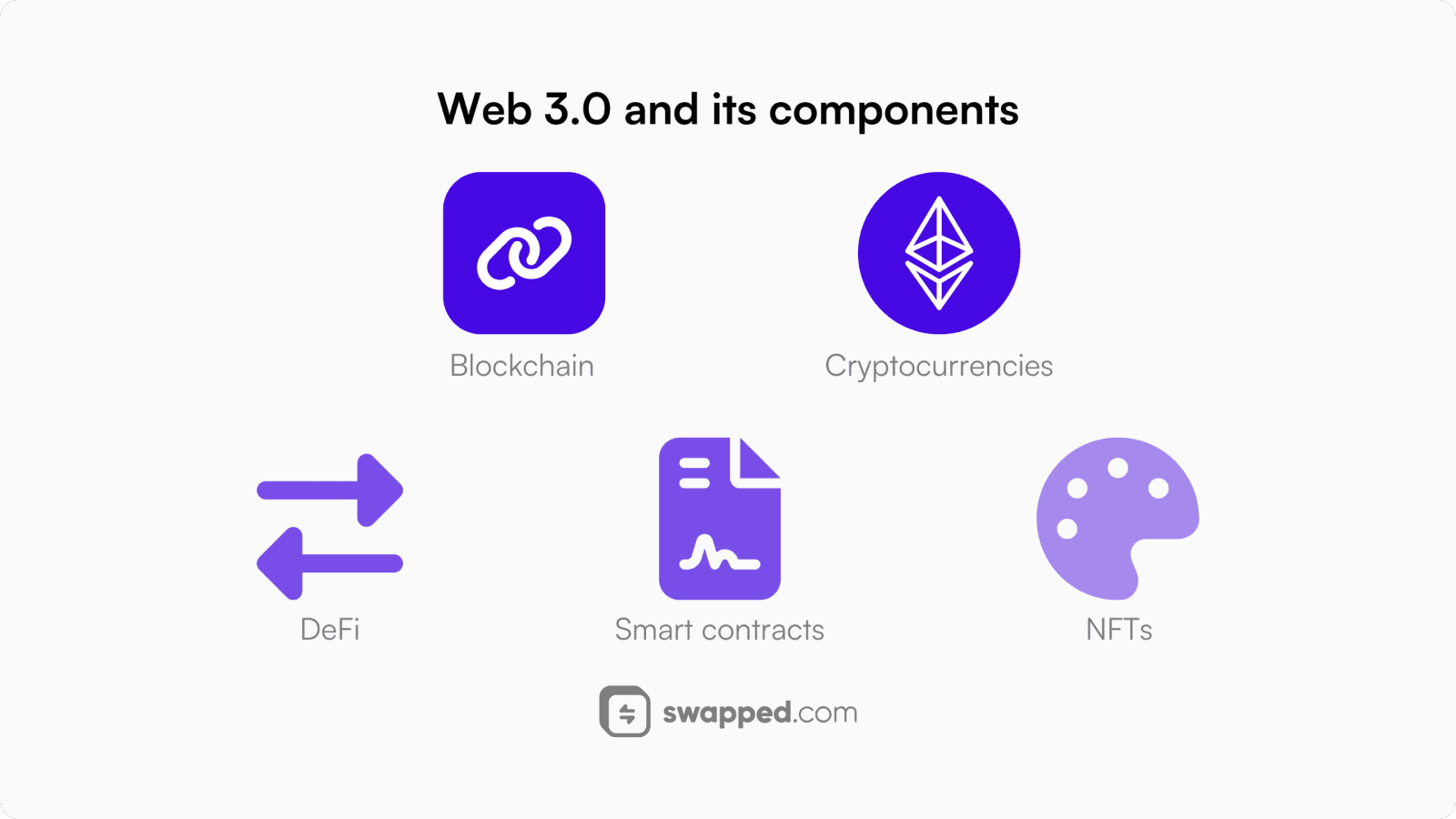
Wallets, contracts, assets and conventional services work together.
Practical Limitations
Costs, difficult recovery, confusing permissions and public transaction traces can affect usability. Centralized infrastructure can remain a critical dependency. A balanced review identifies what happens during failure, not just how the application behaves on a successful first visit.
Learning Without Rushing
You can explore public transaction records, documentation and demonstrations before buying an asset or connecting a funded wallet. This makes it easier to distinguish an application’s stated purpose from the permissions and costs it actually introduces.
Following an Interaction
Start by understanding what the wallet controls and how recovery works. Inspect the intended address, contract and network before authorizing anything. Applications on Ethereum and Solana can have different account models and signing flows, so a familiar-looking interface is not proof that an operation is equivalent.

Clear permissions and recovery paths are part of accessibility.
Evaluating Future Claims
Future development can improve interfaces, proof systems and interoperability, but adoption is not inevitable. A useful roadmap names measurable capabilities and unresolved limitations. A broad prediction about replacing the internet does not show whether a current application is reliable.
For DTCC Trading’s tokenization and multichain focus, the practical questions are about asset identity, authority and interoperability. Who can issue or transfer a token, what does it represent, and how do records remain understandable across systems? Those questions are more useful than the Web3 label alone.
Related Reading
The linked introductions show different uses of the term. Read an application’s own technical and product documentation before treating a general Web3 concept as an available feature.