Crypto Onramps: From Payment to Asset Delivery
Learn how fiat-to-crypto services quote, verify, collect payment and deliver assets, and how to compare custody, costs and transaction status.
DTCC Trading Editorial
A crypto onramp connects a conventional payment method with the acquisition of a digital asset. Understanding that connection means following more than a buy button: payment collection, conversion and asset delivery can involve different systems and entities.
An onramp exchanges money for cryptocurrency under a provider’s terms. The delivered asset might be Bitcoin, Ethereum or another supported token. The specific asset, network and destination must be clear in the quote before the transaction is authorized.
An acquired asset may later be used in decentralized finance, NFT applications or other blockchain activity. Those later uses are separate transactions with separate dependencies. Purchasing an asset does not verify the safety or availability of every application that accepts it.
What an Onramp Connects
A bank balance and an on-chain asset are recorded in different systems. An onramp coordinates the payment and conversion needed to deliver the chosen asset. The service’s responsibilities depend on how that route is structured.
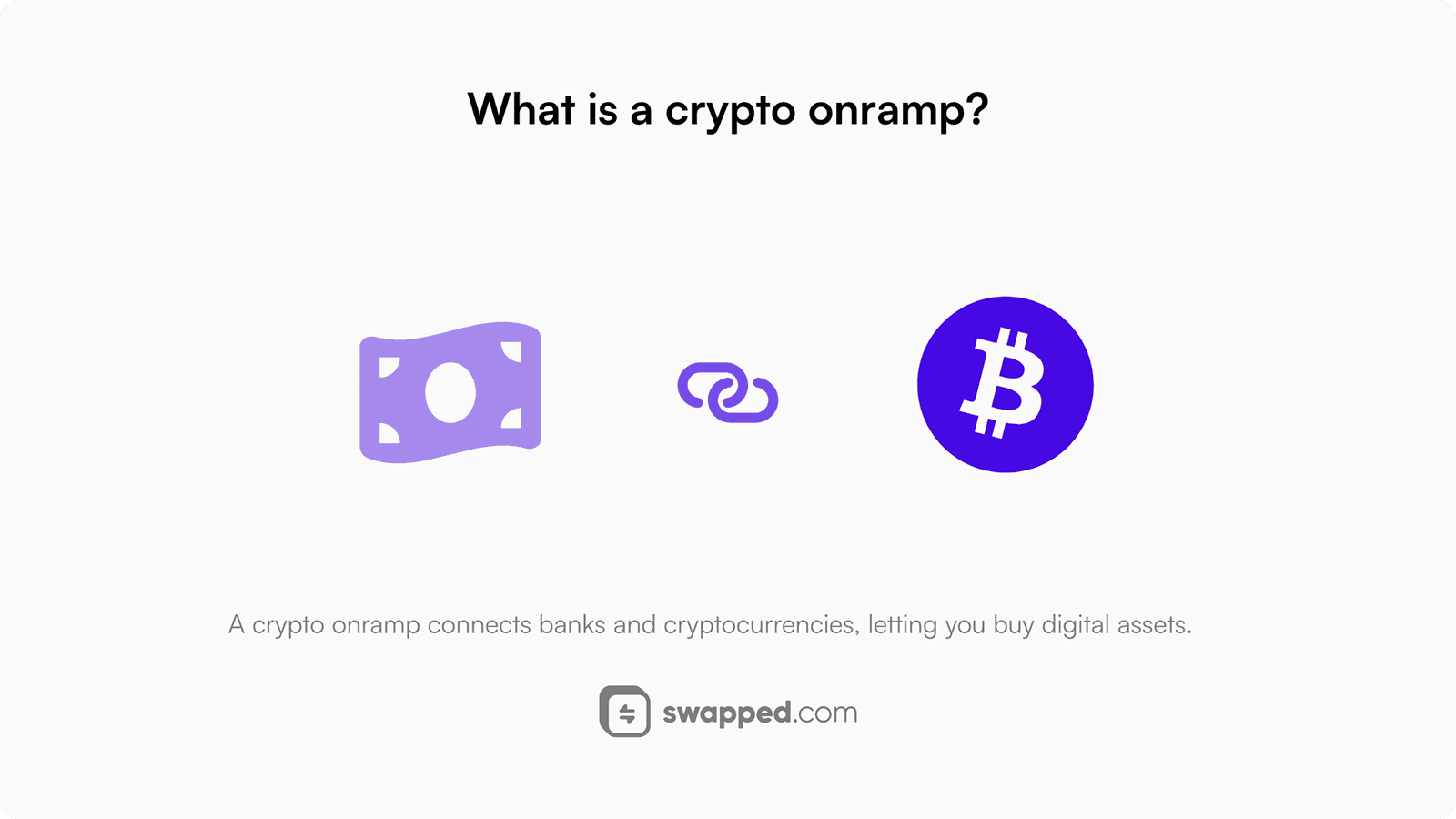
An onramp connects a payment route with a specified digital asset and destination.
Payment and Network Systems
A conventional payment can be authorized before the provider treats it as completed. A network transfer can then be submitted before its destination balance is available. These stages should not be collapsed into one ambiguous success message.
Onramps are one way to acquire assets; they are not the only possible source. A person can also receive an asset through a payment or another transfer. Each route needs its own explanation of ownership, obligations and costs.
What a Simpler Interface Still Needs to Show
A service can prepare technical details while still requiring careful review of addresses and networks. The user needs to understand the exact destination and any permissions requested. An easy interface does not remove the consequences of sending an asset to an incompatible route.
A useful onramp screen identifies the provider, input amount, output asset, network, destination and quote expiry. It should also make unresolved requirements visible before collecting a payment or requesting authorization.
The Typical Transaction Stages
Onramps differ in implementation, but their activity can be reviewed as a sequence. The status record should identify which stage has completed and which party is responsible for the next step.
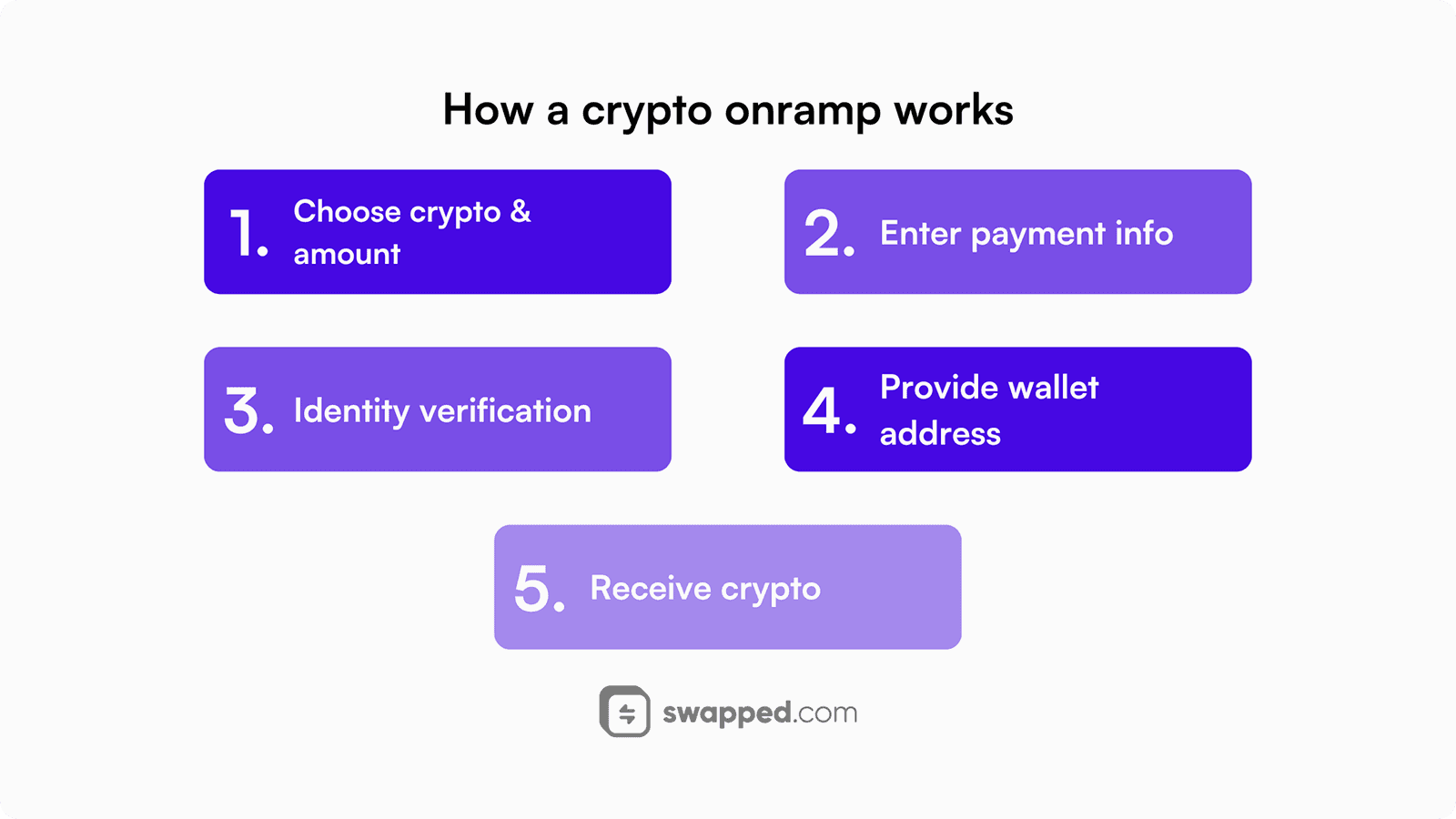
Review the quote, payment, conversion and delivery as separate stages.
From Quote to Payment
The quote connects an amount paid with an expected asset amount delivered. It can include a conversion spread and service charges in addition to the reference market price. Compare the net result for the complete route.
A provider may require an account, identity checks and an eligible payment method. Requirements can vary by region, amount and service entity. A payment option shown on a public page is not proof of availability for every customer.
For delivery to an external wallet, the receiving address and network must be compatible. Some providers instead credit an internal account balance. That distinction affects who controls the keys and what withdrawal steps remain.
The Supporting Operations
Behind the interface, a provider can coordinate payment processing, pricing, screening and network submission. An embedded service can also involve the host application and a separate merchant of record. Identify the company responsible for the actual sale.
Completion time depends on the route and its outstanding checks. A general speed statement may describe only one stage. Read the conditions for payment failure, quote expiry and delayed delivery rather than assuming a fixed end-to-end time.
Different Onramp Arrangements
The main differences concern who handles payment, who controls assets and where the result appears. Services can combine features from several categories, so use their actual terms rather than the category label alone.
Exchange-Based Purchases
An exchange can accept a conventional payment and credit a purchased asset to an account. Trading availability and external withdrawal availability may differ. Check the account’s withdrawal conditions before treating the balance as immediately transferable.
Using an exchange creates reliance on the service’s custody and account controls. Review the entity, terms and withdrawal process. A displayed balance does not provide the same control as keys for a self-custody address.
Delivery to an External Wallet
Some onramps deliver directly to a wallet address supplied by the buyer. The quote should identify that destination and the network. Direct delivery changes custody after receipt, while payment and conversion still depend on the provider.
This arrangement does not eliminate fraud, delivery or wallet risks. The recipient remains responsible for compatible address selection and its own key management. A provider describing itself as non-custodial has not thereby guaranteed the entire route.
Peer-to-Peer Arrangements
A peer-to-peer service connects buyers and sellers under its own rules. The payment method, escrow design and dispute process matter. A transfer between individuals should not be assumed protected merely because a platform introduced them.
Physical Purchase Services
Kiosks or physical outlets can offer asset purchases under provider-specific terms. Verify the operator, quote, fees and destination. Requests to use a kiosk to pay an unexpected bill or release a reward are a separate warning sign to investigate.
Comparing an Onramp
Make comparisons using the same payment amount, asset, network and destination type. Record the time and any unmet eligibility requirements so apparently similar quotes can be evaluated fairly.
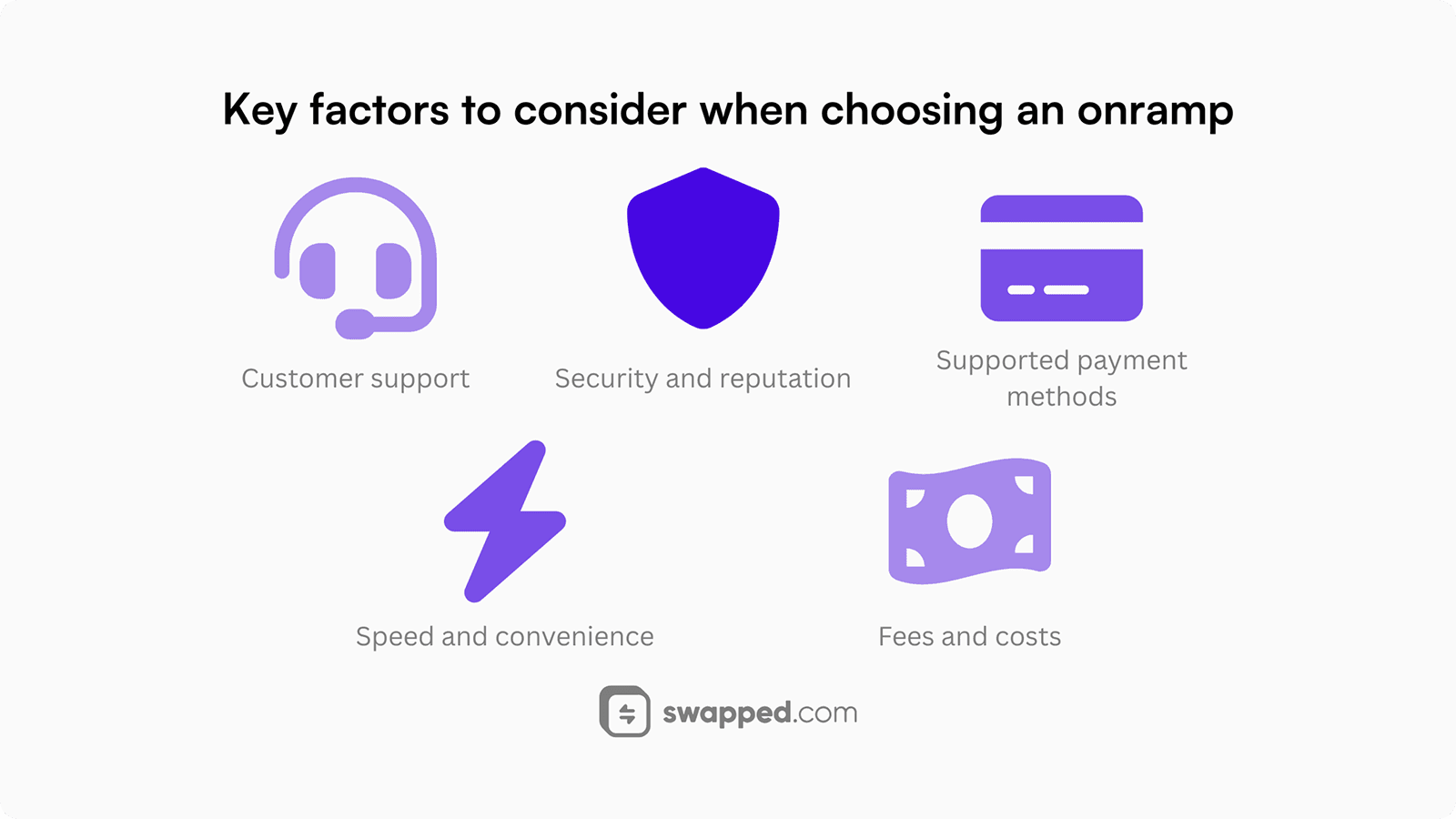
Compare complete costs, eligible routes, custody and support responsibilities.
Total Cost
The final amount can reflect a service fee, price spread, payment charge and network cost. Identify which charges are included in the displayed quote and which are paid separately. A low headline fee does not establish the lowest total cost.
Compare the total payment with the net asset expected at the destination. If one route credits a custodial balance and another delivers externally, include any additional withdrawal step needed to reach the same result.
Identity and Operating Evidence
Confirm the service’s legal identity and reach its terms through a trusted channel. Review custody and complaint procedures. Public reviews can describe experiences but cannot verify every current operating or financial condition.
Identity verification and a familiar payment interface are not independent guarantees of safety. Understand which organization receives personal information and which organization is responsible if payment completes but delivery does not.
Payment Methods and Availability
A card, bank transfer and local payment method can have different limits, costs and processing rules. Eligibility can depend on the customer’s country and account status. Check the route shown for the actual transaction.
A large advertised count of payment methods does not reveal which ones are usable for a particular asset and region. Prefer explicit route details over a global marketing total, and verify any restrictions before starting payment.
Timing and Status
Separate payment authorization, completed payment, network submission and asset receipt. A useful service supplies references for these stages so a delay can be investigated without guessing where the funds are.
If a transfer appears delayed, check the original record before repeating it. A submitted transaction may still be processing, or the receiving wallet may be displaying the wrong network. Repeating the purchase can create an unintended second transaction.
Support and Responsibility
Locate the provider’s official support channel and identify the records needed for help. An order identifier, payment reference and public transaction identifier can connect the stages without exposing signing secrets.
Support availability and response commitments should come from the service’s current terms. Do not assume round-the-clock assistance from a general statement that support exists. A legitimate support process does not need a wallet recovery phrase.
Reviewing a First Purchase Route
Before proceeding, establish the purpose, amount and intended destination. Understand the receiving wallet or account and its recovery process independently of the purchase interface. Preparation makes the final quote easier to evaluate.
Select only an asset and network explicitly supported by the destination. Read the quote and all deductions, then confirm the provider entity and eligibility requirements. A familiar token symbol is not enough to establish compatibility.
Use the provider’s verified account and payment flow. Review verification requests in context and keep account authentication private. An unsolicited person offering to complete the process for you should not receive account or wallet credentials.
Compare the full destination after entry and again at confirmation. Where a memo or tag is required, treat it as part of the destination. Do not substitute an address from unrelated transaction history.
After authorization, retain the order and transaction references and verify the final destination amount. Distinguish a successful payment from completed asset delivery. Resolve any discrepancy using the original records before trying another route.
Understanding an onramp helps explain what happens when buying Bitcoin or another asset. DTCC Trading’s focus on Stellar tokenization and multichain interoperability does not, by itself, establish an onramp provider, payment method or purchase route on the platform.
Related Reading
Provider comparisons can be starting points for research. Check their dates, methodology and current terms, and compare the exact route rather than relying on a headline ranking.