Crypto Terms and Slang in Plain Language
Decode technical vocabulary and common crypto slang, from gas and liquidity pools to HODL, FOMO and airdrops, without confusing slogans with evidence.
DTCC Trading Editorial

Conversations about cryptocurrencies mix technical definitions, market shorthand and jokes. Learning the vocabulary makes those conversations easier to follow, but knowing a term does not establish whether the claim attached to it is accurate.
Begin with the words describing how networks and markets work. Then consider the informal phrases people use to express enthusiasm, fear or group identity. A technical term should have a precise meaning; slang often depends on context.
Altcoin
Bitcoin became the reference point for altcoin, shorthand for alternative coins. It commonly refers to cryptoassets other than bitcoin, although some speakers use it more narrowly. The label says little about an asset’s design, quality or purpose.
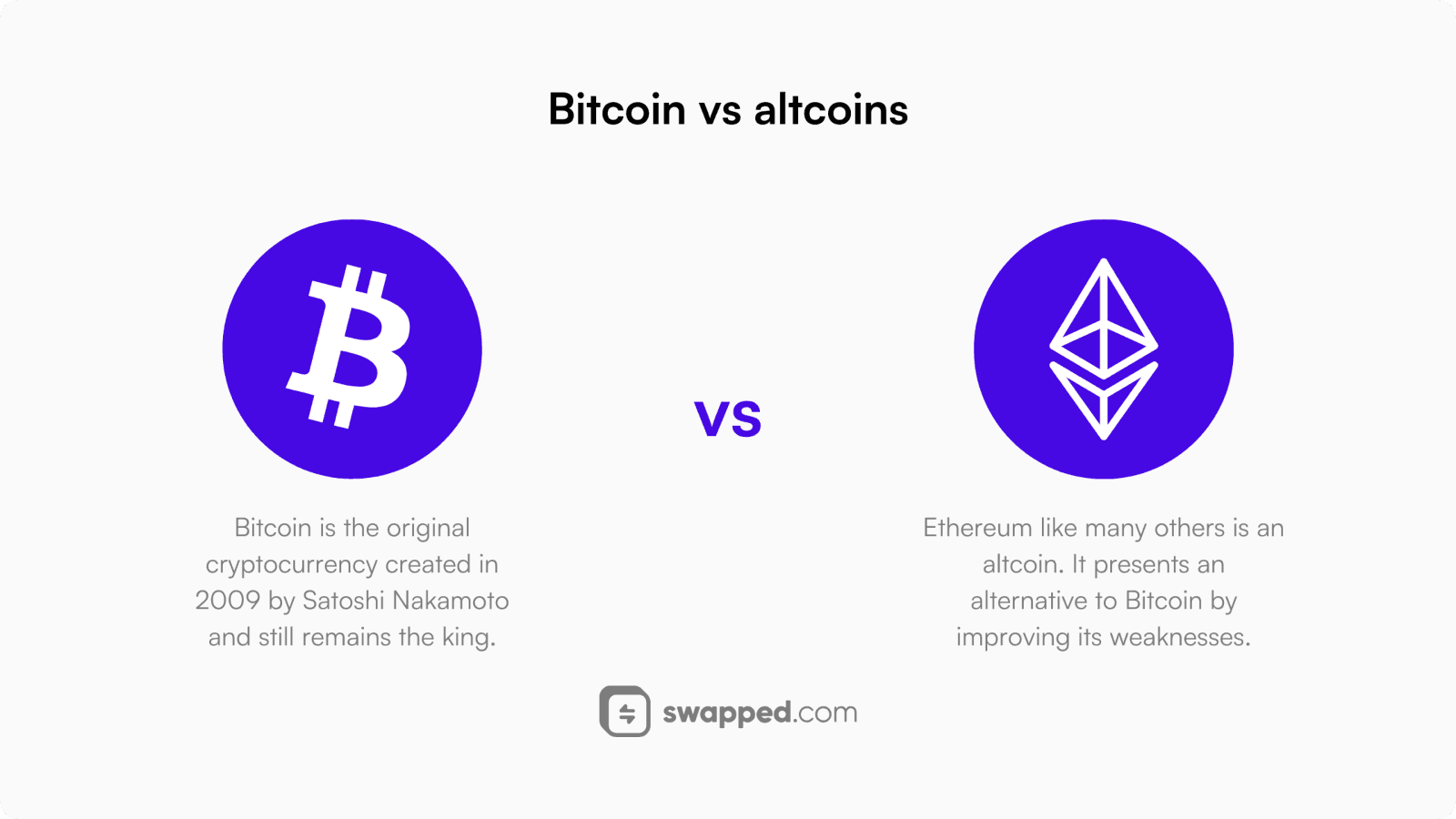
Asset categories describe terminology rather than future market leadership.
All-Time High and All-Time Low
An all-time high, or ATH, is the highest price in a stated dataset; an all-time low, or ATL, is the lowest. The trading pair, venue and data history matter. A thinly traded price spike can produce a record that was not available to most traders.
Airdrop
An airdrop distributes tokens according to chosen rules. The phrase free crypto can conceal claim fees, eligibility conditions or other costs. Receiving an unsolicited token does not establish that a linked claim site is legitimate.
Bull Market
A bull market describes a sustained period of broadly rising prices or optimistic market conditions. The label does not mean every asset rises, and there is no single universally applied starting point. It cannot establish what the next transaction will earn.
Bear Market
A bear market describes a sustained decline or broadly pessimistic conditions. Individual assets can still rise during it. Calling a market bearish is a description or interpretation, not proof that a particular price has reached its lowest point.
EVM
The Ethereum Virtual Machine is the execution environment that applies Ethereum’s smart-contract instructions. Other blockchain networks can implement compatible environments. Compatibility helps reuse tools and code, but it does not make the networks’ security, assets or fees identical.
Fiat Currency
Fiat currencies include government-issued money such as the US dollar and euro. Their value and use depend on monetary institutions, legal arrangements and public confidence rather than a promise of redemption for a fixed amount of a commodity.
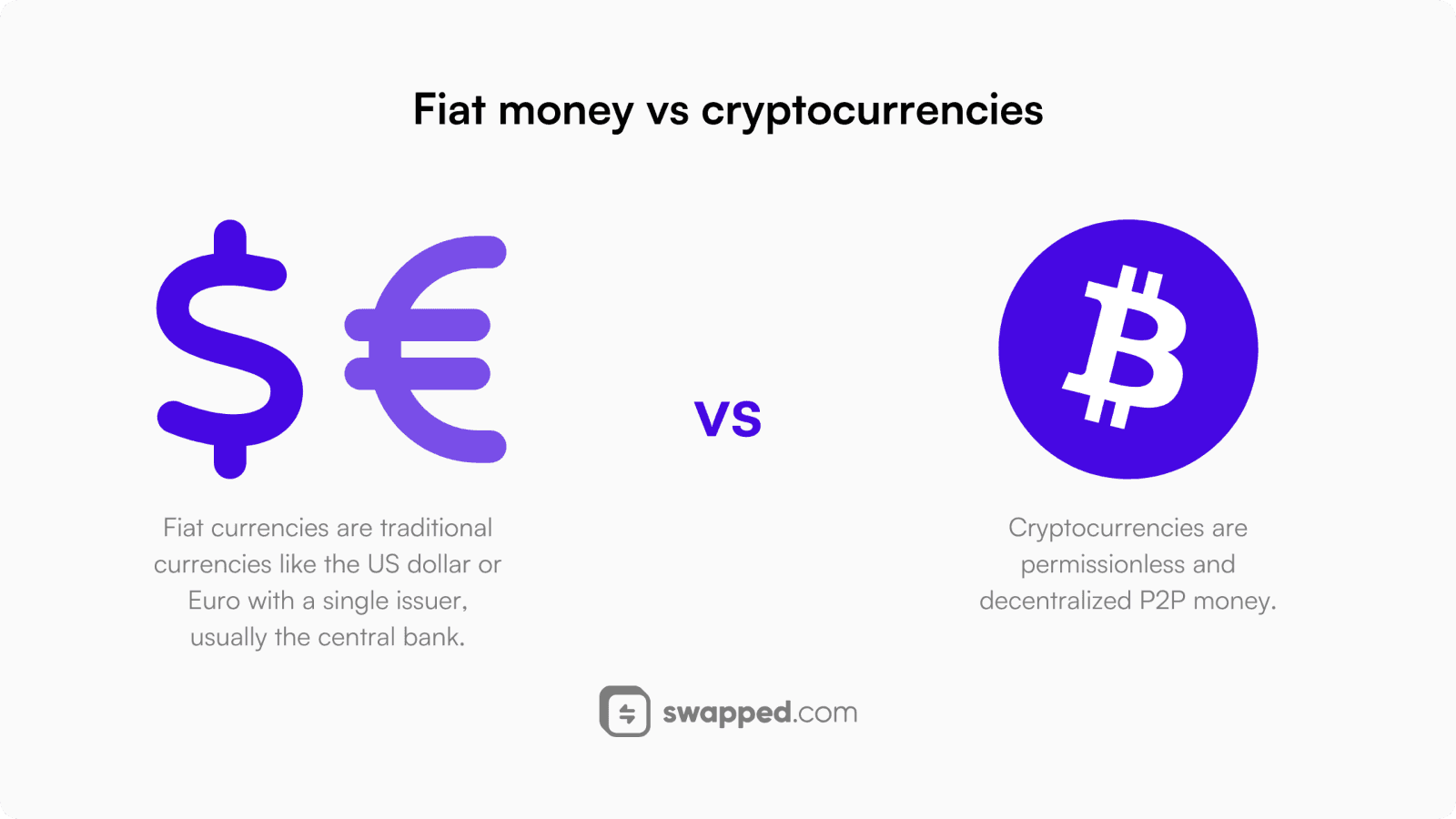
Money and digital assets operate through different institutional and technical arrangements.
UTXO
An unspent transaction output is a previously created output that remains available to spend under its conditions. A transaction consumes complete outputs and creates new ones. A sender can receive change as a new output, with the fee accounted for separately.
Technical Analysis
Technical analysis studies market data such as prices and volume using charts or statistical indicators. It can organize observations, but patterns do not guarantee future prices. A chart also depends on the quality, venue and time period of its underlying data.
Gas
Gas measures execution work in systems such as Ethereum. A transaction’s fee depends on the gas it uses and applicable pricing rules. Gas is a unit of resource accounting, while the fee is an amount paid in the network’s required asset.
MEV
Maximal extractable value concerns value obtained through transaction inclusion, exclusion or ordering beyond ordinary block rewards and fees. In DeFi, examples can involve arbitrage or ordering around another trade. Not every arbitrage is harmful, but some strategies worsen another user’s execution.
Token Burn
A burn removes tokens from usable supply through the token’s defined mechanism or makes them provably inaccessible under stated assumptions. Sending tokens to an address labeled burn is not enough by itself to prove a supply reduction. Minting powers and supply accounting also matter.
Sharding
Sharding divides a system’s data or processing responsibilities into parts. Different designs shard different resources and coordinate them differently. The term alone does not establish transaction capacity, data availability or how the network handles a failed participant.
Bridge
A bridge coordinates information or asset representations across networks. It can rely on contracts, validators, custodians or proofs. Bridging an asset introduces a route with its own assumptions; the destination token may be a representation rather than the original network’s asset.
Liquidity Position or LP Token
A liquidity provider can receive a token or other position record representing rights in a decentralized exchange pool. The representation depends on the protocol. Not every pool requires equal-value deposits or issues the same kind of transferable receipt.
Slippage
Slippage is the difference between expected and realized execution. It can reflect market movement or changing liquidity. Slippage tolerance sets an allowed deviation; it is not a fee. Price impact describes how a trade itself moves the available execution price.
Liquidity Pool
A liquidity pool holds assets under program rules so users can trade or perform other operations. A pool’s quoted balance does not tell the whole story: concentration, asset quality and the pricing mechanism determine how much useful liquidity exists for a given trade.
Impermanent Loss
This term describes how a liquidity position can underperform simply holding the deposited assets when relative prices change. Fees can offset some or all of that difference, but there is no guarantee. The word impermanent does not promise that the position will recover.
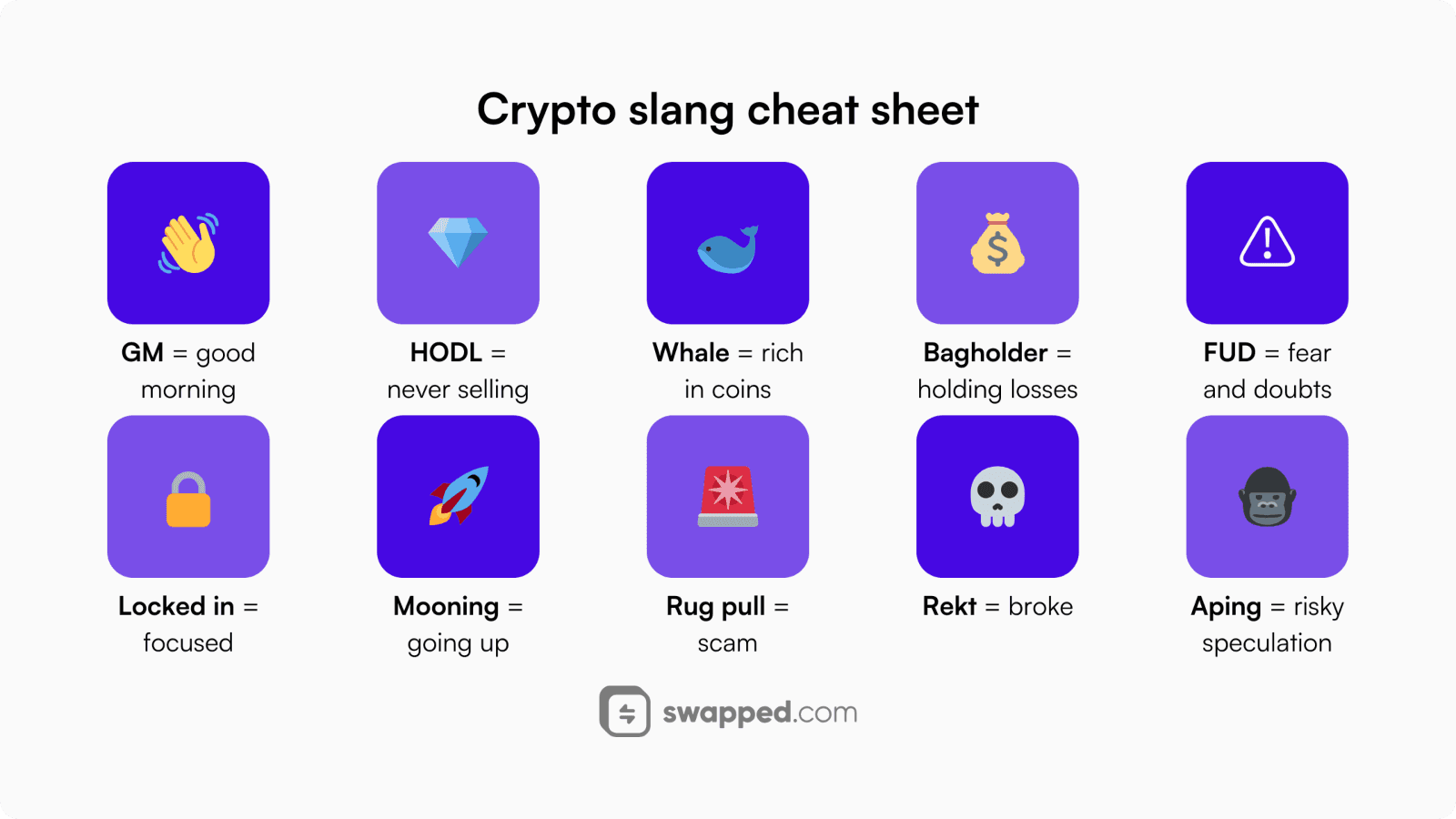
Informal phrases express sentiment and behavior rather than technical guarantees.
GM and GN
GM means good morning and GN means good night. Online communities use them as greetings, often without regard to the recipient’s actual time zone. They carry no technical or market meaning.
HODL
HODL is a deliberate reuse of a misspelling of hold. It usually describes keeping an asset despite volatility. A community slogan about holding does not answer whether an asset still fits someone’s needs or whether its underlying conditions have changed.
DYOR
DYOR means do your own research. Useful research identifies the asset, issuer or protocol, supply rules, permissions and evidence behind important claims. Repeating the acronym does not excuse false advertising or turn an unsupported recommendation into reliable analysis.
FOMO
Fear of missing out describes pressure to act because other people appear to be gaining an advantage. Fast price moves and countdowns can intensify it. The feeling says something about urgency, not about the quality of the opportunity.
FUD
FUD stands for fear, uncertainty and doubt. It can refer to misleading negative messaging, but it is also used to dismiss legitimate criticism. Evaluate the specific evidence instead of accepting or rejecting a claim because someone labels it FUD.
Whale
A whale is a holder or trader large enough to matter in a particular market. A large address might belong to an exchange serving many customers. Address size alone does not reveal one person’s intentions or prove that a transfer was a sale.
Bag
A bag is an informal term for a holding in an asset. Speakers may use it proudly or jokingly. The word provides no reliable information about position size, purchase cost or the holder’s intended time horizon.
Addy
Addy is slang for an address. When receiving assets, the full destination can also require a network and a memo or tag. Familiarity with the nickname should not replace careful verification of those details.
The Trenches
The trenches often describes communities trading newly launched or highly speculative assets. Memecoin discussions frequently use the phrase. Its tone can normalize rapid risk-taking, but it does not indicate a protected market or privileged source of information.
Lock In
To lock in can mean focus intensely on a task. In a trading conversation it can also mean realizing a gain or fixing a rate. Read the surrounding sentence; the phrase has several ordinary meanings and no single crypto-specific definition.
Degen
Degen is community shorthand for a highly speculative participant, often used as a self-description. It can refer to experimentation or to reckless risk-taking. The label should not be mistaken for a skill level or evidence of trading success.
Gem
Gem is promotional language for an asset someone believes is overlooked or undervalued. That belief needs evidence. A small market capitalization or obscure listing does not establish hidden value, and the person promoting it may already hold a position.
Bagholder
A bagholder is someone left holding an asset after a large fall or loss of market interest. It is often an insulting label. The term does not explain whether the decline resulted from market conditions, a failed project or misconduct.
Rug Pull
Rug pull describes a project-related withdrawal of support, liquidity or value that harms other participants, often involving deception. Specific mechanisms vary. A falling price alone does not prove a rug pull; identify the transactions, permissions and representations involved.
Pump and Dump
A pump-and-dump scheme promotes an asset to inflate demand while participants positioned earlier sell into that demand. Promotions can conceal conflicts or fabricate information. A rapidly rising price is not enough to establish the scheme, but coordinated deception is a serious warning sign.
Rekt
Rekt means wrecked and usually describes a severe trading loss or liquidation. The casual language can hide the seriousness of the outcome. It does not explain how the loss happened or whether a position’s risk was understood beforehand.
Sniping
Sniping describes attempts to execute at a precise moment, often near a token launch. Automated tools can compete over timing and ordering. Speed does not protect against malicious token rules, poor liquidity or a price that changes before execution.
Mooning
Mooning means rising very sharply in price. It is expressive language, not a forecast with a defined probability or horizon. A market price can reverse, and a displayed gain may be difficult to realize in a thin market.
Aping
Aping usually means entering a position impulsively with little investigation. Understanding the expression helps recognize the behavior it celebrates. It does not turn urgency or group enthusiasm into evidence that an asset is sound.
Related Reading
The linked glossaries offer additional vocabulary. For technical claims, move from slang to the actual network or application documentation.