Understanding Crypto Rewards and Their Costs
Examine faucets, airdrops, bounties, staking and referral rewards through eligibility, effort, expenses and the permissions each activity requires.
DTCC Trading Editorial

An offer to receive cryptocurrencies without buying them can still require time, personal data, capital or transaction fees. Even an offer denominated in Bitcoin needs a closer look at who pays, what the participant must do and whether the displayed reward can actually be withdrawn.
What Free Really Means
A reward has a funding source and conditions. It might compensate work, promote a product or encourage network participation. Before comparing amounts, identify the required effort, out-of-pocket costs and permissions, then distinguish an estimated reward from one that has been delivered.
What Is Being Distributed?
A reward can be a network’s native coin, an issued token or an internal platform credit. Those are not interchangeable. An internal balance may have withdrawal restrictions, and a token can lack a liquid market even when an application assigns it a price.
Different Activities, Different Tradeoffs
A promotional payment is different from compensation for work. Mining and staking are different again because they involve resources or assets committed to a network. Treat each arrangement according to its mechanics instead of grouping them all under free income.
Crypto Faucets
A faucet distributes small amounts under its own rules. Some are promotional websites; test-network faucets provide valueless testing assets. The word faucet does not establish that a reward has market value or that a website is trustworthy.
Reading the Offer
Check which asset and network the faucet uses, the minimum withdrawal and whether eligibility depends on location or account verification. A large number of displayed units can still represent little or no usable value.
Tasks and Withdrawal Conditions
A site might request advertisements, surveys or other tasks before showing a reward. Compare the time required with the expected withdrawable amount. Stop if the offer shifts into paying a deposit, installing untrusted software or revealing wallet secrets.
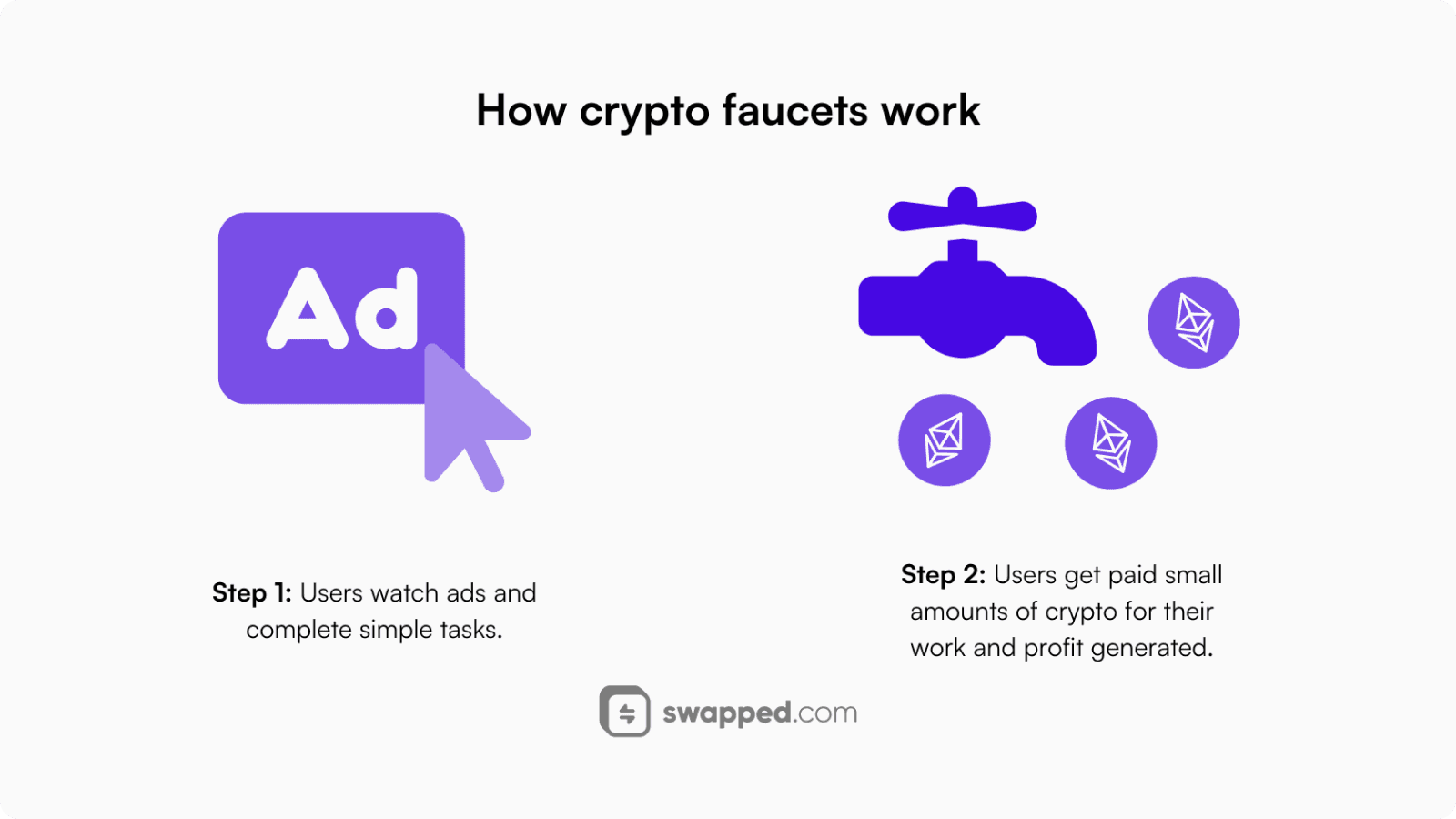
A displayed reward is different from a completed withdrawal.
Evaluating Small Rewards
A legitimate small distribution can help demonstrate receiving an asset, but it should not require control of an existing wallet. A public receiving address is different from a recovery phrase or a broad token-spending permission.
Withdrawal thresholds, fees, expired balances and identity requirements can change the practical result. Read those conditions before spending substantial time. A balance shown by a website is a claim made by that service until the asset is actually delivered.
Airdrops and Bounties
Airdrops distribute assets according to chosen eligibility rules. Bounties compensate defined contributions. Both can be legitimate, but participation does not guarantee a reward and an unsolicited claim page can be malicious.
How Airdrops Work
An airdrop can allocate tokens to wallet addresses based on activity, holdings or other criteria. Distribution may be automatic or require a claim. The eligibility rules, claim contract and token’s actual identity matter more than the promotional amount displayed.
Reviewing a Claim
Verify the announcement through the project’s established channels and inspect the requested operation. A claim that unexpectedly requests access to unrelated assets deserves scrutiny. Do not spend money on speculative activity assuming that an unannounced future distribution will reimburse it.
Working Within Bounty Rules
A bounty program defines eligible work, payment conditions and reporting channels. A security bounty also defines authorized testing scope. Follow those written boundaries and report through the designated process; finding an issue does not automatically entitle someone to a particular payment.
Staking and Mining
These activities support different consensus systems and have real costs. Rewards can vary with network conditions, participation and protocol rules. Neither should be described as free income without accounting for the resources and risks involved.
Staking Rewards
In a proof-of-stake blockchain, validators commit stake and perform protocol duties. Rewards and penalties follow the network’s rules. Delegation, pooled staking and custodial products add their own fees and arrangements.
Capital and Access Requirements
Staking requires eligible assets or a service representing a stake. A DeFi product using staking-related tokens can add contract, liquidity and pricing risks. Check withdrawal rules, operator responsibilities and potential penalties before treating a quoted annual rate as an expected outcome.
Mining Rewards
Proof-of-work mining uses computation to compete for valid blocks. The economics include hardware, electricity, cooling, maintenance and pool arrangements. A mining reward is compensation within that system, not a payment obtained without expenditure.
Estimating Costs Honestly
A useful estimate separates revenue assumptions from operating costs and the initial equipment expense. Network difficulty, asset prices and fees can change. A website claiming guaranteed cloud-mining returns should not substitute for a verifiable explanation of the operation and its obligations.
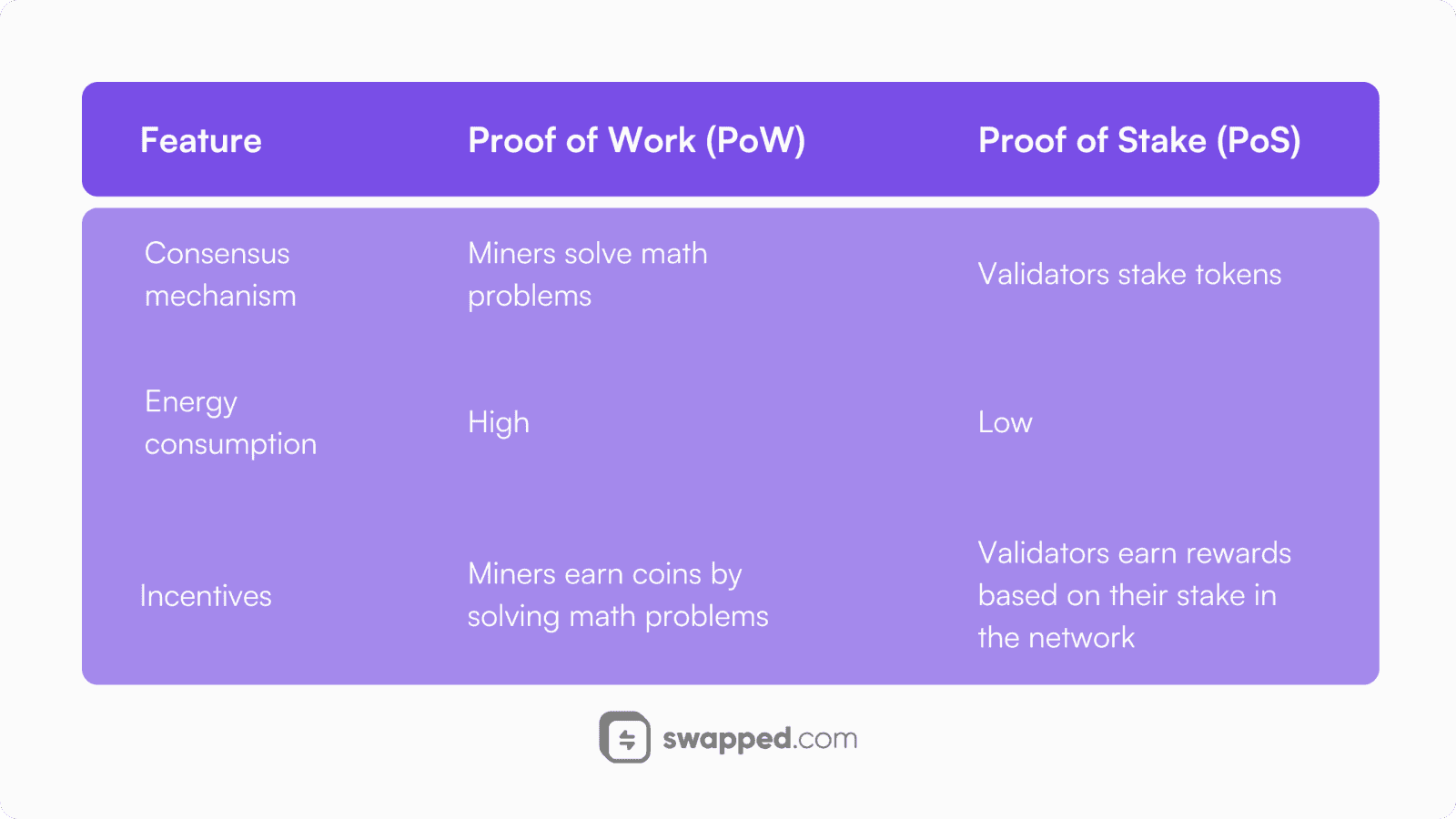
Mining and staking commit different resources under different rules.
Payment for Creative Work
Writing, design, education and software contributions can be paid in digital assets. The underlying arrangement is still work for compensation. Establish the deliverable, payer, asset, amount and payment timing before starting.
Publishing and Education
A blog or educational project can attract paid commissions or sponsorships, but an audience and revenue take time to develop. Distinguish independent analysis from sponsored material and verify factual claims before publishing them.
Social Channels
Social platforms can help distribute useful work, but follower counts do not guarantee earnings. Requests to promote an asset can also create conflicts. Make the commercial relationship clear and avoid repeating return claims that you cannot substantiate.
Referral Arrangements
A referral program pays for qualifying activity under its terms. That can involve sustained work and depends on other people’s choices. Read attribution rules, payment thresholds and restrictions instead of assuming that every click or signup earns a reward.
Trading-Service Referrals
Some services compensate referrals through fees or fixed bonuses. Such arrangements can create an incentive to encourage unnecessary trading. A referral link should not be presented as an independent assessment of a service’s safety or suitability.
Product Referrals
Manufacturers and merchants can offer commission programs with their own approval and payout rules. Verify the current program directly and disclose the relationship when recommending a product. The existence of a commission does not establish product quality.
Cashback and Loyalty Rewards
Cashback reduces a purchase’s effective cost only after accounting for fees, exchange rates and any extra spending. Rewards can expire, change in value or have redemption limits. Buying something unnecessary to earn a token is still an expense.
Compare the Net Result
Identify the payer, the required action, the costs and the route to an actual payout. Protect wallet secrets and review every permission. The useful question is whether the complete arrangement makes sense, not whether its headline uses the word free.
Related Reading
The linked material provides examples of reward categories. Verify current eligibility and payout rules directly with the service before relying on any particular offer.