Major Crypto Failures and the Questions They Raise
Review selected exchange, lending and token failures through custody, liabilities, incentives and verifiable evidence, without treating a failure list as a safety ranking.
DTCC Trading Editorial

Major crypto failures have involved different mechanisms: theft, fraud, unstable token designs and businesses unable to meet obligations. Grouping them together can obscure the cause. A useful review identifies what failed and which evidence establishes it.
These selected cases are not a ranking of every loss in crypto history. Their purpose is to explain recurring questions about custody, representations and liquidity. People harmed by a failure should not be blamed for deception that later investigations uncovered.
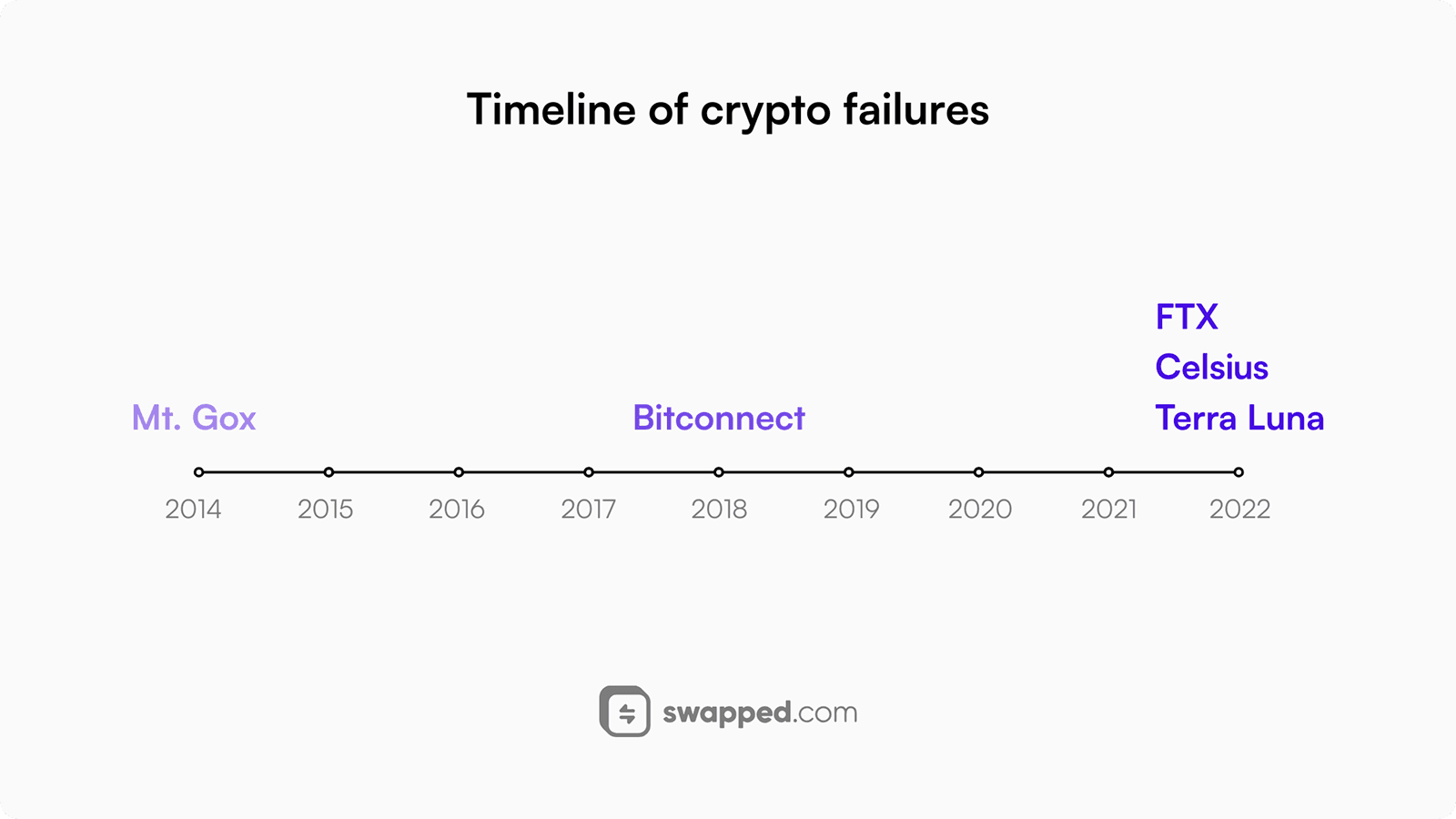
Several major failures in 2022 involved different business and token mechanisms.
Mt. Gox and Custodial Access
Mt. Gox was a major Bitcoin trading service that entered insolvency proceedings in 2014. Customers’ exchange balances depended on the service’s ability to honor withdrawals. The public Bitcoin ledger continuing to operate did not make those customer balances immediately recoverable.
The trustee’s notices document the later legal process. The case illustrates why a custodian’s account record, asset holdings and liabilities must be reconciled. A historical account should distinguish the original loss from subsequent recovery proceedings and distributions.
BitConnect and Promised Returns
BitConnect promoted a cryptocurrency lending program using claims about proprietary trading technology and returns. US authorities documented that the scheme paid earlier investors with funds from later investors. The promised mechanism differed from the actual source of payments.
In September 2022, US promoter Glenn Arcaro was sentenced for his role in the fraud. The case demonstrates why a persuasive technical story and visible payouts do not establish a sustainable source of returns or validate the underlying business.
TerraUSD and Luna
The Terra blockchain ecosystem included UST, an algorithmic stablecoin whose stabilization arrangement was linked to Luna. The relevant question was whether that arrangement could maintain the target value under stress, not whether the word stable appeared in the token’s description.
UST lost its dollar peg in May 2022 and the related tokens collapsed in value. In 2024, a US civil jury found Terraform Labs and Do Kwon liable for securities fraud. Technical design and representations to investors were both material parts of the case.
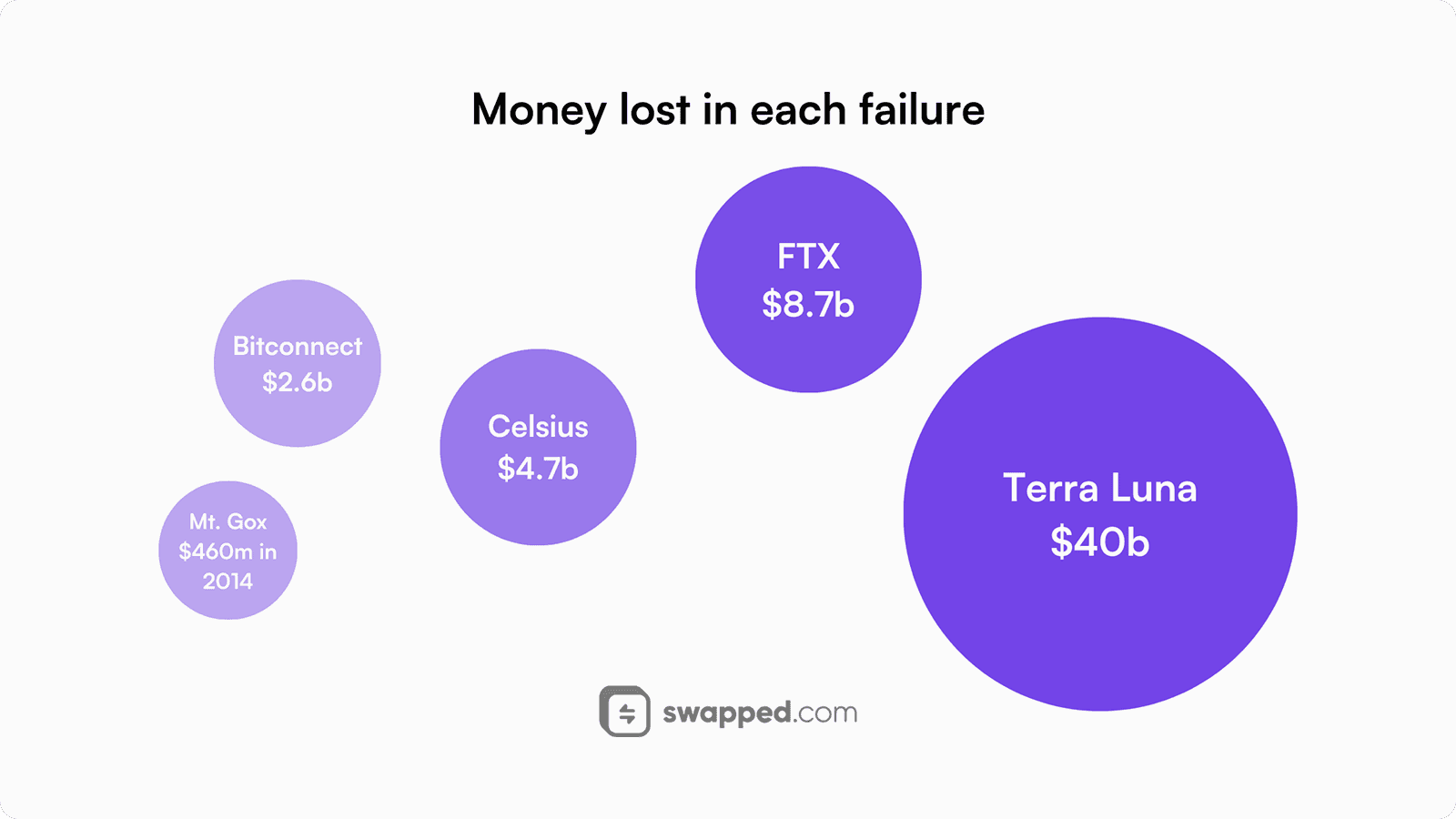
A loss figure needs a defined asset, valuation date and treatment of later recoveries.
Celsius and Withdrawal Obligations
Celsius offered custodial crypto services with yield claims. Customers relied on the business to return assets under the relevant terms. The rate displayed in an account did not reveal the full risks taken with the underlying funds.
Celsius halted withdrawals in June 2022 and entered bankruptcy. In May 2025, founder Alexander Mashinsky was sentenced for fraud. The episode shows why liquidity, asset use and truthful disclosure matter alongside the amount of assets a platform claims to manage.
FTX and Customer Funds
FTX’s 2022 collapse exposed a severe failure involving customer funds and related business activity. Its public profile and scale did not establish that customer assets were being handled as represented.
Sam Bankman-Fried was convicted and sentenced in March 2024 for the fraud. Bankruptcy recovery and criminal accountability are separate processes. A later distribution should not be described as erasing the original loss of access or the misconduct established in court.
Questions That Carry Across Cases
The cases point to concrete review questions rather than a formula that guarantees safety. Who controls the assets, what obligations exist, what evidence supports the claims and what happens when many customers seek access at once?
Checking Claims Against Evidence
Before investing or placing assets with a service, identify the actual product and counterparty. Compare marketing with formal terms and independent evidence. Research can expose gaps, but it cannot guarantee discovery of concealed fraud or make a loss the victim’s fault.
Assets, Liabilities and Assurance
A list of addresses or a proof-of-reserves snapshot can show selected assets under specified conditions. It does not by itself establish all liabilities, ownership restrictions or internal controls. Read the scope and date of any assurance report before treating it as a full audit.
Different Forms of Control
Using DeFi can change custody and execution dependencies, but it introduces contract, oracle, governance and interface risks. Self-custody and decentralization are meaningful design choices whose actual implementation must be examined; neither word guarantees protection from loss.
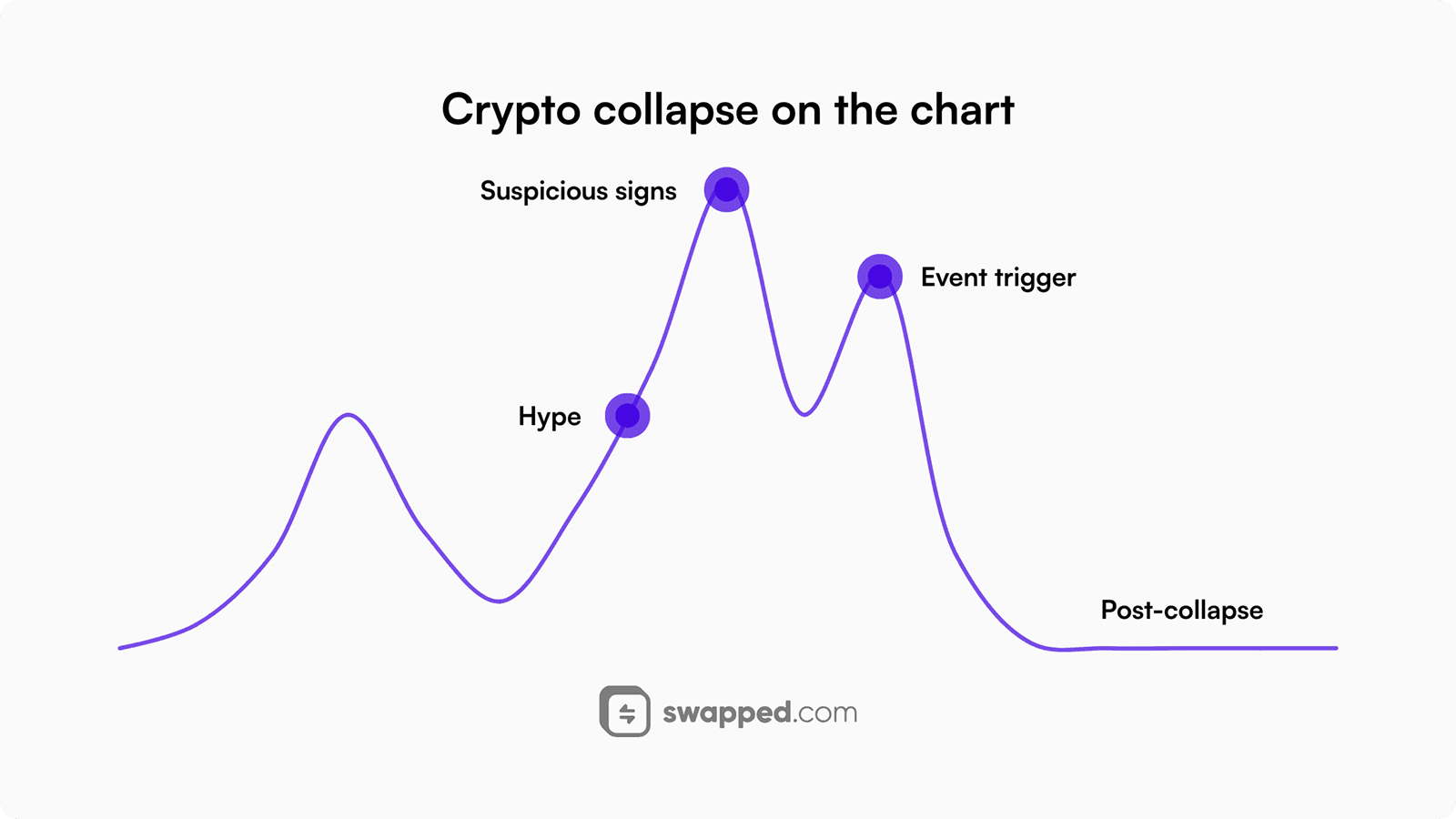
Loss of confidence can expose existing weaknesses, while the underlying causes still need investigation.
Recognizing Deception and Operational Gaps
Fraud and business failure are not identical. Both can harm users, and a review should distinguish deliberate misrepresentation from technical or financial weakness where the evidence allows. Crypto activity is also subject to laws that vary by jurisdiction and product.
Understanding the Requested Action
Learn how phishing, impersonation and address poisoning change the action a user authorizes. Verify the destination and the authority requested by a wallet prompt. Separately, inspect a service’s custody and business arrangements, because a correctly executed deposit can still create exposure to an unreliable counterparty.
Planning Self-Custody
Self-custody can reduce dependence on a custodian for signing access, while requiring secure keys, tested recovery and careful transaction review. It does not remove token-issuer powers or contract vulnerabilities. Evaluate the complete arrangement before moving assets.
Understanding Concentration
Using several services or assets does not necessarily create independent exposures. They can depend on the same custodian, market, issuer or infrastructure. A concentration review should follow those shared dependencies rather than count logos or token names.
What the Historical Record Can Teach
These failures make the value of precise evidence clear. A working interface, famous founder, large balance or regular payout cannot answer every question about safety. Follow the asset, the obligation and the controls, and keep uncertainty visible when important evidence is missing.
Related Reading
The linked histories provide additional context. For legal findings and recovery status, prioritize court, regulator and trustee records and distinguish their publication dates from the original events.