Practical Security Habits for Digital Assets
Protect accounts and signing material, review permissions and destinations, and follow transaction evidence with practical habits that reduce avoidable digital-asset risk.
DTCC Trading Editorial
Using cryptocurrencies involves decisions about account access, signing authority and transaction permissions. Security improves when those decisions are understandable and repeatable. A single product or slogan cannot cover every failure mode.
This guide focuses on habits that connect an intended action with the exact authorization and result. The same approach helps with an exchange account, a self-managed wallet or an application interaction.
Protect Signing and Recovery Material
A private key or recovery phrase can provide control over assets. Store recovery material through a protected backup arrangement that you understand. A hardware wallet can isolate keys from some everyday computer threats, but its recovery backup and signing approvals still require careful handling.
Never provide recovery material to a website, support agent or unsolicited helper. Receiving funds does not require it. If a service controls the keys instead, understand its account recovery and withdrawal rules rather than assuming the same backup model applies.
Protect Service Accounts
Use Unique Credentials
Use a strong, unique password for each service and protect the password manager or other storage method used to maintain them. Reusing a password allows one unrelated compromise to affect multiple accounts. Secure the email account used for recovery as well.
Add Strong Authentication
Enable multifactor authentication where supported. Phishing-resistant methods such as security keys or appropriately implemented passkeys can provide stronger protection than passwords alone. Keep a recovery method that does not create an easier alternative route into the account.
SMS codes are exposed to phone-number takeover risks, and authenticator codes can still be phished. Do not approve an unexpected login prompt. Check the actual website or application before entering any code or credential.
Maintain the Device Environment
Install software from verified sources and limit unnecessary browser extensions. A compromised extension or device can alter what a user sees or copies. Separate sensitive activity from untrusted downloads and applications where practical.
Keep operating systems, browsers and wallet software current through trusted update channels. A message claiming an urgent update can itself be phishing, so verify updates within the established application or official source.
Use device locking and appropriate disk encryption to reduce exposure if hardware is lost. Backups and recovery procedures should remain usable without leaving signing secrets in unprotected cloud files or screenshots.
Recognize Manipulated Requests
Check the Source
Messages can impersonate exchanges, wallet teams or known contacts. Use trusted bookmarks or independently verified application links for sensitive actions. A matching logo, familiar sender name or search advertisement does not establish the destination’s authenticity.

Promised returns and referral pressure deserve scrutiny before any payment.
Question Guaranteed Outcomes
Offers of guaranteed high returns, secret opportunities or paid recovery can exploit urgency. Ask who is responsible, what activity generates the claimed result and what evidence supports it. Do not send funds merely to unlock a larger promised balance.
Understand Custodial Access
An exchange can control deposited assets while displaying an internal customer balance. Its security, solvency and withdrawal operations all matter. Account protections reduce some risks but do not establish that the operator can meet every obligation.
Use available account controls such as strong authentication, withdrawal allowlists and activity alerts when they fit the service. Review authorized devices and API credentials. A read-only API key and a key permitted to trade or withdraw create very different exposures.
Decide deliberately which assets remain with a custodian and why. Moving them to self-custody changes the responsibility for key protection and recovery; it should be an understood transfer of responsibility rather than an automatic reaction to a slogan.
Choose a Control Model
A wallet choice should reflect the networks used, signing requirements, recovery needs and the people responsible. Verify support for the exact assets and operations rather than relying on broad multichain marketing.
Connected software wallets offer convenient access, while dedicated signers can isolate private keys from a host device. Neither model prevents every harmful authorization. Inspect the destination, amount and permissions on the most trustworthy display available.
Separating routine application activity from longer-term holdings can limit the impact of some mistakes. The separation must be real: shared recovery material or broad permissions can reconnect the exposures. Understand the arrangement before adding complexity.
Review Every Transaction
Check the Complete Destination
Compare full addresses after pasting and on the authorization screen. Verify the network, exact asset and any memo or tag. Avoid copying destinations from unsolicited transaction history, where similar-looking addresses can be placed deliberately.
Use a Test When It Helps
A small test transfer can help verify a new route and receiving-service crediting, provided it meets fees and minimums. It does not guarantee every later transfer or protect against a destination being changed afterward. Repeat the essential checks for the final operation.
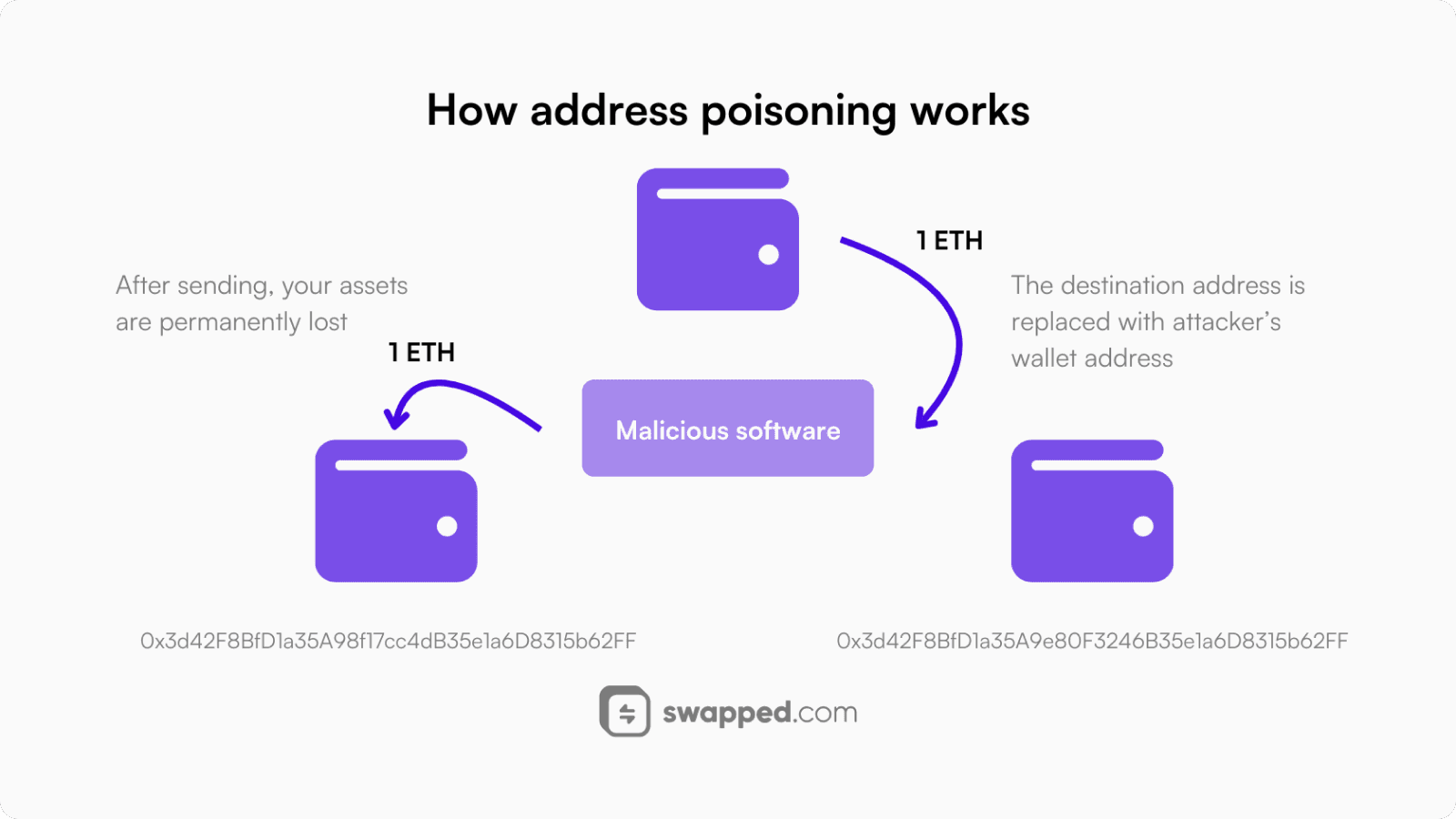
Review the destination before authorization because blockchain transfers can be difficult or impossible to reverse through ordinary support channels.
Permissions Beyond a Transfer
A token approval can allow a contract to spend assets later. A signed order can authorize later execution. Read what the signature or transaction permits, including the asset, amount, spender and expiry where applicable.
Review and remove unnecessary permissions using a trusted tool or wallet feature when supported. Disconnecting a website session does not necessarily revoke on-chain approvals. Revocation itself is an operation that should be verified before authorization.
When Something Looks Wrong
Pause new authorizations and identify the last confirmed stage. Check public transaction records and the service’s account status. Do not repeat an uncertain financial action or follow an unsolicited recovery link while trying to resolve it.
If signing material may be exposed, treat the relevant accounts as potentially compromised and follow a carefully verified recovery process. Changing a website password does not replace a leaked on-chain private key. Support requests should use public references, never secrets.
A dependable routine is simple: verify the source, understand the control model, inspect the authorization and confirm the result. Apply it consistently, including when an interface looks familiar or an action feels urgent.
Related Reading
The linked security guides offer additional context. Use your wallet or service’s official documentation for its supported controls and recovery process.