Wallet Recovery Phrases and Backup Basics
Learn what a recovery phrase restores, how it differs from a private key and what a complete wallet backup must protect.
DTCC Trading Editorial

A recovery phrase is sensitive backup material used by many self-custody wallets. It can help restore signing keys when a device is lost or replaced. The exact recovery process depends on the wallet and backup standard.
For a cryptocurrency wallet, possession of recovery material can provide powerful access. That is why it should never be shared with support agents, websites or people offering rewards. A public receiving address and a recovery phrase serve entirely different purposes.
Understanding the backup format before funding a wallet makes recovery less mysterious. The goal is to know what must be preserved, how it is protected and how to verify the backup using the wallet’s documented process.
What a Recovery Phrase Represents
Many wallets use a sequence of words to encode information from which signing keys can be derived. BIP39 is one common standard, but it is not the only backup method. Word count and recovery compatibility depend on the specific format.
A public example is never a private backup: Do not use a phrase copied from an article, message or demonstration.
A compatible wallet can use backup material to derive keys for assets such as Bitcoin and Ethereum. Successful recovery also depends on the format, derivation choices and any additional passphrase or account information required by the original setup.
A trusted wallet generates its backup during the documented setup process. Do not invent your own words or accept a prewritten phrase from another person. Predictable or previously disclosed material cannot provide private control.
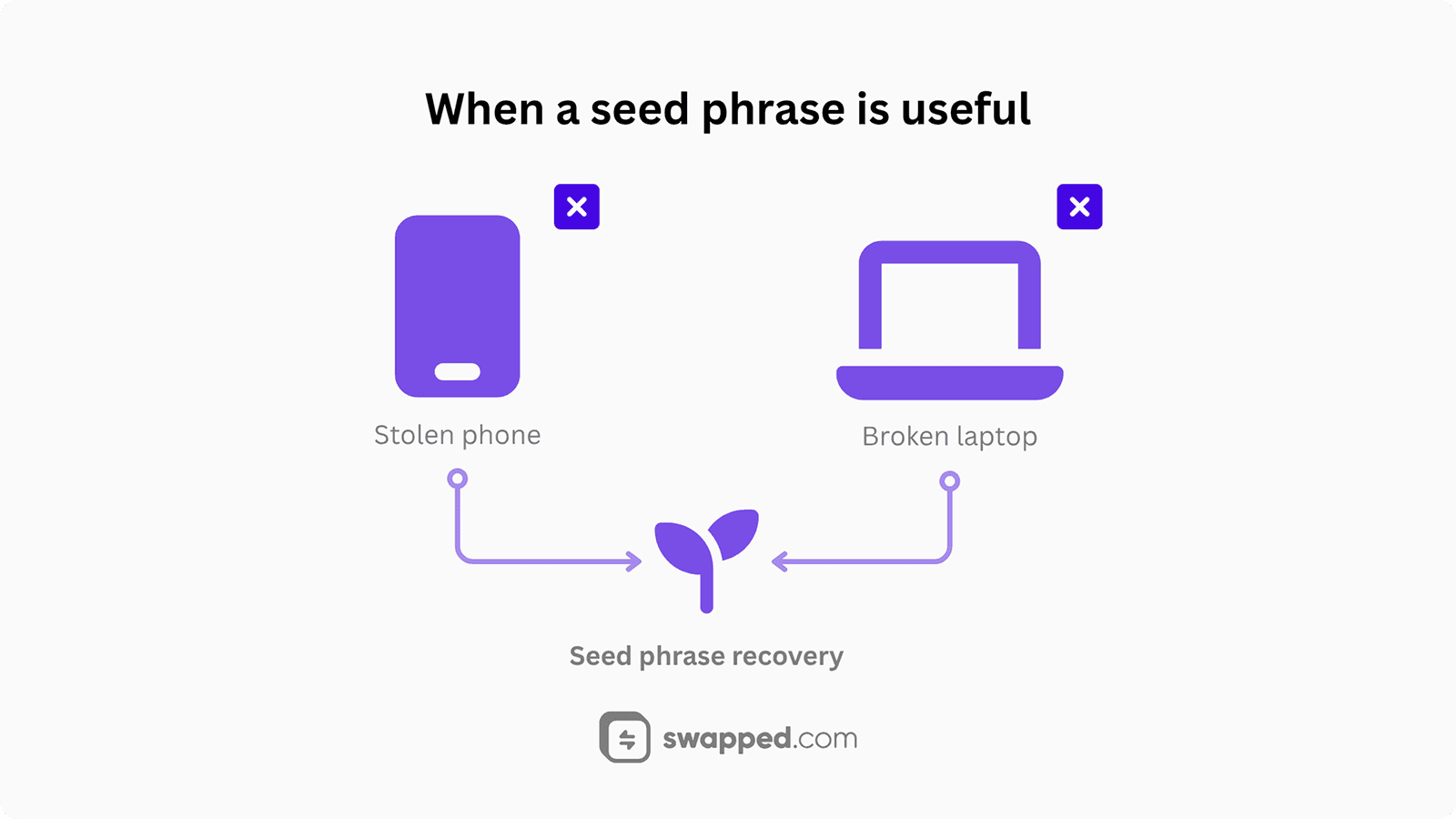
A complete, compatible backup can restore keys after a device is lost or replaced.
How Recovery Relates to Keys
The words do not store the assets themselves. Assets and account state are recorded by their networks. Recovery recreates the key material needed to access the relevant accounts, while wallet software discovers and displays the associated state.
Deterministic Key Derivation
A deterministic wallet derives a sequence or tree of keys from a starting secret. This can support many addresses from one underlying backup. The derivation method is part of the recovery information and must be compatible with the software used to restore it.
A useful analogy is a set of branches generated from the same starting point. Knowing that point is powerful, but the wallet still needs the correct rules to follow the branches. A backup should therefore be understood together with its wallet format.
Order and Exact Spelling
Record the words in their original order and verify them through the wallet’s supported backup-check process. A missing word, transcription error or incorrect passphrase can prevent access to the intended wallet even when another wallet opens successfully.
Why Recovery Planning Matters
A functioning device can hide the importance of its backup. Recovery planning asks what would happen if that device stopped working today and which information would be needed to regain access independently of it.
Device Loss and Replacement
If a phone or computer fails, a suitable backup can allow restoration through compatible software or hardware. That ability depends on the backup being complete and accessible. A screenshot of an account balance is not a key backup.
Before deciding to receive Bitcoin, understand the destination wallet’s recovery method. Receiving a transfer does not verify that recovery is possible. Check the backup using a documented procedure before depending on it for valuable assets.
Hardware Is Only One Layer
A hardware wallet can protect signing operations, but its backup needs separate protection. Device failure, theft and accidental reset are different events, and the recovery plan should account for losing the device without exposing the backup.
Control and Its Limits
Control of keys lets a user authorize operations under the network’s rules. It does not eliminate every restriction on an asset or service. Issuer controls, contract rules and custodial arrangements can still affect what an asset holder can do.
Recovery Phrase and Private Key
A private key and a recovery phrase are related but different forms of secret material. Understanding their scope helps explain why importing one key may not restore every account associated with a wallet.
The Scope of a Private Key
A private key is used to create signatures for a particular key pair. Its relationship to addresses depends on the network and address format. It is too simplistic to assume that every visible address always corresponds to one unique exported key.
[Private key omitted: never copy demonstration key material into a funded wallet.]
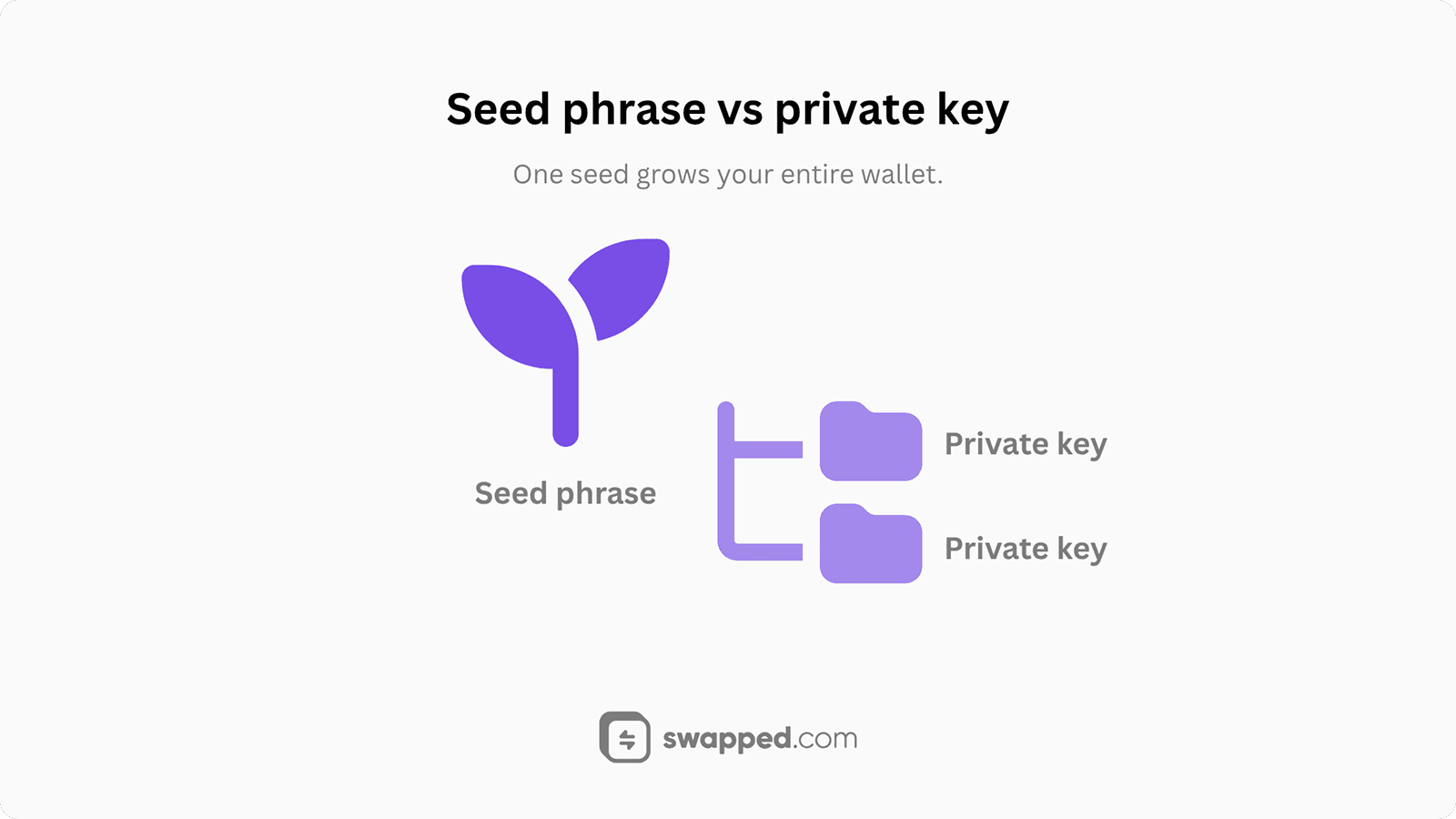
One wallet backup can derive multiple keys, subject to the wallet’s backup and account format.
The Scope of a Wallet Backup
A recovery phrase can restore a broader deterministic key structure, but it does not automatically cover keys imported separately afterward. Multisignature arrangements can require additional signers and configuration. Know which accounts your backup actually includes.
Keep non-secret recovery notes about the wallet type, network and backup standard where they can be found when needed. Protect the secret material separately. The plan should be understandable without placing all sensitive information in an exposed document.
Common Word-Based Standards
Word-based backups follow defined encoding schemes. Compatibility matters more than recognizing a familiar word list. A phrase from one standard should not be assumed interchangeable with another simply because both use ordinary words.
The BIP39 Word List
BIP39 defines a method that combines generated entropy with a checksum and represents the result using a word list. Its English list contains 2,048 entries. This is a technical format, not an invitation to choose words personally.
The checksum can help detect some transcription errors, but it does not prove that a phrase is private or securely generated. A valid phrase published online is still known to others and should never be used to protect funds.
Word Count and Passphrases
Supported word counts depend on the backup scheme. Some wallets also support an additional passphrase that changes the derived wallet. If used, the exact passphrase becomes essential recovery information; the word list alone may not restore the intended accounts.
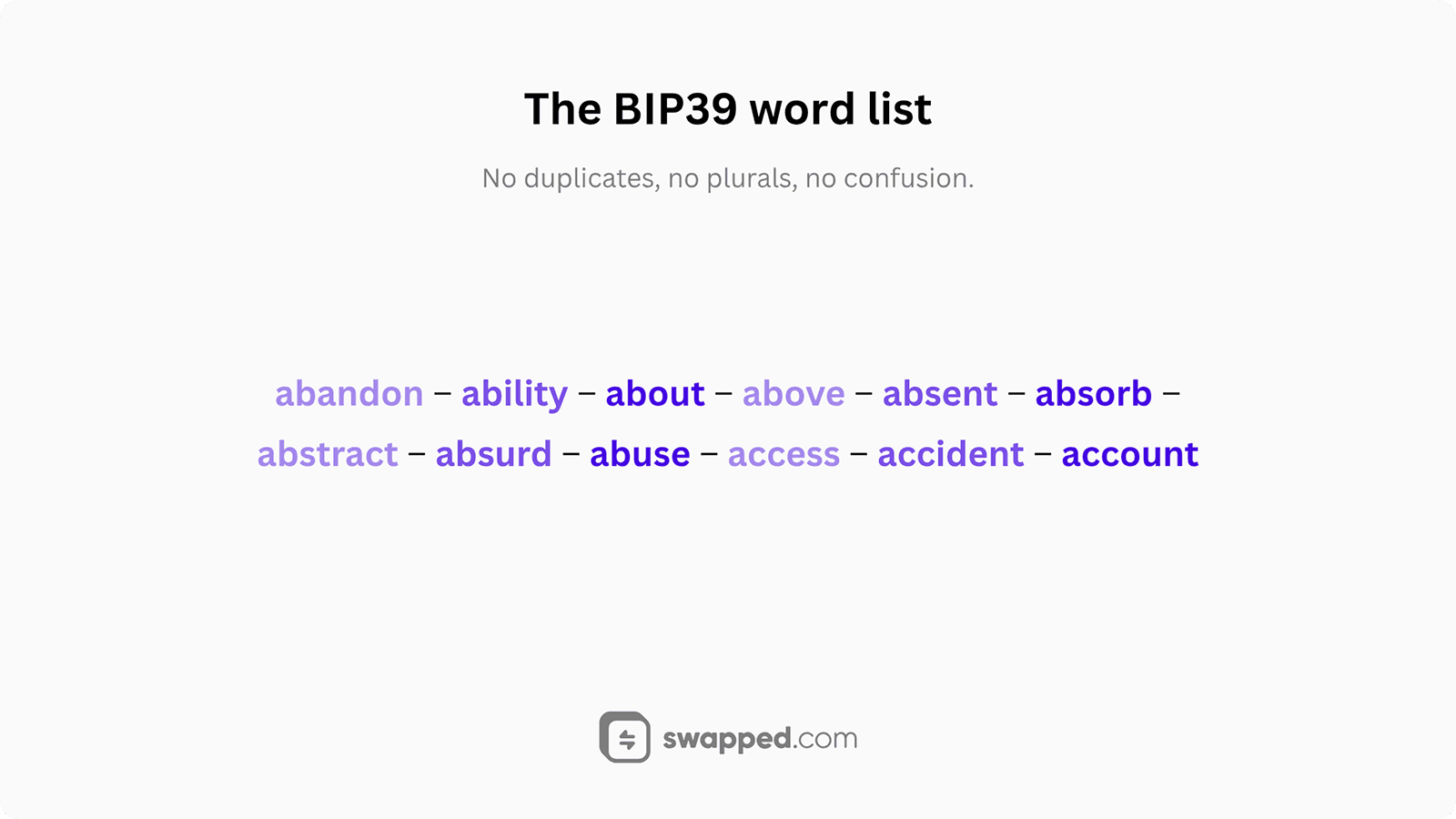
Backup standards define word encoding; different standards can require different recovery procedures.
Protecting Recovery Material
A backup must remain both private and recoverable. Protection against theft, accidental disclosure and physical loss needs to be considered together. A backup that nobody can recover is not an effective recovery plan.
Limit Digital Exposure
Avoid copying recovery material into messages, cloud notes, screenshots or ordinary web forms. Use the wallet manufacturer’s documented recovery interface when restoration is necessary. A support conversation should never require disclosure of the phrase.
Physical Backup Planning
A physical record needs legible ordering, protection from unauthorized access and a location that remains available when needed. Consider loss and environmental damage as well as theft. Do not place identifying account details beside exposed secret material.
Durability and Access
Durable storage can reduce some physical failure risks, but no material is universally indestructible. Evaluate the actual design and environment. Multiple copies can improve resilience while also creating additional locations that need protection.
Preparing a Wallet Before Use
Start with verified wallet software and understand its recovery method. Some wallets use different backup systems or account recovery arrangements, so follow the current documentation for the chosen product rather than a generic word-count assumption.
Where supported, run the wallet’s built-in backup verification or simulated recovery. This should check the backup without sharing it with an external service. Record that the check succeeded without recording the secret itself in an activity log.
A choice to buy crypto does not change these responsibilities. The receiving wallet and its recovery process need independent review. DTCC Trading’s educational material does not request, store or validate your private recovery phrase.
A Recovery Plan You Understand
A good plan identifies the backup format, necessary additional information and the trusted recovery procedure. It also considers who should be able to recover access if the original user becomes unavailable, without exposing secrets prematurely.
Review the plan after changing wallet types, adding imported keys or creating a multisignature arrangement. Keep private material private and use documented verification methods. Recovery confidence should come from a checked process, not from a balance displayed on one device.
Related Reading
The linked explainers provide additional context. For an actual wallet, its current backup documentation determines the required recovery procedure.