Ethereum Token Standards and Their Limits
Compare ERC-20, ERC-721 and ERC-1155 interfaces, understand approvals and distinguish technical compatibility from asset quality or security.
DTCC Trading Editorial

Many cryptocurrencies and NFTs use shared interfaces on Ethereum. These token standards let software recognize common operations such as reading a balance or requesting a transfer. They make integration easier without making every token behave identically or carry the same rights.
A standard describes an interface and expected behavior. An individual implementation can add controls, restrictions or vulnerabilities. Understanding that boundary helps users and developers ask better questions about compatibility and authority.
What a Token Standard Defines
A token standard specifies operations and events that other software can expect on a blockchain. Wallets and applications can build against those conventions. Support still depends on the actual network, implementation and application, so standard compliance is not universal compatibility.
Without common interfaces, each integration would need more custom knowledge of each token. Standards reduce that burden. They do not remove the need to identify the correct contract or handle implementation-specific behavior.
Different standards address different asset models. Fungible balances, individually identified items and multiple token types within one contract need different operations. The choice should follow the application’s requirements.
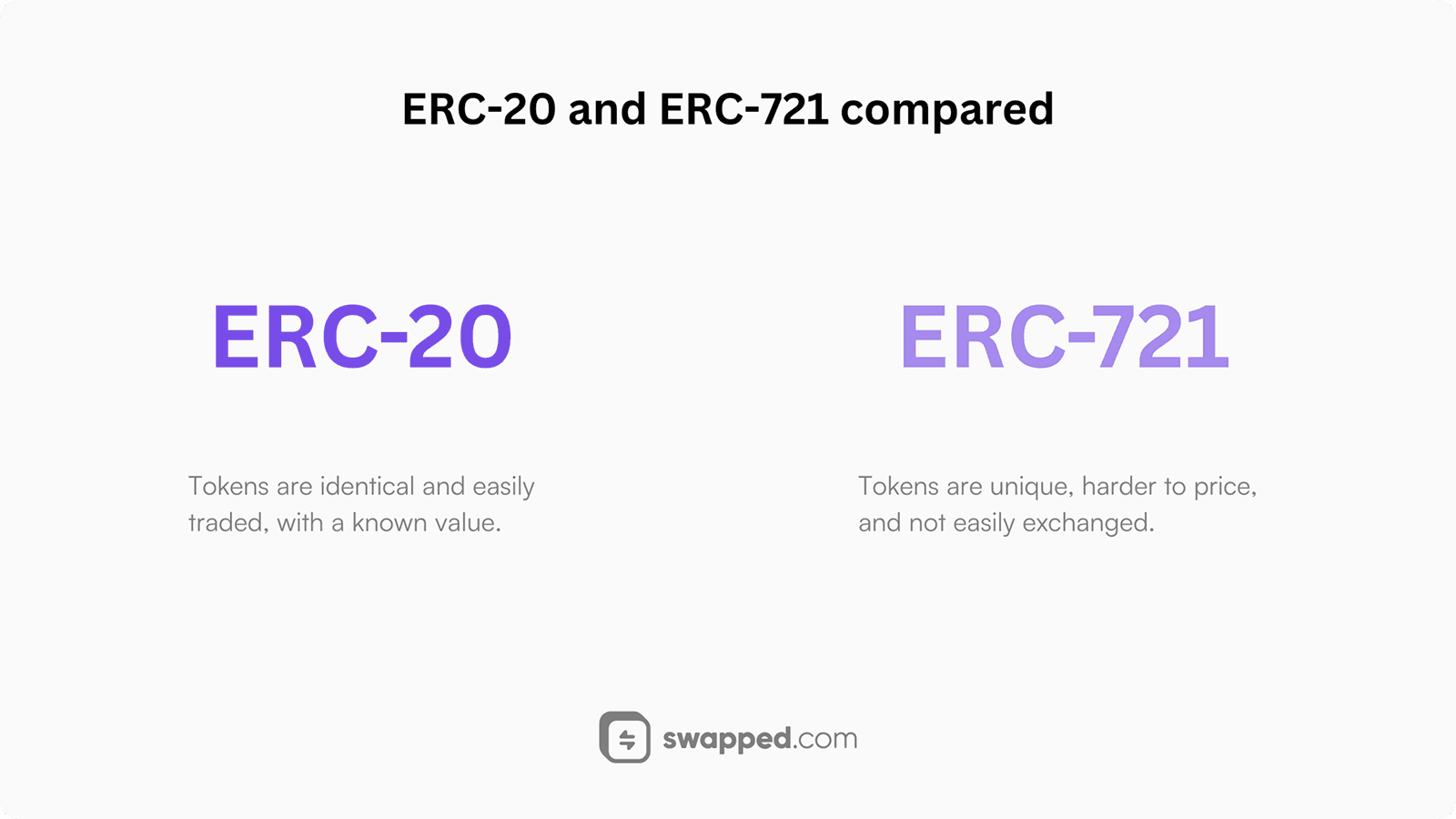
ERC-20 describes fungible balances; ERC-721 identifies individual tokens.
ERC-20: Fungible Token Balances
ERC-20 defines a common interface for fungible tokens. It includes balance and supply queries, transfers and an allowance mechanism. The contract address and network identify the token more reliably than its displayed name or symbol.
What Fungibility Means Here
Within the token’s balance model, units are interchangeable rather than individually numbered items. That does not guarantee a stable price, equal treatment by every service or the absence of transfer restrictions in a particular implementation.
Allowances let an owner authorize another address to spend up to a specified amount through the token interface. Approval is an authorization, distinct from the later transfer. Review the spender and amount before granting it.
Applying the Standard to a Token
A stablecoin implemented with ERC-20 can expose familiar balance and transfer functions while also having issuer controls or redemption conditions. The interface does not verify backing or require every wallet and exchange to support that exact deployment.
ERC-721: Individually Identified Tokens
ERC-721 represents tokens with distinct identifiers within a contract. Software can query ownership and transfer a specific identifier. A token’s identity is the combination of network, contract and token ID.
Understanding Non-Fungible Ownership
An individually identified token can represent a collectible, access record or other application-defined item. Its uniqueness on-chain does not automatically confer copyright, ownership of a physical object or exclusive access to an associated image.
ERC-721 includes ownership and transfer operations as well as approval mechanisms. Optional metadata can describe a token, but its storage and mutability depend on the implementation. Read the asset’s terms and technical design separately.
Why a Shared NFT Interface Helps
A common interface helps marketplaces and wallets handle individually identified items consistently. It does not authenticate the creator or verify that linked media will remain available. Those are separate questions requiring separate evidence.
ERC-1155: Multiple Token Types
ERC-1155 defines an interface for managing multiple token identifiers within one contract. Different identifiers can represent different supplies or types. This can suit applications that need more than one asset category.
One Contract, Several Identifiers
An application might use one identifier for a widely available item and another for a limited item. The amount associated with each identifier matters. ERC-1155 supports a model broader than simply classifying every contract as one currency or one NFT collection.
The standard includes batch operations that can handle several identifiers together. Actual efficiency depends on the operation and implementation. A batch interface does not guarantee that every transaction is cheaper than every alternative.
A Practical Design Example
A hypothetical game could track consumable items and unique equipment under different identifiers. The token interface records balances and transfers, while the game’s rules determine what those items do. Owning a token does not guarantee continued game operation.
Experimental Hybrid Designs
Some projects explore combinations of fungible balances and individually identified items. ERC-404 is a name used for an experimental mixed implementation. Treat such designs according to their actual code and review status, not the familiarity of an ERC-style label.
How Hybrid Behavior Differs
A hybrid design can link changes in a fungible balance to the creation or movement of individually identified tokens. The exact synchronization rules determine what happens during transfers and interactions with other applications.
That coupling can create edge cases for integrations expecting ordinary ERC-20 or ERC-721 behavior. Developers need to test the actual transfer and approval paths. A partial interface resemblance is not proof of full compatibility.
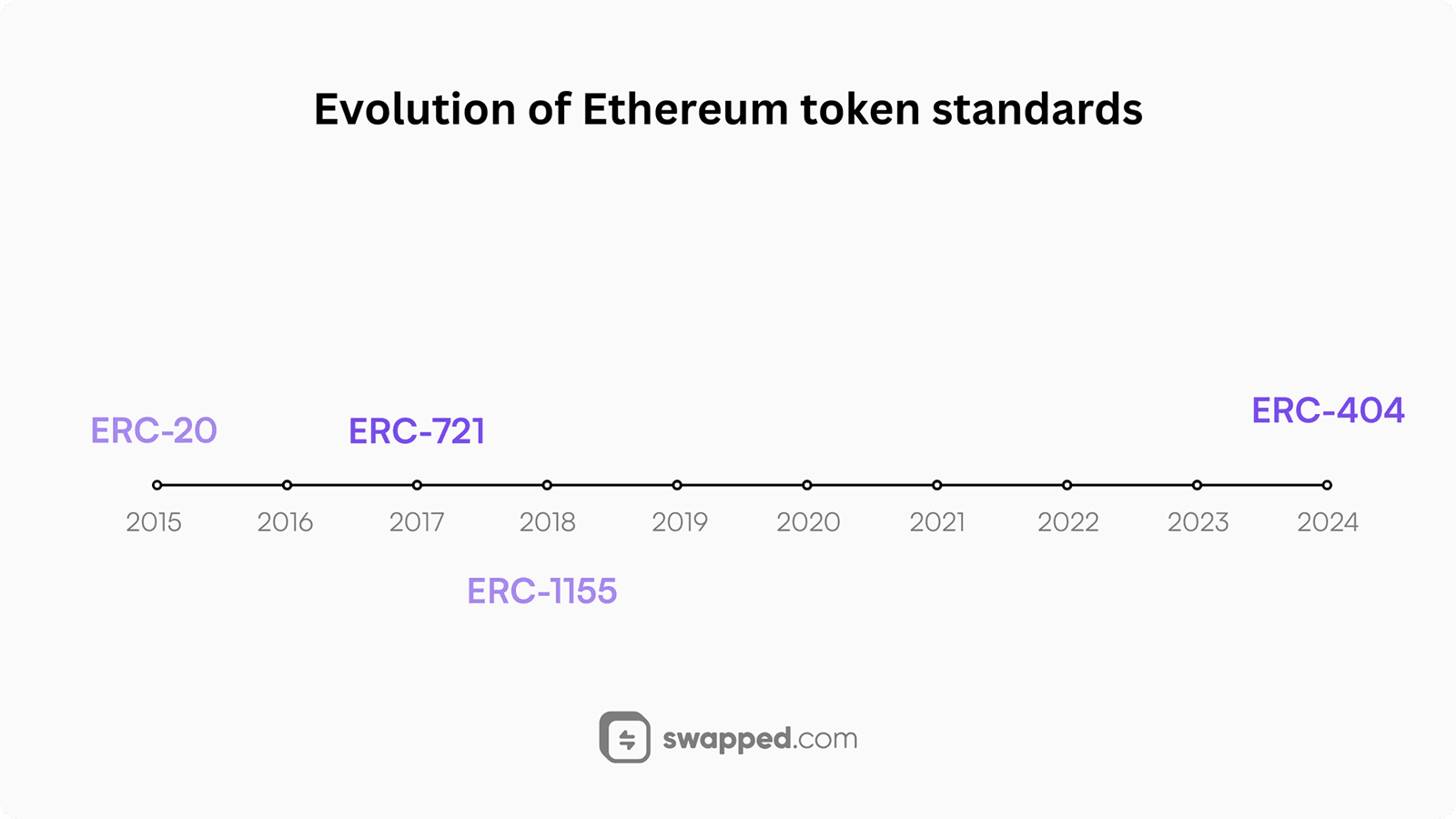
Different token models support different operations and integration assumptions.
Reading Experimental Claims
Check whether a design is a finalized standard, a proposal or a project-specific implementation. Its repository and formal specification should make that status clear. An experimental label should remain visible when discussing its capabilities.
Adoption Is a Separate Question
Trading activity or attention does not validate an implementation. Evaluate code review, deployed behavior and integration support directly. Market popularity and technical correctness answer different questions.
What Standards Mean for Users
The practical value is knowing which questions to ask before transferring, approving or integrating a token. A standard gives a starting vocabulary, while the asset’s actual deployment determines the details.
Wallet and Service Support
Verify the network and contract against the receiving application’s supported-asset instructions. A wallet may display a token while a separate service cannot credit it. Display support, transfer support and deposit support are different capabilities.
Security and Authority
A standard interface is not a security audit. Review administrator powers, upgradeability, transfer controls and the scope of any audit. An allowance granted to a malicious spender can be dangerous even when the token itself follows a familiar standard.
Learning to Inspect a Token
You can begin with read-only information: the network, contract address, published specification and explorer record. Understanding those identifiers is useful before making a purchase or granting a permission.
Choose a Compatible Wallet Setup
Use verified wallet software and confirm the intended network. Read how it displays the relevant token type and how recovery works. A missing display does not always mean an asset is absent, so compare the wallet view with the network record.
Identify the Exact Deployment
Compare the contract or asset identifier with the issuer’s verified documentation. Names, symbols and logos can be copied. DTCC Trading’s educational discussion of Ethereum standards does not establish support for a particular token or purchase route.
Review Permissions Before Signing
Read the requested operation, spender and amount. Distinguish a transfer from an approval or an operator permission covering multiple items. If the wallet cannot explain the request adequately, resolve the uncertainty before authorizing it.
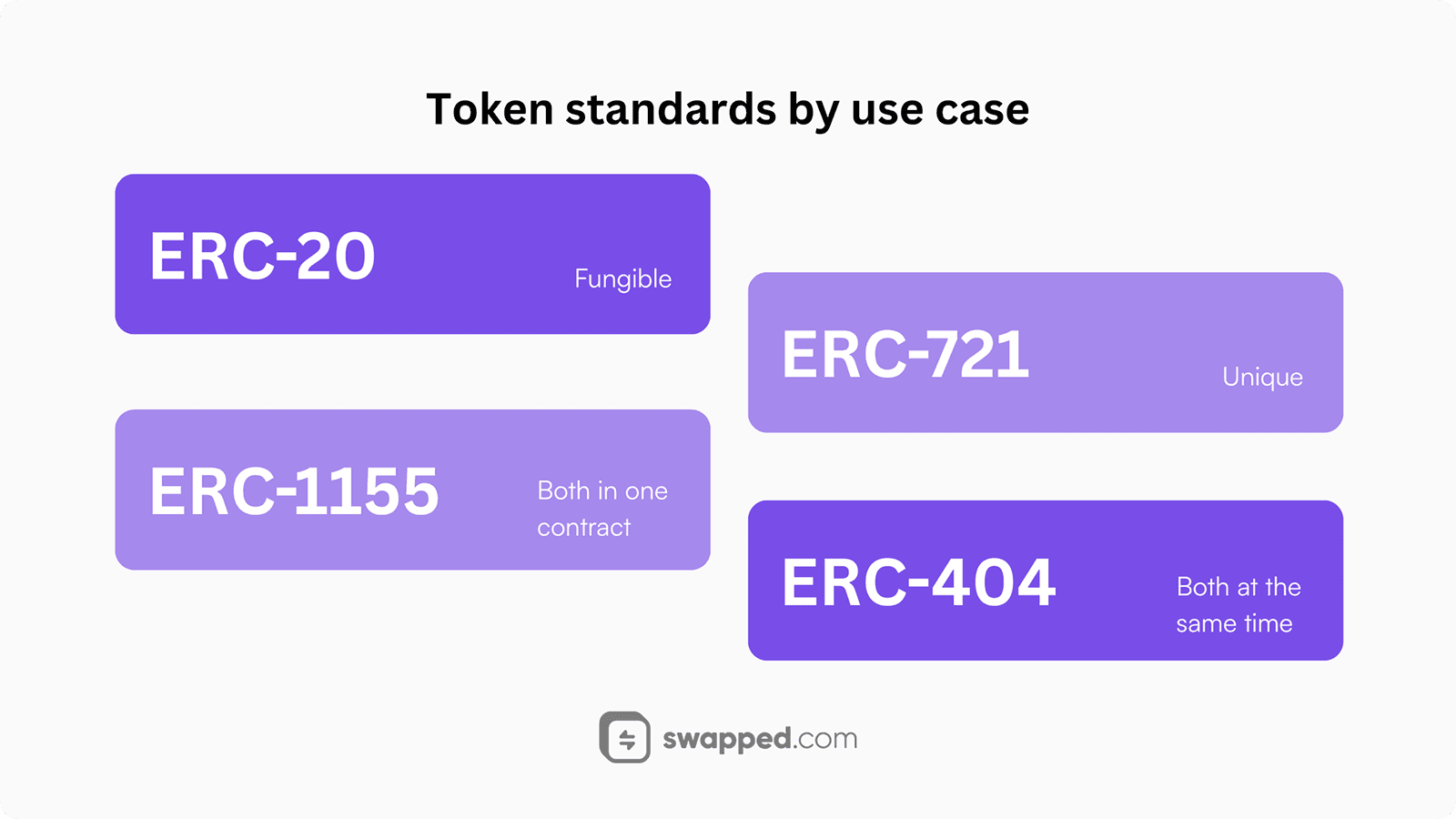
Choose and evaluate a token interface for the operations the application actually needs.
How Standards Develop
Standards evolve through proposals, review and implementation experience. New interfaces can address missing functionality while introducing new assumptions. A newer number is not automatically a better choice for an existing application.
Developers should separate interface conformance from business logic and legal rights. Tests can check the expected functions, while documentation explains what the token represents and which controls remain with an issuer or administrator.
For users, the same distinction improves decision-making: identify the asset, understand its permissions and read the rights attached to it. The standard alone cannot answer every question about the token.
Shared interfaces make digital assets easier to integrate, but clarity comes from describing their boundaries as well as their capabilities. That approach applies across tokenization systems, including systems built on other networks.
Related Reading
The formal specifications are the best starting point for required behavior. Use introductory guides as context and verify implementation details against the deployed contract.