A blockchain bridge connects activity across networks. Its asset representation, verification process and completion rules determine what a cross-chain transfer actually does.
A blockchain bridge coordinates activity between networks that maintain separate records. It can carry messages, support asset movement or both. The important question is what each side verifies and what the user receives after the cross-chain process completes.
What a Bridge Connects
A balance recorded on one network is not automatically a balance on another. A bridge introduces a mechanism for linking actions across them. That mechanism can create a representation, release an existing asset or deliver a message to an application.
The resulting asset may have a different issuer or contract from another token with the same symbol. Understanding that distinction is essential when checking deposit compatibility, redemption conditions or the dependencies behind a displayed balance.
Following a Bridged Transfer
Begin with the source network, starting asset, destination network and expected result. Then identify the operations that connect them. A bridge interface can combine several steps while showing only one progress indicator.
Asset Representations
Some designs lock an asset in one place and issue a representation elsewhere. Others use different issuance or liquidity arrangements. The design determines what supports the destination asset and what must happen if the user later wants to return.
Do not infer those rights from a token name. Read the bridge’s current documentation and compare the exact identifiers. Two similarly named assets can rely on different systems, with different transfer restrictions and recovery paths.
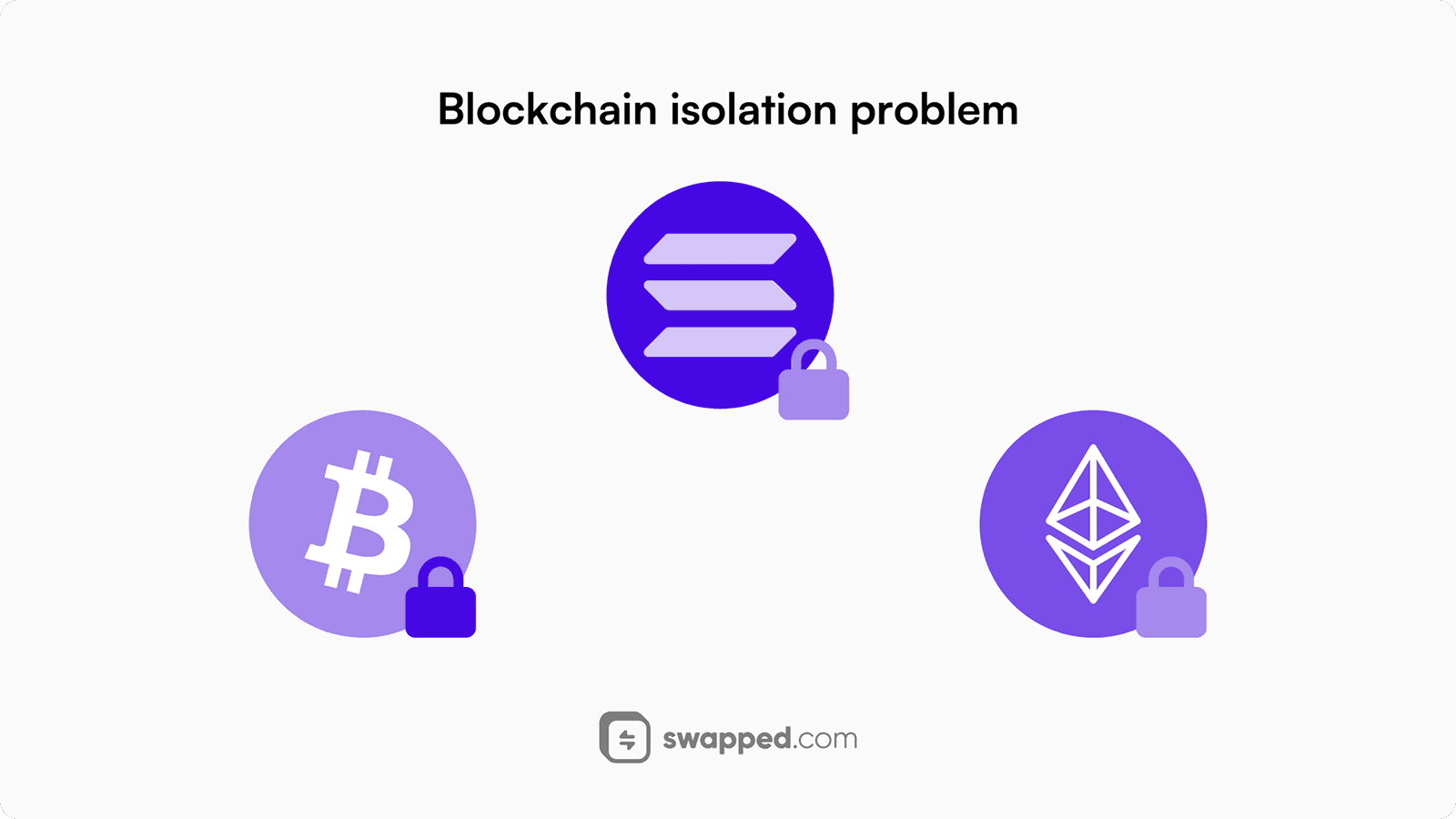
A cross-chain route links separate network records through a defined mechanism.
Different Verification Models
Bridges differ in how they decide that a source event is valid. The verification process is a core dependency because it authorizes an action on the destination side.
Additional Operators or Verifiers
Some bridges depend on a specified set of signers, validators or other operators. Examine who can authorize transfers, change configurations or pause the system. A distributed set can still introduce a shared dependency beyond either connected network.
Operational procedures matter alongside the number of participants. Key management, upgrade authority and incident response can affect the route. A high-level description such as decentralized does not replace those concrete details.
Verification Linked to a Network
Other designs use proofs or mechanisms tied more closely to the connected networks. These also have assumptions, implementation risks and completion rules. Identify exactly what is checked rather than treating the term trustless as an absence of every dependency.
Reviewing Bridge Risks
A route combines the risks of its contracts, verification mechanism, connected networks and any liquidity providers. A completed security review is useful evidence with a defined scope; it is not a guarantee that all components or future changes are safe.
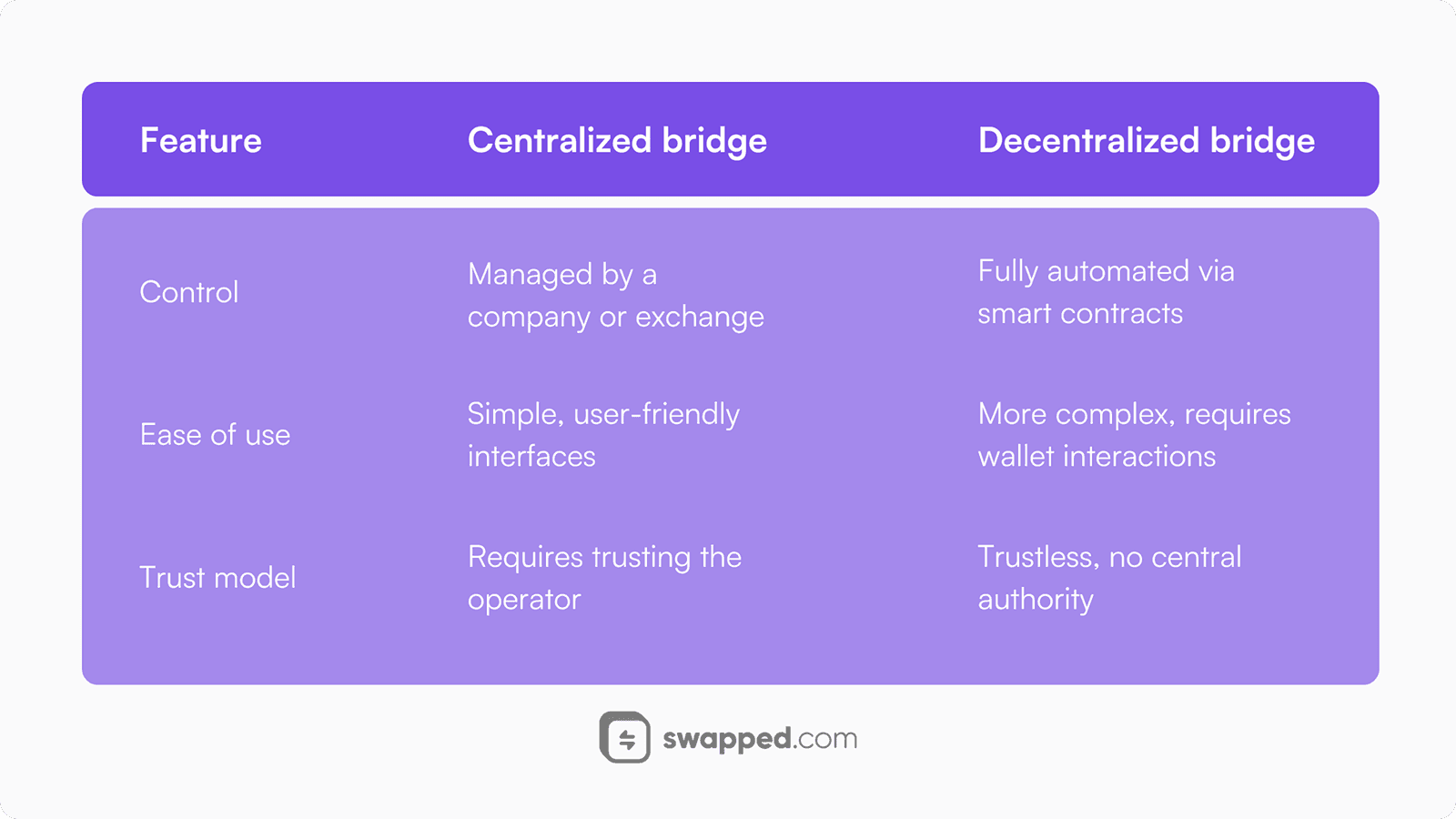
The bridge mechanism adds dependencies to the networks it connects.
Contract and Operational Risk
A software defect, compromised authority or unavailable operator can interrupt a route. Read what can be paused, upgraded or recovered and who controls those actions. The interface’s continued availability does not prove that every underlying operation is functioning.
Cost and Completion Risk
The initial quote may include network fees, bridge charges or conversion costs. Completion can depend on confirmations, verification windows and available liquidity. A source transaction succeeding does not alone prove that the expected destination asset has arrived.
A Useful Route Checklist
Before using a route, establish the exact starting and destination assets, the verification model and the expected sequence. Review required approvals, quote conditions and any later claim step. Preserve public identifiers for both sides where they are available.
DTCC Trading works with Stellar tokenization and multichain interoperability. That focus does not establish support for every bridge, network or asset representation described here. A specific integration needs its own documentation and verified route behavior.
Related Concepts
FAQs about Bridge
Does an audited bridge guarantee safe transfers?
No. A review covers a particular scope and version. Contracts, operators, integrations and later changes can introduce additional risks. Examine the review alongside the actual deployed design, asset representation and authority to upgrade or pause the route.