Altcoin is a broad label for crypto assets other than Bitcoin. It groups together very different networks and tokens, so the individual asset’s design matters more than the category.
Altcoin is shorthand for an alternative to Bitcoin in common crypto vocabulary. The category is broad enough to include assets with very different purposes, issuers and technical designs. Being called an altcoin does not establish a shared risk level, feature set or relationship with Bitcoin.
What the Label Includes
The term is commonly applied to cryptocurrencies other than Bitcoin, and is often extended informally to tokens. Usage varies between communities and data providers. Check the intended definition when comparing market statistics or reading a claim about all altcoins.
A network’s native asset and a token issued on that network are different structures. One may help pay protocol fees, while another represents application rights or an issuer’s claim. The broad label does not explain those differences.
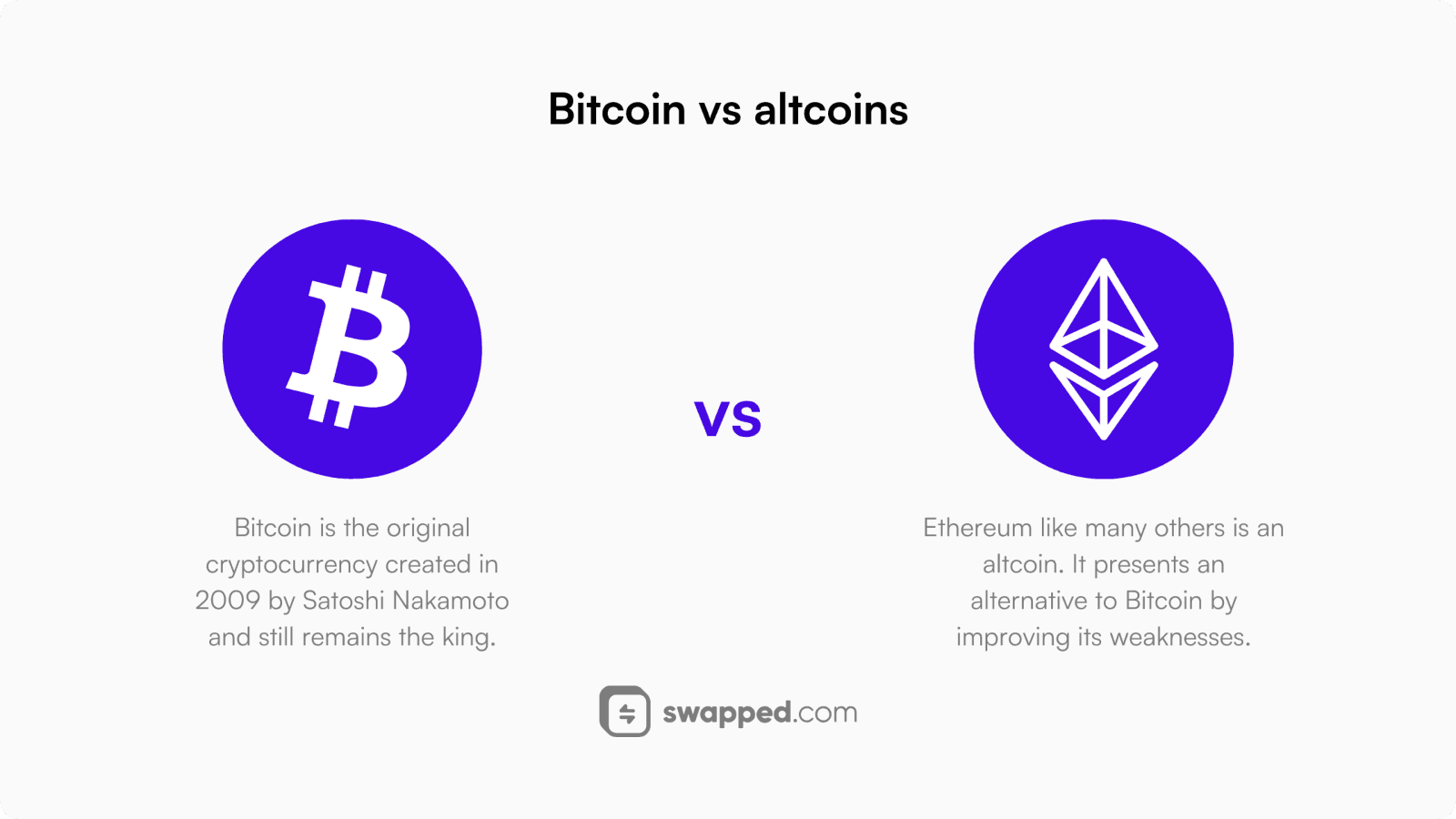
Altcoin is a broad category; each asset still needs an individual description.
Why Different Assets Exist
Projects choose different approaches to payments, programmability, privacy, governance or other uses. Those choices introduce trade-offs and dependencies. A stated goal in a whitepaper is not proof that the deployed system achieves it.
To understand an asset, identify the network, issuance rules, supply, control permissions and intended use. Then compare those claims with documentation and deployed behavior. A new feature or a familiar brand name does not by itself establish value or reliability.
Why People Hold Altcoins
People can hold an asset for use in an application, payment of network costs, governance participation or speculation. These motivations are different and can overlap. Observing that an address holds a token does not reveal the holder’s purpose.
Holding several tokens also does not automatically create independent exposure. They can depend on the same network, custodian, issuer or market conditions. The number of symbols in a wallet is a poor substitute for understanding those relationships.
Common Categories
Categories help organize research, but their boundaries are imperfect. A token can fit more than one description, and assets with the same marketing category can operate very differently.
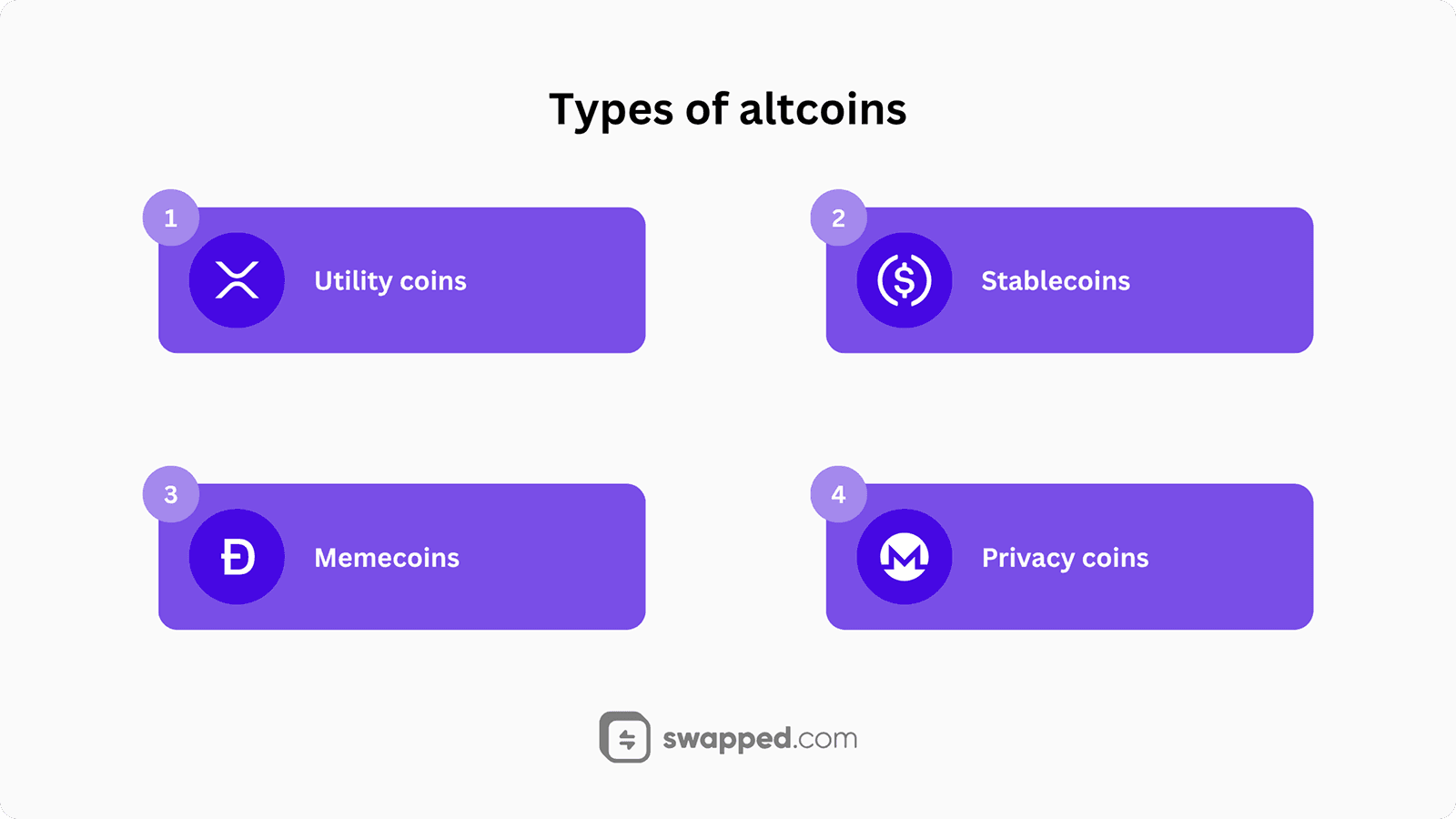
A category describes a theme; contract rules and issuer terms define the asset.
Programmable Network Assets
Ethereum is an example of a network that supports programmable applications, with ETH as its native asset. Application tokens built on a network are separate assets. Owning the native asset does not confer ownership of every application using the network.
A smart contract follows deployed code and the surrounding network rules. Automation can execute a defined operation, but it does not establish that the code is correct, the inputs are reliable or every offchain promise is enforceable.
Stable-Value Tokens
Stablecoins aim to track a reference value, such as a currency, through a particular mechanism. The mechanism and rights differ by asset. A target price is not a guarantee that the market price will remain fixed.
Read reserve, collateral, issuance and redemption terms where relevant. A token transfer and a redemption claim are different operations. Availability of one does not prove that every holder can use the other under identical conditions.
Privacy-Oriented Designs
Some assets emphasize privacy features, but the scope depends on the protocol and how it is used. Privacy is not established by a category name. Network metadata, optional settings and interactions with other services can affect what information remains visible.
Community and Meme Tokens
Memecoins often draw attention from community identity or online culture. That origin does not define a uniform technical design. Inspect supply, controls and liquidity rather than assuming that popularity creates utility, security or a dependable resale market.
Evaluate the Individual Asset
Use the exact network and asset identifier, then read primary documentation and current evidence. Check whether a claimed feature is proposed, tested or deployed. Different stages should not be combined into one statement about present functionality.
DTCC Trading explains altcoins as a vocabulary category. Mentioning an asset, network or token type here does not establish platform support or an investment recommendation. The useful next step in research is a precise description of the particular asset.
Related Concepts
FAQs about Altcoin
How many altcoins exist?
There is no single stable total. The answer depends on whether inactive assets, application tokens and multiple network representations are included. Use a named provider’s current dataset and definition when a count matters, rather than treating an undated number as universal.