Initial Coin Offerings and Token-Sale Terms
Understand how token sales raise funds, how token rights differ from shares, and which offering, delivery and governance details need verification.
DTCC Trading Editorial

A token sale can raise funds for a digital-asset project by offering tokens or rights to future tokens. The label initial coin offering, or ICO, describes a fundraising approach; it does not establish the legal rights or quality of the offering.
Understanding an ICO requires reading the actual instrument, sale agreement and project evidence. A compelling idea and a working token are different milestones. Neither alone proves that the proposed service will be delivered or that the token will have a liquid market.
What an ICO Offers
An ICO commonly involves selling a project-related token to fund development or other activities. The token can have different functions and restrictions. The name of the sale does not tell you whether holders receive access, governance rights or an enforceable financial claim.
A cryptocurrency or blockchain project may describe a token as useful within a future application. That description needs to be compared with the sale terms and the implemented system. A token is not automatically an ownership stake in the company promoting it.
The similarity between ICO and initial public offering, or IPO, can be misleading. Shares and tokens can convey very different rights. Legal classification depends on the instrument, transaction and jurisdiction rather than the marketing acronym.
The Stages of a Token Sale
A useful review separates planning, promotion, sale execution and delivery. Projects can be at very different stages when they seek funding, so identify which parts already work and which remain promises.
Planning and Documentation
A whitepaper can explain the intended system, token role and development plan. It is a document authored by the project, not independent verification. Compare its claims with code, working demonstrations and clearly attributed external evidence.
Supply, allocation and vesting rules determine how tokens are distributed over time. Identify who can change those rules, whether additional issuance is possible and how insiders’ allocations compare with the amount offered to purchasers.
Promotion and Disclosures
Marketing can describe aspirations more confidently than formal terms. Preserve the distinction between an announced partnership and a verified agreement, or between a roadmap item and a deployed feature. Endorsements do not substitute for evidence about the offering.
Sale Execution
A sale may accept assets such as Bitcoin or Ethereum, but the accepted method and delivery process are specific to the offering. A payment address appearing in a message does not authenticate the issuer or establish entitlement to tokens.
Discounts and bonus schedules change the effective price and can create pressure to act. Compare the full allocation and lockup terms rather than evaluating an early price in isolation. A lower purchase price does not guarantee an exit market.
After Funds Are Raised
Token delivery, product development and secondary trading are separate outcomes. A completed sale can still be followed by delays, restricted transfers or no usable product. Reporting should distinguish raised funds from demonstrated delivery.
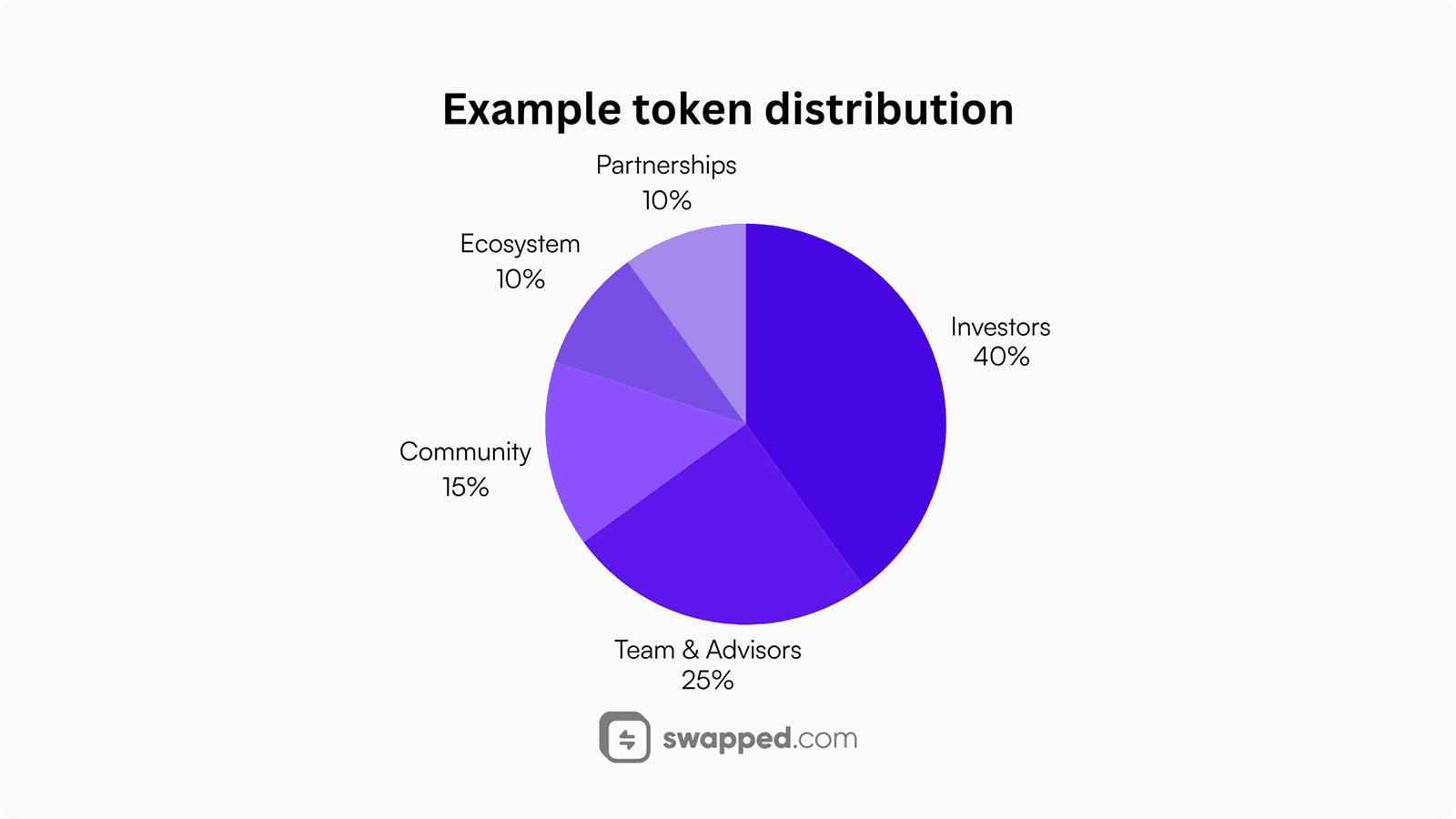
Allocation, issuance authority and vesting determine how a token’s supply reaches participants.
Funding Rounds and Their Meaning
Projects can combine several financing methods. Round names describe a sequence or audience but do not define identical rights across issuers. Compare the actual agreement attached to each round.
Seed funding often supports an early stage of development. It can take the form of equity, debt, token rights or another arrangement. The label does not reveal the project’s maturity, valuation or the conditions under which the investor receives an asset.
Private funding can involve selected investors under negotiated terms. Pricing, information rights, vesting and transfer restrictions may differ from a later sale. Those differences matter when evaluating the overall capital and token structure.
Public distribution describes a wider offering process, subject to eligibility and applicable law. It should not be assumed open to everyone in every country. The published access conditions and offering documents determine who can participate.
Comparing an ICO With an IPO
Both can raise capital, but the comparison needs to focus on the rights sold, disclosure framework and issuer obligations. The presence of a tradable instrument does not make the underlying arrangements equivalent.
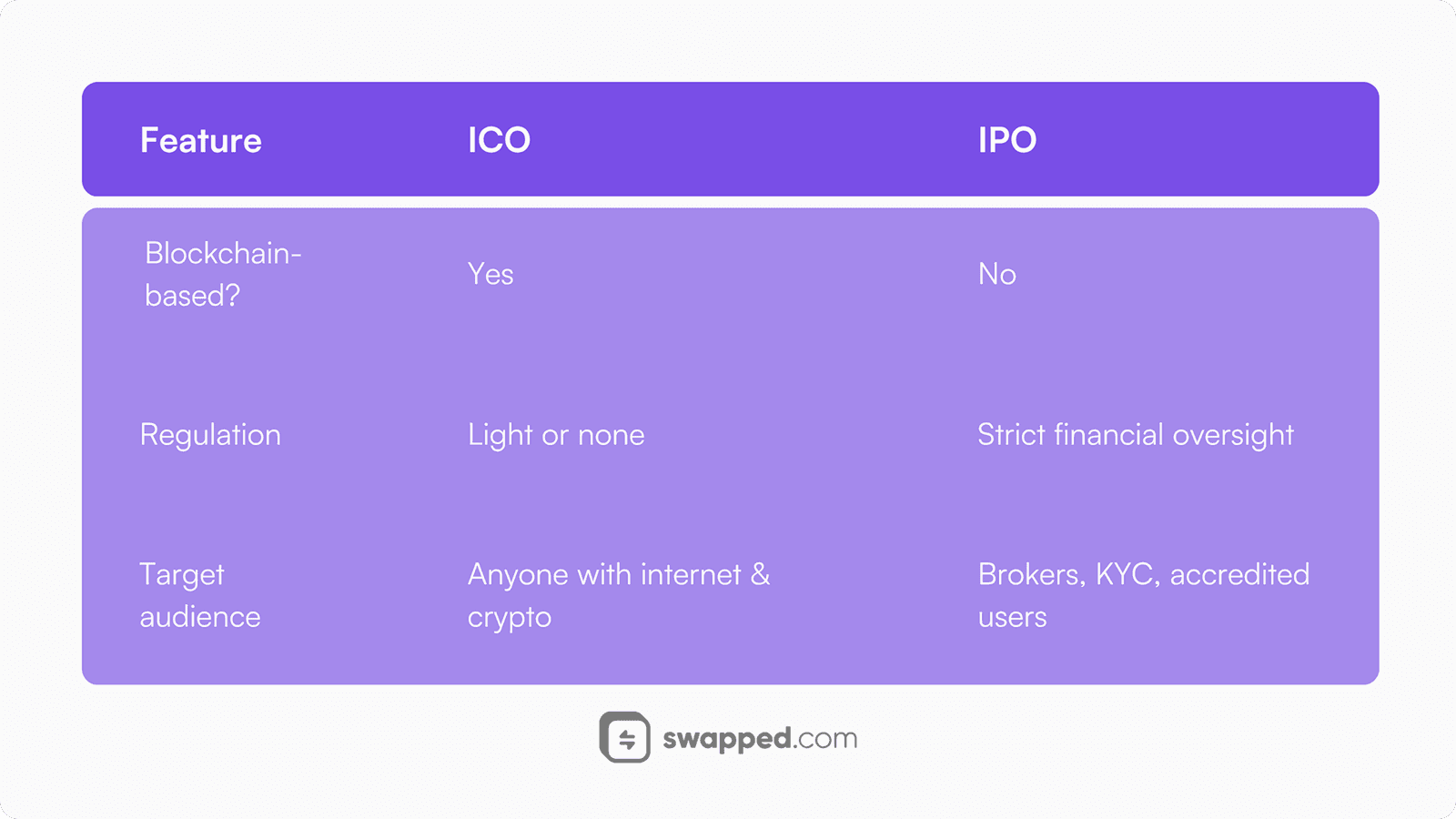
Compare the rights and obligations of the instrument, rather than the similarity of the fundraising labels.
Legal Framework
A share offering operates within the applicable securities framework and its specific offering terms. Requirements differ by jurisdiction and offering type. Registration or permission to offer an instrument is not a guarantee of investment quality.
A token sale can also fall within securities or other financial rules. It is inaccurate to describe every ICO as unregulated. Current legal analysis must address the actual token, distribution and jurisdictions involved.
Holder Rights
Shares commonly represent an ownership interest in a company, with rights defined by their class and governing documents. Those rights can differ across share classes and do not guarantee dividends or a particular level of control.
A token can confer access, voting functions or a claim, or it may provide no enforceable right against a company. Read the governing terms. A token balance and an equity interest should never be treated as interchangeable without evidence.
Access Requirements
Both token and share offerings can impose eligibility, location and verification requirements. Technical access to a website or contract does not establish that a person is permitted to participate under the relevant terms.
Project Maturity
Maturity is a fact to verify, not a property guaranteed by an acronym. Identify existing operations, financial information and product evidence. An early-stage project and an operating company can create very different execution risks.
Other Token Distribution Labels
Several labels describe the platform or structure used for a sale. They can help identify the mechanics, but they should not be mistaken for independent quality certifications.
Exchange-Hosted Offerings
An initial exchange offering generally uses an exchange’s sale process. Review the exchange’s role, purchaser agreement and selection disclosures. A hosted sale does not establish that the exchange guarantees the project or future token liquidity.
DEX-Related Offerings
An initial DEX offering can use decentralized trading infrastructure or a launch mechanism. Smart-contract execution does not remove issuer, allocation or legal questions. Determine which contracts control the sale and what permissions remain afterward.
Security Token Offerings
A security token offering describes a tokenized instrument presented within a securities framework. The holder’s claim, transfer restrictions and servicing arrangements still need to be specified. Tokenization changes the record or transfer mechanism, not every underlying obligation.
Private Sales and Venture Funding
A project may raise company equity and issue tokens through separate arrangements. Understand how those structures relate and whether token holders have any claim on company value. A venture investment in the company does not automatically benefit token holders.
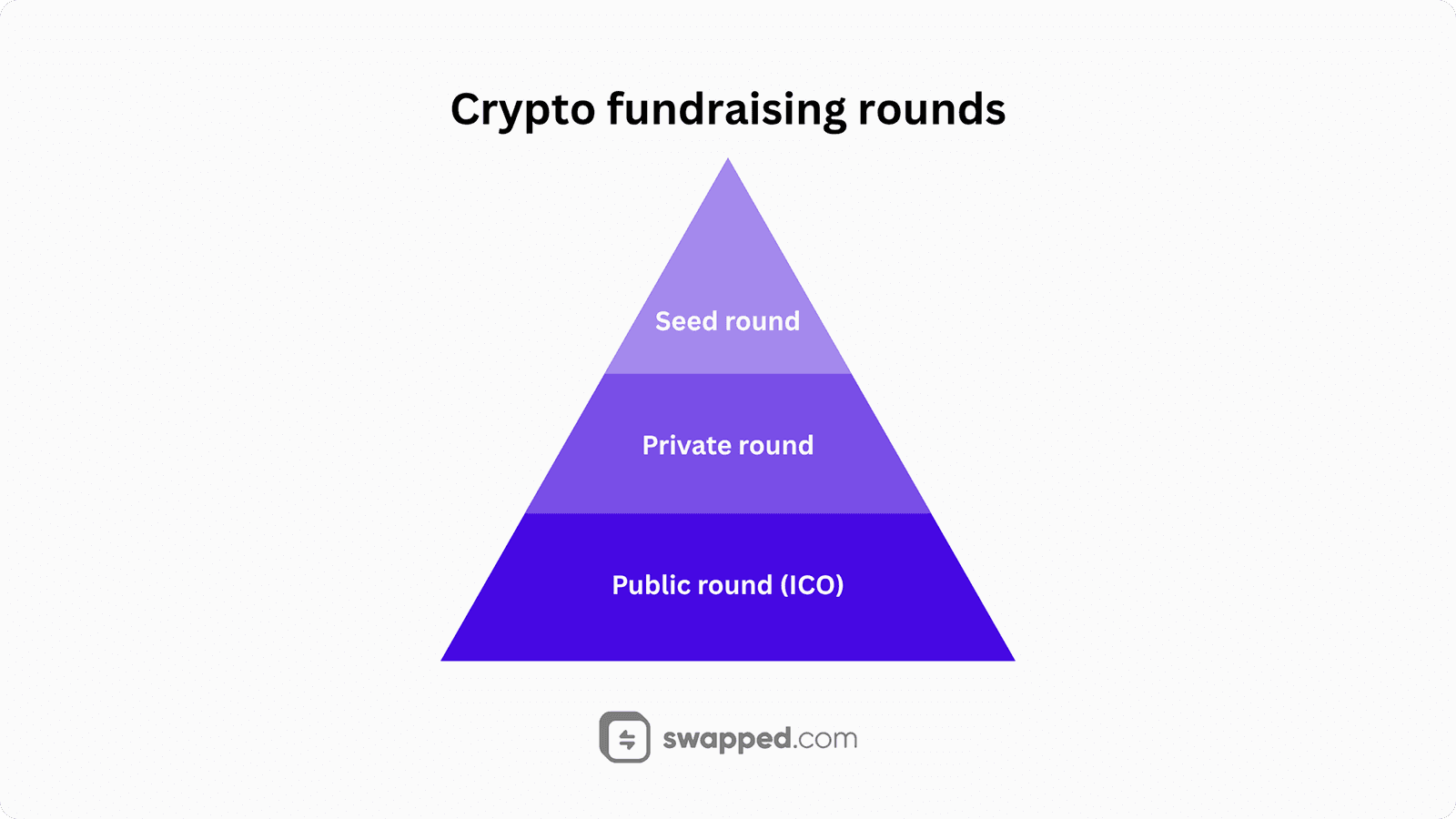
Round names do not define rights; the actual agreements and allocation schedules do.
Reviewing a Proposed Token Sale
A review should produce a clear account of the issuer, instrument, funding use and delivery obligations. Missing essential information is a reason to stop the assessment rather than fill the gap with an optimistic assumption.
Check the Project Evidence
Read the formal terms alongside the whitepaper and inspect the claimed working product. Verify team and partnership statements through attributable sources. A polished website or repository with code does not establish that the stated system is deployed and operating.
Separate an audit report’s actual scope from a general claim that a project is audited. Check the version, date and unresolved findings. Technical review does not verify every commercial, custody or legal assertion made by the promoter.
Understand Payment and Delivery
Identify the accepted asset, network, beneficiary and delivery schedule from verified offering materials. Determine what record proves participation and what happens if the sale fails or tokens are delayed. Do not send funds while those conditions remain unclear.
Authenticate the Counterparty
Use the issuer’s established communication channel to verify a sale and any payment instructions. Impersonation can occur through search ads, copied sites and private messages. A request to reveal a wallet recovery phrase is unrelated to legitimate sale verification.
Read the Full Terms
Review transfer restrictions, vesting, cancellation rights, dispute provisions and powers retained by administrators. Check whether the contract and legal terms describe the same arrangement. The ability to receive a token does not necessarily mean it can be sold.
Assess the Exposure
A token sale can involve product failure, illiquidity and complete loss of the amount committed. Personal suitability depends on circumstances beyond this article. A countdown or bonus should not replace a clear understanding of those exposures.
How Fundraising Can Evolve
Offering structures change with market conditions, technology and law. A historical period of popularity does not establish which model is suitable today. Evaluate a current offering using current documents rather than a general story about an earlier cycle.
More elaborate structures can also make rights harder to follow. Identify the issuer of each instrument and the agreement connecting it to any future token. Additional labels do not remove the need for a coherent explanation.
A Clearer View of Token Fundraising
The useful question is what the purchaser receives and what the issuer must deliver. That keeps attention on concrete rights and evidence instead of the excitement surrounding a launch.
A working tokenization system can support several kinds of instruments, each with its own obligations. The technology alone does not establish backing, regulatory status, returns or the quality of an offering.
DTCC Trading focuses on Stellar tokenization and multichain interoperability. This explanation of ICOs does not announce a DTCC token sale or establish approval, eligibility or investment terms for any offering.
Related Reading
Use the linked introductions to understand terminology, then obtain current primary legal and project documents for any specific offering under review.