Collateral is an asset committed to secure an obligation. Its value, eligibility and liquidation rules determine how a collateralized position works.
Collateral connects an obligation with an asset that supports it. In digital asset markets, a borrower or trader may commit tokens to a service or contract before taking on a loan or position. The terms determine who controls those tokens and when they can be released.
What Collateral Means
Collateral is property pledged or deposited to secure an obligation. If the obligation is not met, the arrangement can allow that property to be sold or transferred under defined conditions. The exact rights depend on the agreement and implementation.
In a token lending arrangement, the deposited asset and the borrowed asset can be different. That difference matters because either asset’s price can change, affecting the relationship between the collateral’s value and the amount owed.
A smart contract can apply collateral rules automatically, while a custodial service may administer them through an account system. Neither arrangement makes the rules universal. Read the particular asset, valuation, custody and release conditions.
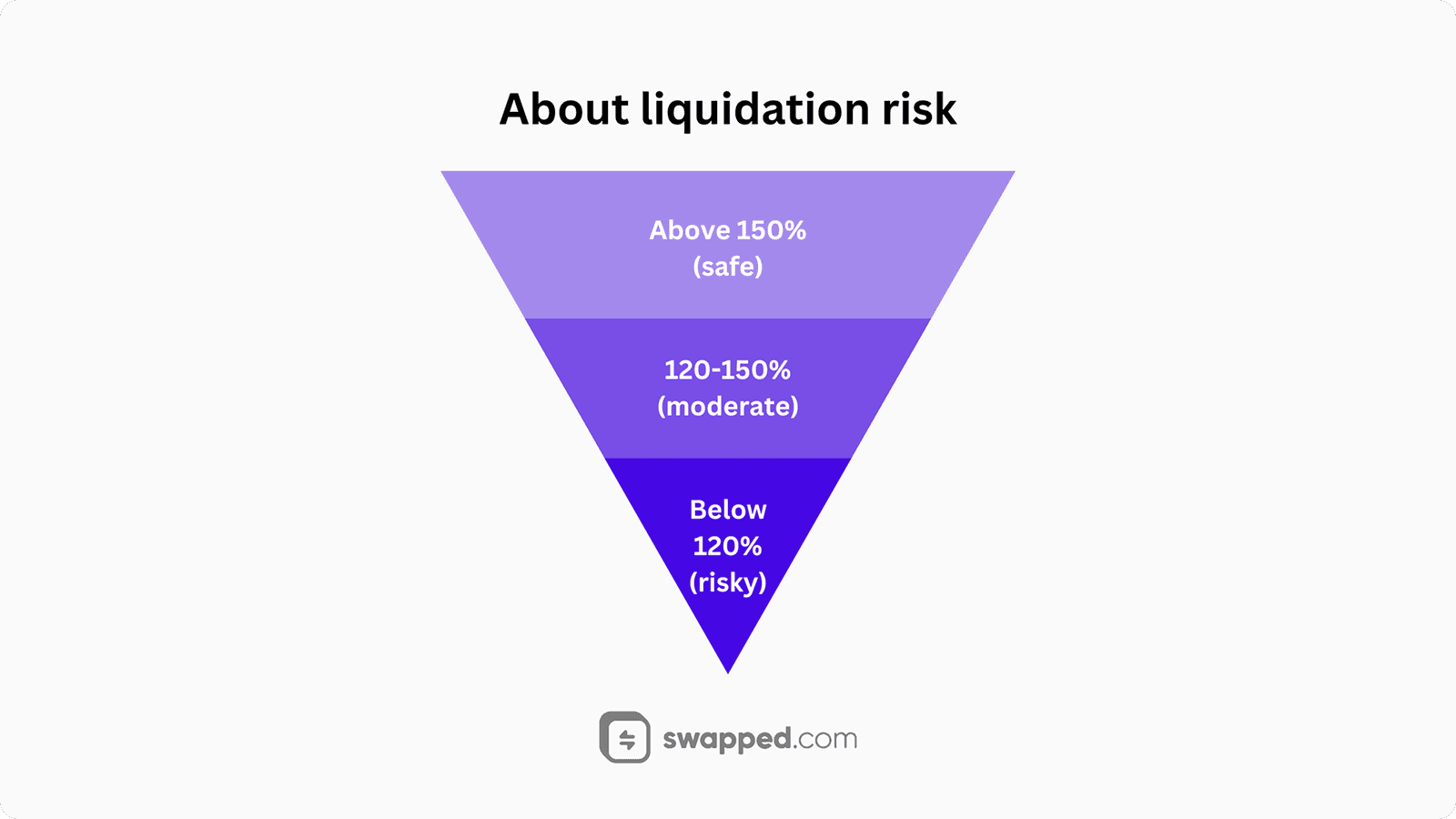
Collateral coverage depends on asset values and the rules of the position.
Following a Collateralized Position
Consider a hypothetical loan secured by tokens. The borrower deposits the tokens and receives a separate asset. The position then contains at least three things to track: collateral units, the value used by the system and the outstanding obligation.
The displayed balance does not tell the whole story. Interest, fees, price feeds and collateral factors can change the amount available to borrow or withdraw. A position review needs those rules as well as the current market price.
Why Excess Collateral Is Used
An overcollateralized arrangement requires collateral worth more than the obligation it supports. The additional value provides a buffer against adverse changes, but it does not prevent losses or guarantee that liquidation will occur at an expected price.
For illustration, 150 units of collateral value against 100 units of debt gives a 150 percent collateral ratio. This is arithmetic, not a recommended ratio. A protocol can define borrowing and liquidation thresholds differently from that simple calculation.
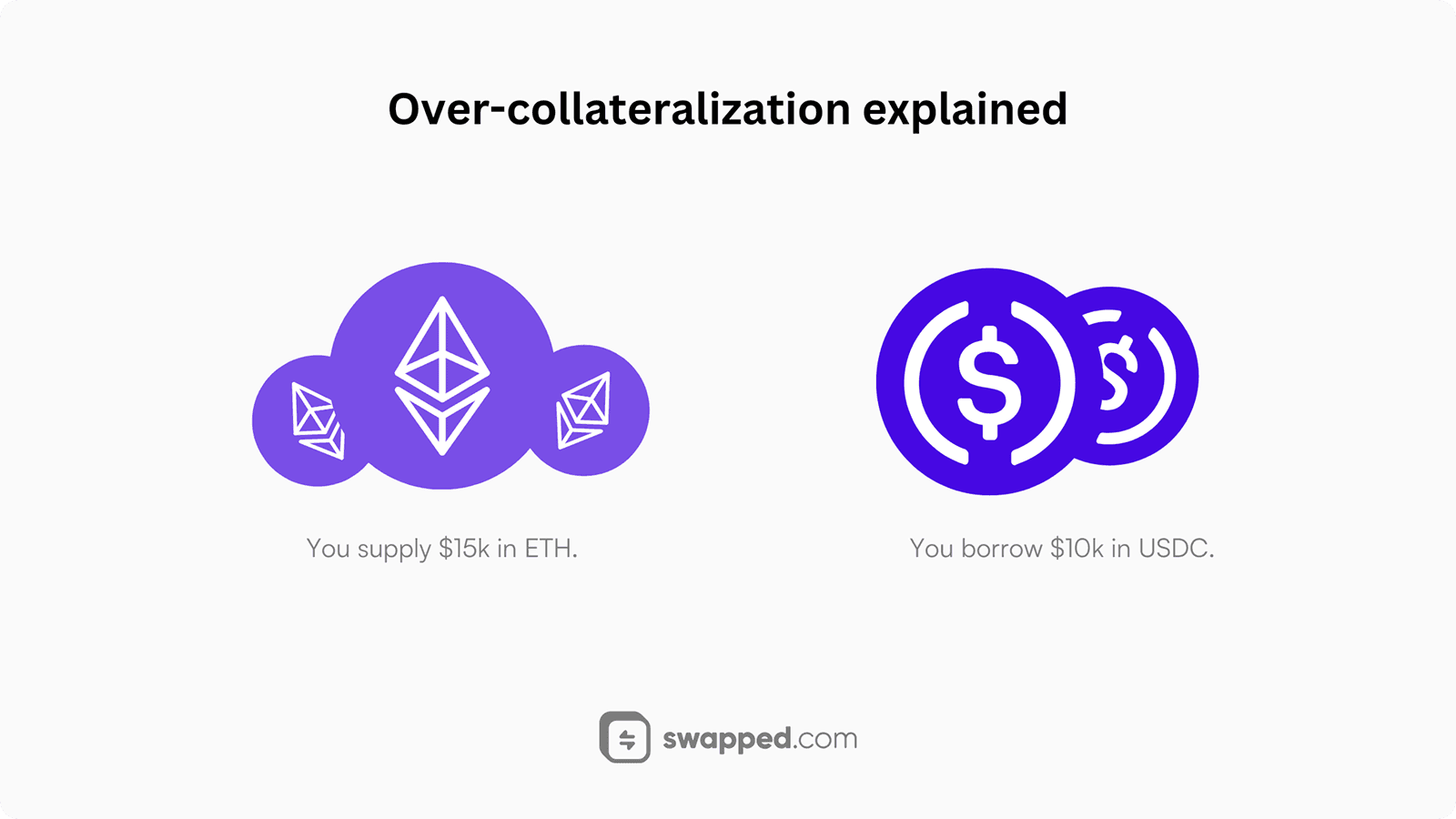
Excess collateral creates a buffer; its effectiveness depends on the rules.
Understanding Liquidation
Liquidation is a process that closes or reduces an undercollateralized obligation using the associated collateral. The triggering value may come from an oracle or another specified price source. Fees and execution conditions can affect what remains afterward.
Some interfaces display warnings or allow additional collateral and repayments. Those features are not guarantees of enough time to act. Network delays, price changes or unavailable liquidity can interfere with an attempted adjustment.
Collateral can face more than market risk. A token may lose transferability, a price feed may malfunction or a platform may restrict withdrawals. Evaluate the asset and the system holding it as separate sources of uncertainty.
Collateral in Margined Trading
A margined position uses collateral to support trading exposure. The exposure can exceed the collateral value, so a modest market change can produce a larger percentage change in the position’s equity. Contract specifications explain how that calculation works.
Collateral management is therefore more than watching a token balance. It includes understanding maintenance requirements, costs, correlated positions and release conditions. This glossary describes the mechanism without establishing a DTCC Trading lending or margin product.
Related Concepts
FAQs about Collateral
What changes when collateral falls in value?
The position’s coverage can fall even when the number of deposited tokens stays the same. Depending on the rules, borrowing capacity may decrease or liquidation may become possible. Check the actual valuation source and thresholds rather than relying on a general ratio.