A CBDC is digital money issued as a direct liability of a central bank. Access, privacy and payment features depend on the particular design.
Central bank digital currency describes a form of public money in digital form. The term identifies the issuer and the claim it represents; it does not identify one universal app, ledger technology or set of privacy rules. Each design needs to be understood on its own terms.
What CBDC Means
CBDC stands for central bank digital currency. Its defining feature is that it is a direct liability of the issuing central bank, denominated in that monetary authority’s unit of account. That distinguishes it from a private token with a similar price target.
A commercial bank deposit is a claim on that bank. A privately issued stablecoin has its own issuer and redemption arrangement. A CBDC is a different kind of claim, even if all three can be accessed through a digital payment interface.
The interface does not determine the issuer. A bank or payment company could provide access to a CBDC under a particular design while the underlying monetary liability remains with the central bank. Intermediaries need not disappear.
How Designs Differ
A CBDC does not have to use a public blockchain. Designers can choose different ledgers, access models and operating arrangements. Evaluating the technology requires the specific project’s documentation, rather than assumptions based on cryptocurrency systems.
Retail designs concern access by the public, while wholesale designs concern use among specified financial participants. Those categories help explain the intended users, but they do not settle questions about transaction limits, custody or cross-border availability.
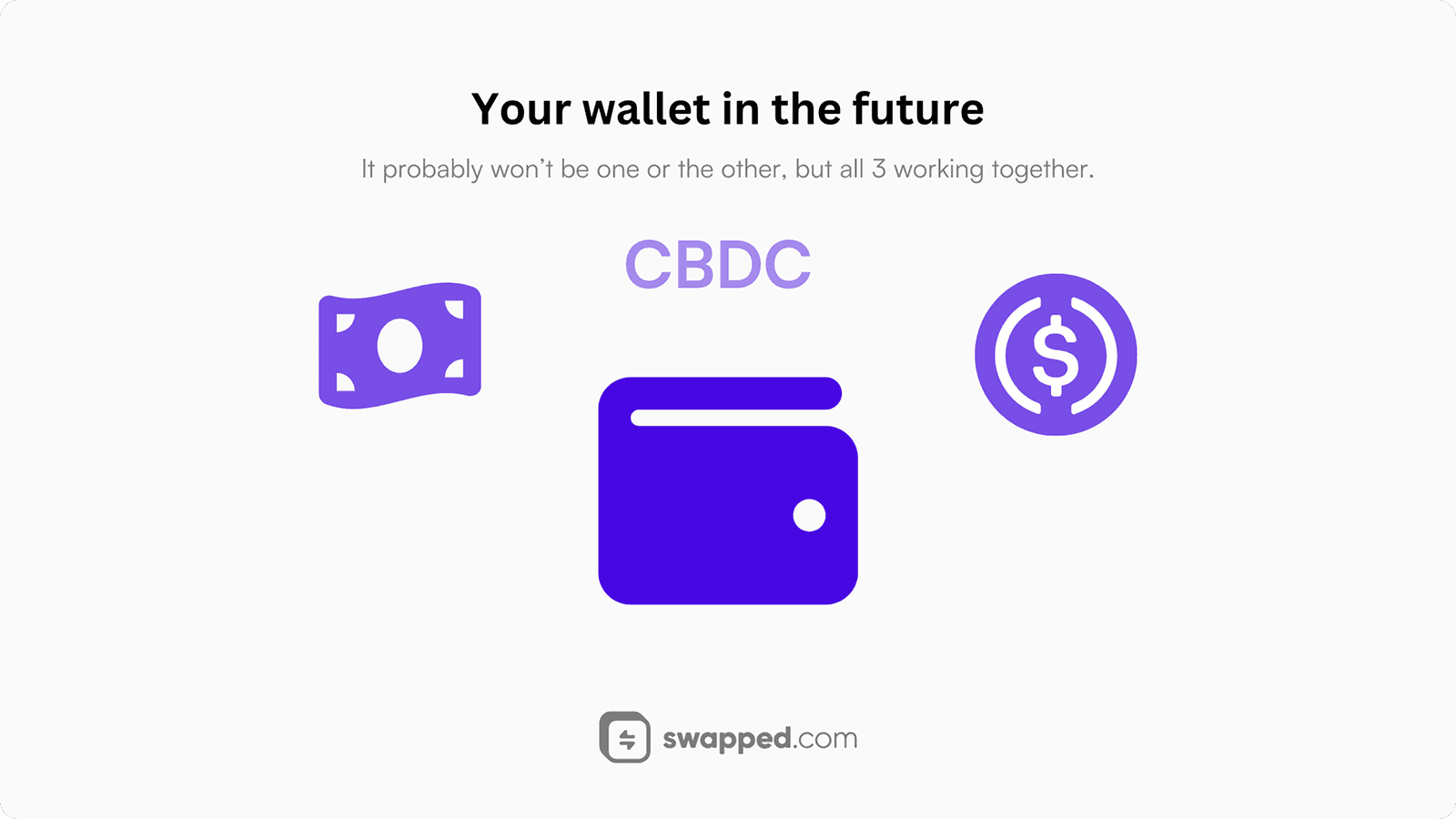
Digital money can represent different claims, even through similar interfaces.
Access and Payment Interfaces
A retail system might use wallets, accounts, cards or combinations of interfaces. Its actual requirements depend on the chosen design. A smartphone, internet connection or particular identity process should not be assumed to be mandatory in every CBDC system.
The visible payment experience can resemble existing digital payments while the settlement arrangement differs. To understand it, ask who provides access, who records the transfer and which claim changes hands.
CBDCs and Crypto Assets
The word digital describes a shared medium, not a shared monetary structure. CBDCs and decentralized crypto assets can have very different purposes and operating rules.
Bitcoin, for example, follows its network’s issuance and consensus rules rather than representing a central bank liability. A CBDC remains connected to a particular monetary authority. Comparing them requires more than checking whether both can move electronically.
Privacy is another design question. Data access can depend on the system architecture, participating intermediaries and applicable law. Neither complete anonymity nor universal visibility follows automatically from the CBDC label.
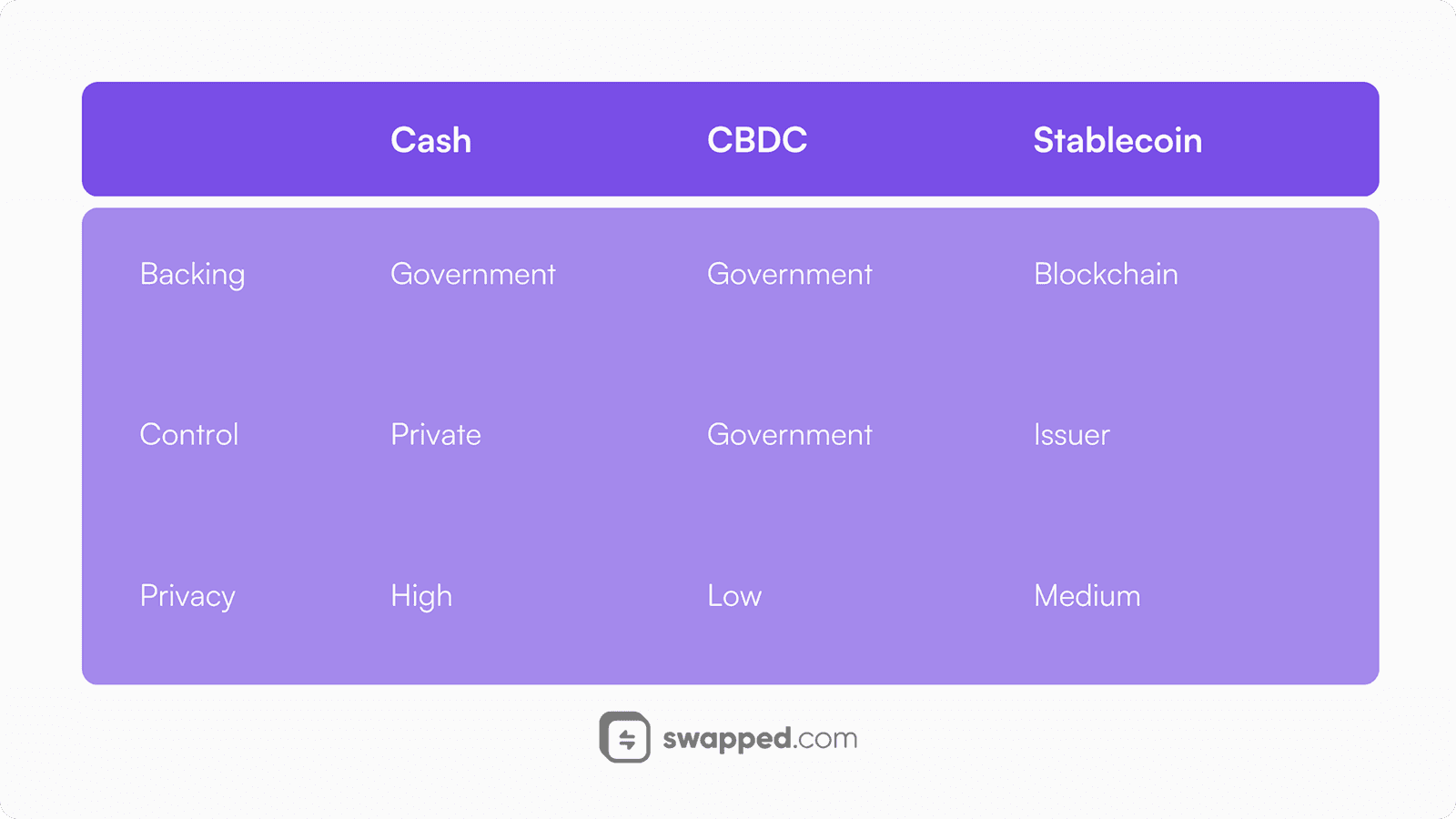
Issuer, access and settlement distinguish different forms of digital money.
Value and Monetary Claims
A CBDC denominated in a national currency is a form of that currency. This does not remove changes in the currency’s purchasing power or exchange value. Monetary denomination, credit risk and inflation are different concepts.
Why CBDCs Are Studied
A CBDC proposal can address payment access, settlement or the role of public money in a digital economy. The relevant policy objectives should be stated by the authority responsible for the project.
Possible benefits have to be assessed alongside operational resilience, privacy, financial intermediation and implementation costs. A proposal, research project or pilot does not establish that a general public service is already available.
For a specific CBDC, read the issuing authority’s current materials and distinguish an announced intention from a deployed feature. Discussion of CBDCs here does not establish issuance, distribution or support by DTCC Trading.
Related Concepts
FAQs about CBDC
Does a CBDC replace other digital assets?
A CBDC has its own monetary purpose and access rules. Its existence does not automatically replace Bitcoin, private stablecoins or commercial bank deposits. Any claim about a particular currency’s role should be checked against the issuing authority’s actual policy and implementation.