Arbitrage examines price differences between related markets. A visible spread is only a starting point; execution, costs, asset equivalence and access determine the actual result.
Arbitrage concerns differences between prices for the same asset or economically related positions. In crypto discussion, the term often describes buying in one place and selling in another. A price difference on two screens does not by itself establish an executable profit.
What Arbitrage Means
In an idealized model, arbitrage captures an inconsistency between equivalent prices without retaining market exposure. Real transactions have practical constraints. Fees, timing, liquidity and failures can leave one part of the intended sequence incomplete.
Start by checking that the compared instruments are actually equivalent. Tokens sharing a symbol can exist on different networks or represent different claims. A derivative price is also not directly interchangeable with a spot price without considering its contract terms.
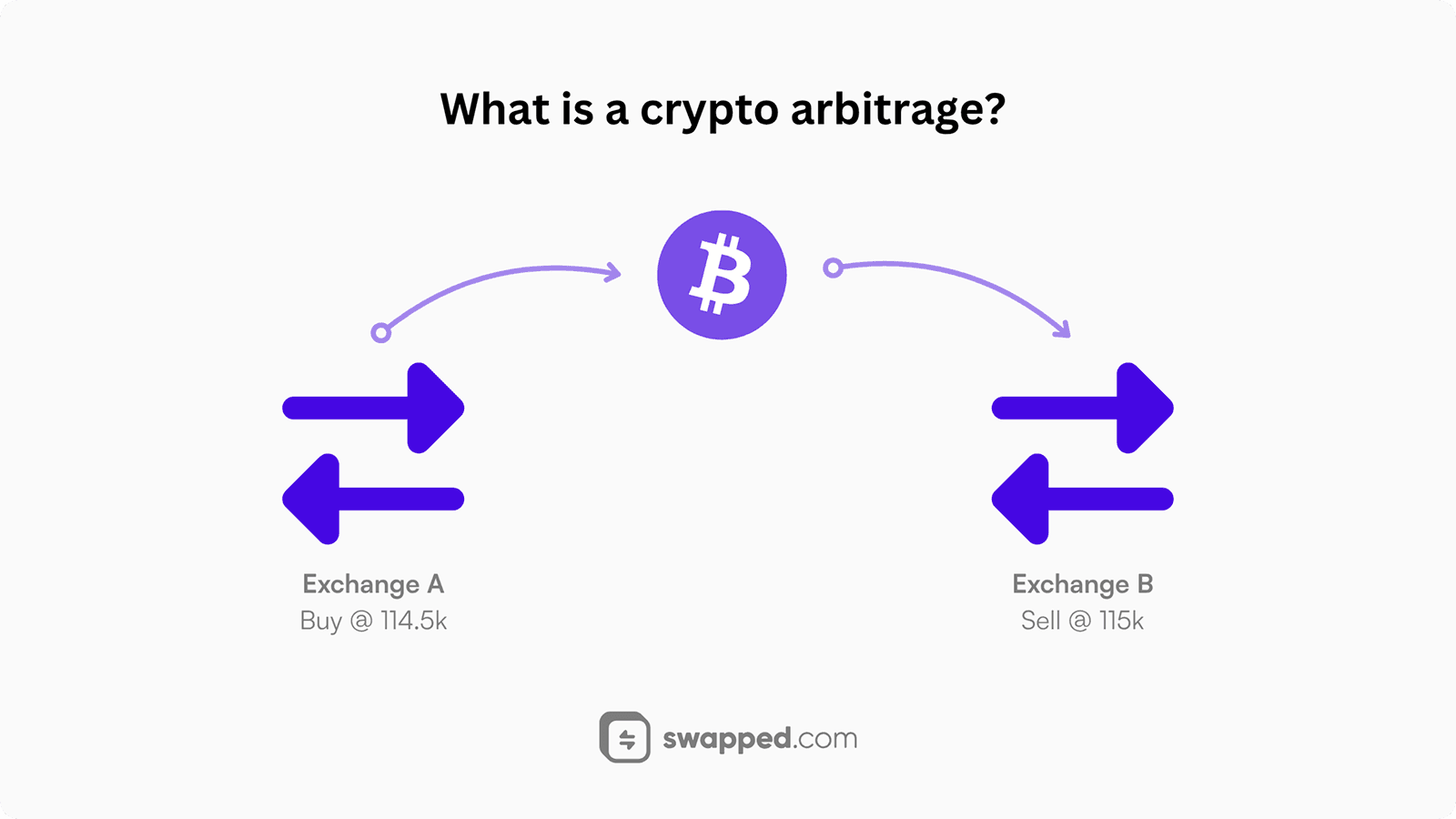
A visible price difference must be evaluated with costs and execution conditions.
Following a Simple Price Comparison
Imagine one market displays a buy price below another market’s sell price. A useful comparison asks how much can trade at those prices, whether both accounts are funded and whether withdrawals or transfers are needed between the two operations.
Subtract relevant trading charges, network costs and other deductions from the apparent spread. Then consider what happens if only one operation executes. That incomplete state can create price exposure that the initial comparison did not show.
A last traded price is especially limited evidence. It records a past transaction, not a standing offer for any amount. Inspect executable bids and asks or a current route quote for the actual transaction size.
Common Forms of Comparison
Different strategies compare different relationships. Their shared feature is a pricing inconsistency; their operational requirements can be very different. Naming the strategy does not explain how each leg settles.
Across Trading Venues
A cross-venue comparison examines prices on separate markets. It may require balances on both venues or a transfer between them. Custody, account limits and network compatibility can determine whether the apparent opportunity can be acted on.
Transfer time creates a changing environment. A spread can disappear before funds arrive, and an unavailable withdrawal can prevent the planned sequence. These are transaction constraints, not small details to add after calculating the headline difference.
Across Related Trading Pairs
A multi-pair comparison examines a route through several assets and back to the starting asset. Each conversion has its own price, depth and fee. The combined route must be evaluated as a sequence rather than as independent attractive quotes.
Onchain routes may sometimes execute several operations within one transaction. That changes which partial outcomes are possible, but it does not eliminate execution costs, competition, contract risk or the possibility that the transaction fails.
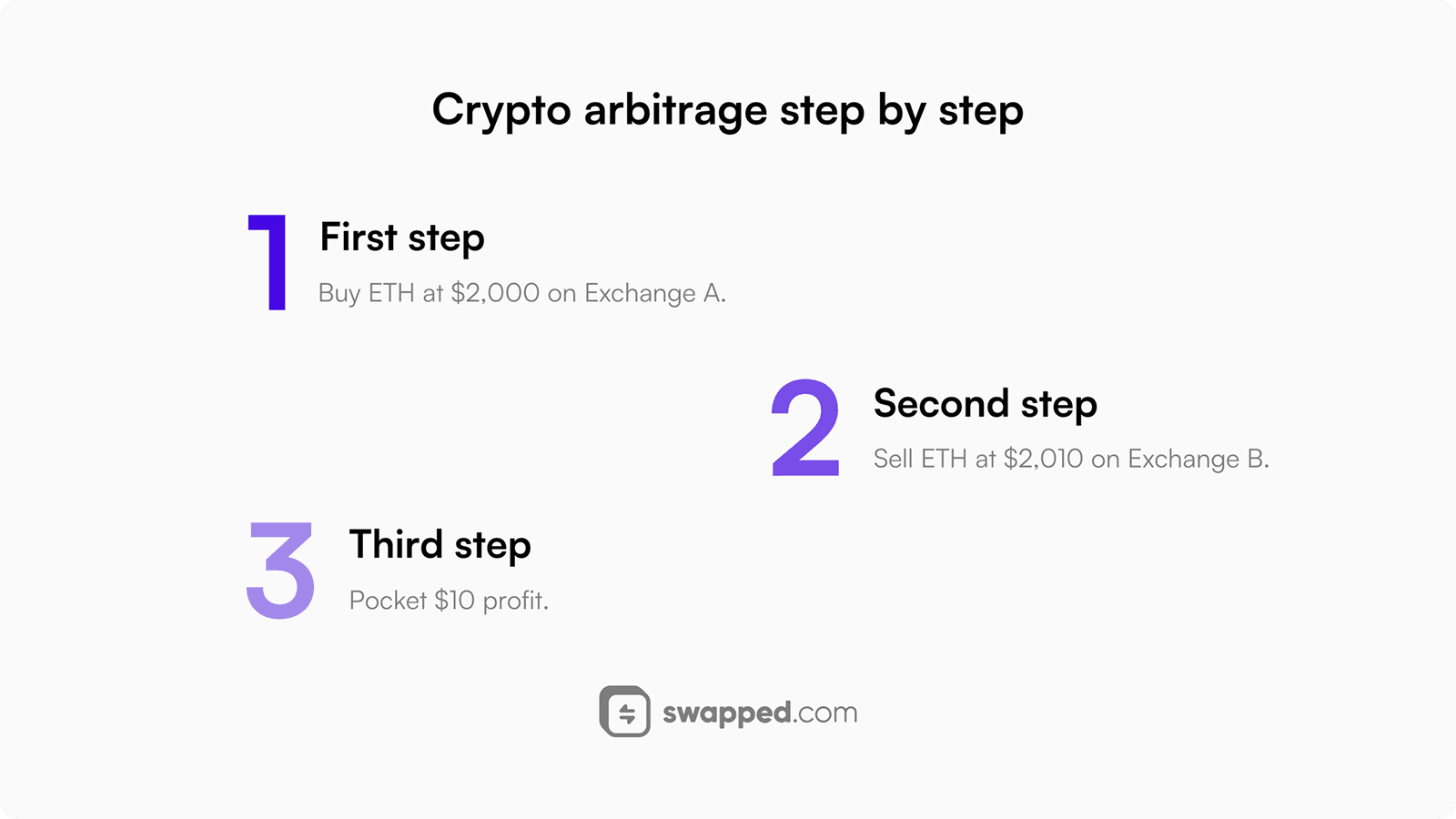
Every leg of a route has a price, capacity and settlement condition.
Why Apparent Spreads Disappear
Price data can be stale, balances can be inaccessible and orders can move before execution. A robust explanation distinguishes a theoretical spread, a simulated result and a completed set of transactions with reconciled balances.
Depth and Slippage
The available price often changes with size. A small quote can look profitable while a larger trade moves through worse orders or a pool’s pricing curve. Review the full intended amount rather than extrapolating from the first unit.
Operational Dependencies
Accounts, APIs, network submission and custody systems can all affect execution. Automation can process information quickly, but it also depends on correct configuration, current data and protected credentials. A bot is not evidence of a safe or profitable strategy.
Evaluate Evidence of Results
A claimed arbitrage result should identify the instruments, transaction amounts, times and costs. Completed records should show both sides and any remaining exposure. A screenshot of two different prices does not provide that evidence.
Rules and eligibility also depend on the venues and jurisdictions involved. This concept does not establish permission to use a particular service or certify the legality of a proposed strategy. Review the actual terms for the intended activity.
DTCC Trading’s glossary explains how price comparisons work. It does not promise arbitrage returns or identify a currently available trading opportunity. The central distinction is between observing a spread and proving a completed, cost-adjusted result.
Related Concepts
FAQs about Arbitrage
Does the word arbitrage mean a trade is risk-free?
An idealized arbitrage relationship can be described without market risk, but real execution adds constraints. A leg can fail, a price can change or funds can become inaccessible. Evaluate the actual transaction sequence and costs rather than relying on the label.