An airdrop distributes tokens to a defined group of addresses or participants. Eligibility, claim mechanics and token value are separate questions that require verification.
An airdrop distributes digital assets according to a project’s chosen rules. Tokens may appear directly at an address or become available through a claim process. Receiving or qualifying for an asset does not establish its value, legitimacy or relevance to the recipient.
What an Airdrop Means
The term describes a distribution method, not a guarantee of free profit. A project can choose recipients using past activity, ownership at a snapshot or another criterion. The published rules should explain what is distributed and how eligibility is determined.
Airdrops can be used to introduce a token, recognize participation or distribute governance rights. Those purposes are claims about the project’s design. They still need supporting documentation about the token’s actual permissions, supply and use.
How Distribution Can Work
Separate the eligibility calculation from the transfer. An address can satisfy a published criterion without having received tokens yet. A claim page can also show an estimate that depends on further requirements or a distribution period.
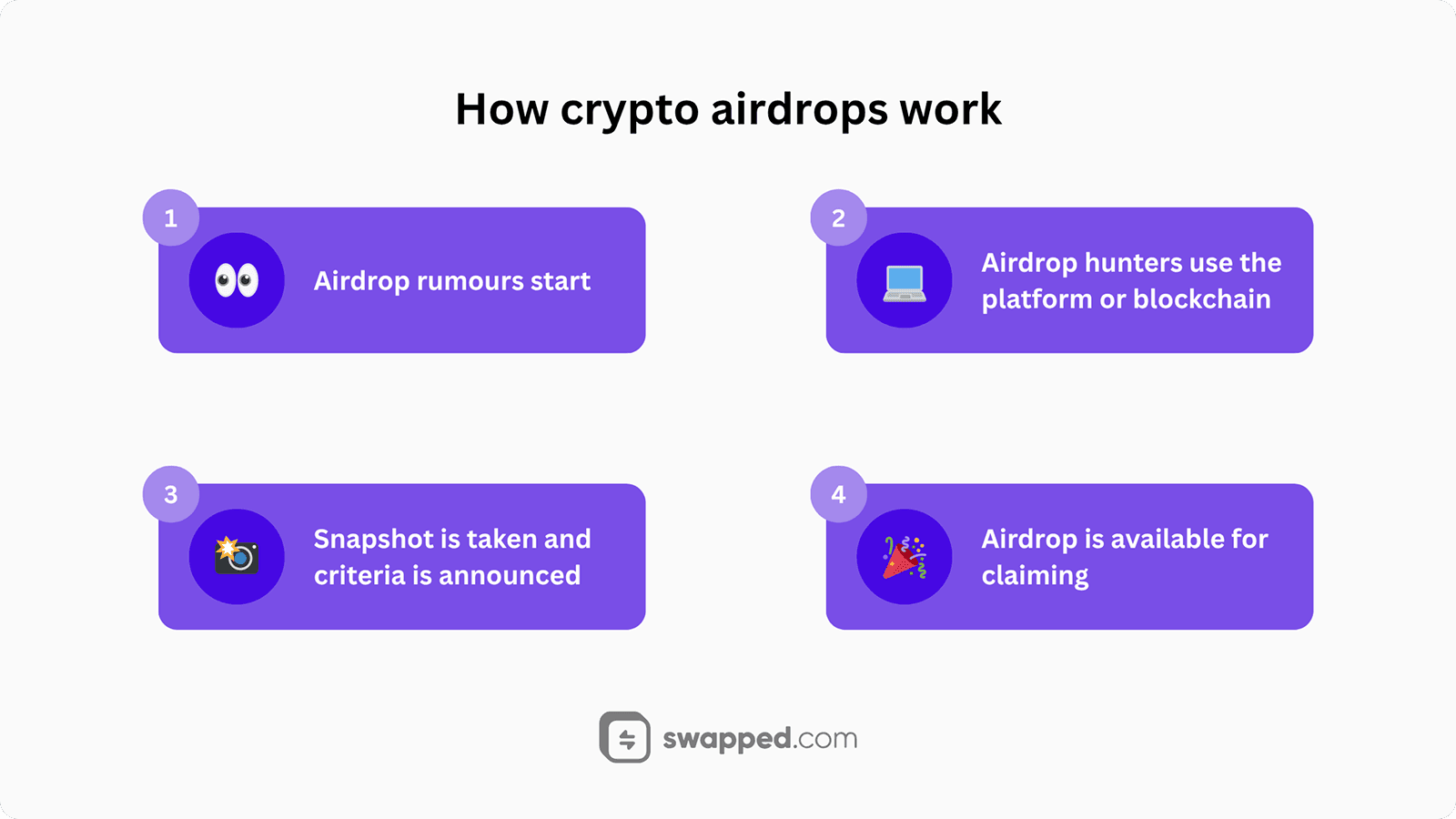
Eligibility, claiming and receiving tokens are distinct distribution stages.
Direct Delivery
Some distributions send tokens to selected addresses without requiring a recipient action. Public networks can also display unsolicited assets sent by unrelated parties. An unexpected balance is therefore an observation to inspect, not an invitation to follow its embedded links.
The displayed token name, logo or price may come from metadata that anyone can imitate. Verify the network and exact asset identifier against the project’s primary materials before associating the entry with a recognized organization.
Claim-Based Distribution
Other distributions require an eligible account to submit a claim. A legitimate claim mechanism should explain the contract or service involved and any network fee. Read the requested operation rather than assuming every wallet prompt is merely a confirmation of eligibility.
An approval can grant spending authority, while a signature can have consequences beyond a simple login. If the requested action does not match the documented claim, stop and investigate the difference through verified project channels.
Understanding Eligibility
Eligibility is defined by the particular distribution. Historical activity, balances or other criteria may be used, but there is no general rule that a certain transaction guarantees a future reward.
Snapshots and Past Activity
A snapshot measures a specified state or activity at a defined point or period. Read which network, asset and addresses are included. A transaction after the relevant period may have no effect on the allocation calculation.
Some projects revise estimates, exclude activity or apply claim deadlines under their published terms. Keep the version and date of the rules with any eligibility record. A social post summarizing the rules may omit important conditions.
Costs and Obligations
Claiming may involve a network charge, and acquiring eligibility can involve separate costs or risks. Tokens can also be illiquid or restricted. Evaluate the actual asset and process rather than treating a displayed allocation as immediately spendable money.
A displayed allocation is not the same as a liquid, verified asset balance.
Recognizing Misleading Claims
Airdrop language is also used in phishing. Attackers can imitate project branding, create urgent deadlines or advertise a valuable balance that requires a harmful authorization. The promise of a reward does not explain why a particular permission is necessary.
Verify the Publication
Find the announcement through the project’s established website or documentation. Compare the domain and asset identifier carefully. A reply, direct message or paid search result is not automatically an official distribution channel.
Inspect the Requested Permission
Review the wallet’s explanation and any available simulation. Identify the account or contract receiving authority and the assets involved. Never disclose a recovery phrase or private key to check eligibility, claim a distribution or receive support.
Keep a Distribution Record
Save the official terms, relevant date, asset identifier and public transaction reference. These records help explain what was received and support later accounting or tax review under the rules that apply to the recipient.
Read the Asset After the Claim
A completed claim establishes only the operation that the network or service processed. Inspect the resulting balance and token properties. It does not prove that the asset has a reliable market, redemption right or continuing project support.
Avoid equating a quoted price with realizable proceeds. A thin market can produce a visible price without supporting a sale of the displayed balance. Transfer restrictions and network costs can further change the practical result.
For tax or reporting questions, use current official guidance for the relevant jurisdiction and the actual facts of the distribution. The word airdrop does not create one universal treatment across countries or circumstances.
DTCC Trading explains airdrops as a distribution concept. This entry does not announce a DTCC token reward, approve a third-party claim page or establish eligibility for any named distribution. Specific programs need separate verified documentation.
Related Concepts
FAQs about Airdrop
Are airdrops always free to receive?
A direct distribution may require no action, while a claim can involve network costs or other conditions. Earlier activity used for eligibility may also have involved costs. Read the complete process instead of treating the word free as a description of every stage.