A bull market describes a sustained rising-price phase with positive sentiment. The label needs a defined market and period, and does not guarantee continuing gains.
A bull market is a broad description of a rising-price phase, usually accompanied by optimism. It is used across financial markets, including crypto. The label summarizes a pattern in a defined market; it does not promise that every asset rises or that the pattern continues.
Market phases are easier to name after a substantial history is visible. In real time, different observers may use different time windows and thresholds. A useful description states which index or asset group supports the conclusion.
What a Bull Market Describes
The term generally implies more than a brief upward move. Analysts look at an extended trend and its breadth, but there is no single universal crypto-market definition. A numerical convention borrowed from stocks should be identified as a convention, not a physical market rule.
A broad index can rise even when some of its components fall. Weighting and membership affect that result. Check whether the discussion concerns Bitcoin, a group of large assets or the whole provider-defined market before interpreting the label.
Price performance also depends on the starting date and quote currency. An asset can rise over a recent period while remaining below an earlier high. Both observations can be true without establishing a forecast about the next phase.
A rising market describes observed prices, not an assurance about future returns.
How Rising Phases Develop
Changes in demand, available supply, financing conditions and expectations can influence prices. A single explanation is rarely established by a chart alone. Distinguish observed transactions and policy changes from a narrative proposed to explain the move.
Positive performance can attract more attention, which can reinforce optimistic discussion. That feedback can influence behavior without proving that every underlying project has improved. Market enthusiasm and operational progress need separate evidence.
Liquidity conditions can change during an upward phase. A visible gain may be difficult to realize at a large size, particularly in smaller markets. Trading volume, market depth and quoted price are related but different measurements.
Features Often Discussed
Commentary may point to a combination of price trends, participation and sentiment. Those features can describe the period, but none is a guarantee that the trend has a particular remaining duration.
Broad Price Strength
Breadth asks how many assets participate in the move. A rally driven by a few large components differs from one shared by many assets. The distinction helps explain the index result without assuming that every holder experienced a gain.
More Market Activity
Increasing activity can be measured through volume, account participation or network usage, depending on the question. Each metric has limitations. An increase in token transfers, for example, does not directly establish a corresponding increase in economic demand.
Optimistic Expectations
Optimism can appear in surveys, commentary and willingness to take exposure. It is a description of expectations, not proof that those expectations will be fulfilled. Strong conviction can coexist with limited evidence or changing fundamentals.
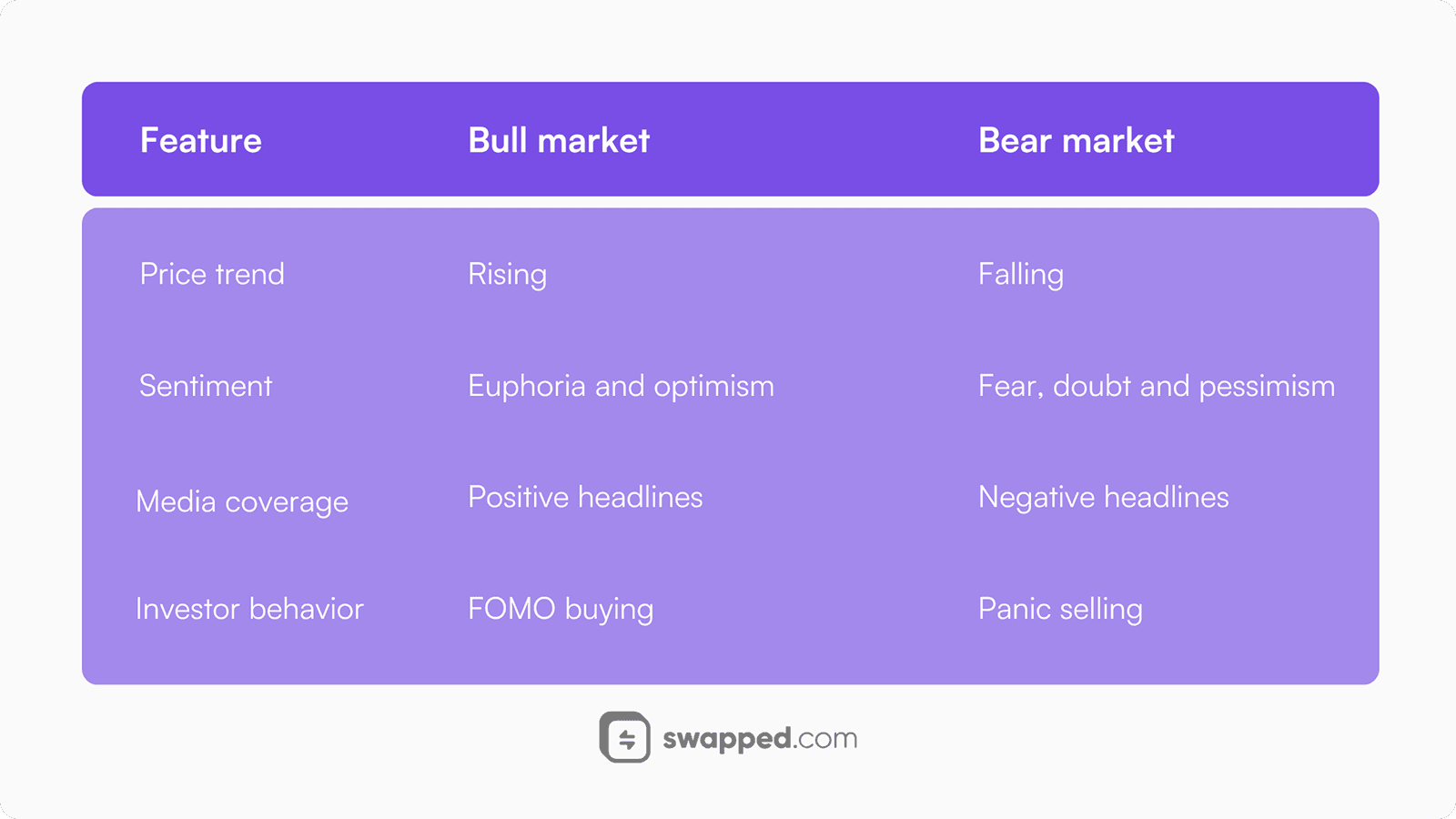
Price, participation and sentiment should be measured and interpreted separately.
What Rising Prices Can Hide
An upward market can make incomplete research look successful for a time. It can also increase concentration as one holding grows faster than others. A rising account value does not remove the need to understand its composition and dependencies.
Concentration and Leverage
A position’s risk can change as its weight or exposure changes. Borrowing or margined contracts add costs and liquidation rules. Their behavior is not captured by the simple statement that the wider market is rising.
Unverified Claims
Promotions can use recent returns as evidence of future gains. Examine the selected period, omitted losses and any compensation behind the message. A token’s previous increase does not verify its identity, rights, liquidity or security.
Execution and Access
A displayed portfolio value assumes a valuation method and accessible markets. Fees, depth, withdrawal rules and operational problems can affect the result of an actual transaction. Distinguish quoted value from completed, available proceeds.
Reviewing the Market Description
Begin with data and a stated method. Identify the market, period and measurements supporting the label. That makes the analysis useful without turning a broad description into a personalized instruction.
Separate Observation From Expectation
An observed upward trend belongs in the factual part of a report. A view that it will continue belongs in the forecast, with its assumptions and uncertainty. Keeping those parts separate makes later evaluation clearer.
A pullback during a rising phase can be temporary or part of a larger reversal. The initial movement does not establish which interpretation will prove correct. Avoid describing every decline as an automatic buying opportunity.
Keep the Individual Context
An individual decision involves goals, obligations, time horizon and tolerance for loss. A market label cannot supply those details. General education about bull markets should not be read as a recommendation to increase exposure.
DTCC Trading uses this glossary to explain market language. No current bull market, future return or supported investment product is implied. A precise definition helps readers assess claims without inheriting the confidence of the person making them.
Related Concepts
FAQs about Bull Market
How long does a bull market last?
There is no fixed duration. The answer also depends on the market, starting point and definition used. Historical examples describe previous periods; they do not establish a timetable for the current market or guarantee a minimum remaining period of gains.