A bear market describes a sustained declining-price phase with pessimistic sentiment. Its boundaries depend on the market and method, and a decline does not guarantee a rebound.
A bear market describes an extended period of falling prices and often pessimistic sentiment. In crypto, the term may refer to Bitcoin, a selected index or a broader group of assets. Specify the market and period before assuming that every use describes the same conditions.
What a Bear Market Describes
The label usually implies a broader decline than a short-lived dip. Some analysts apply numerical conventions used in stock markets, while others emphasize duration and market breadth. A convention should be explained rather than presented as a universal crypto rule.
A market can experience strong short-term rallies within a longer decline. Those moves do not automatically resolve whether the broader phase has ended. Interpretation depends on the selected horizon and the evidence available at the time.
A declining phase can contain rallies and substantial differences among assets.
Recognizing the Measured Pattern
Begin with the actual price series and its reference period. The chosen peak, quote currency and index composition can all affect how large the decline appears.
Price Declines and Drawdowns
A drawdown measures a fall from an earlier peak under a stated method. It is different from a calendar-period return or a loss measured from an individual purchase. Those figures can differ even when they refer to the same asset.
Breadth and Sentiment
Breadth describes how widely the decline is shared, while sentiment concerns expectations and attitudes. A few large assets can dominate an index. Negative commentary alone does not establish the magnitude or distribution of losses across the market.
Possible Drivers of a Decline
Changes in demand, financing, regulation, operations or expectations can influence prices. Establishing a cause requires evidence beyond the timing of a headline and a chart movement.
Market-Wide Conditions
A change in available funding or willingness to hold risk can affect many assets together. The effect need not be identical across tokens or venues. Examine the actual exposures before assuming that one broad explanation accounts for every decline.
Project and Service Failures
An asset-specific event can affect its own market and connected services. Custody failures, technical problems or broken promises concern different mechanisms. Distinguish verified facts from rumors before describing the cause and reach of a disruption.
Liquidity and Forced Selling
Thin market depth and collateral liquidations can interact with falling prices. Execution can then differ substantially from a displayed quote. A falling market value does not by itself show how much could be realized through a particular transaction.
Reviewing Decisions Under Stress
A declining market can create pressure to act quickly. A useful review begins with current facts, constraints and the actual reason for the position.
Revisit Assumptions
Compare the original reasoning with the evidence now available. A lower price is not automatically a bargain, and a higher past price does not establish a recovery target. Identify which assumptions remain supported and which have changed.
Understand the Mechanism
Review custody, withdrawal access, token rights and any borrowed exposure. A position can face operational or contractual constraints in addition to market risk. These details matter regardless of whether the wider market label changes.
Keep Evidence Separate From Emotion
Fear, regret and a wish to recover losses can affect interpretation. Write down the known facts, uncertainties and practical limitations separately. A general market definition cannot determine the right financial decision for an individual circumstance.
Bear and Bull Market Language
The terms describe broad directions over a chosen period. They do not divide every trading day into a certain, universally agreed category.
Bull markets describe rising-price phases, but can contain setbacks and underperforming assets.
Bear markets describe declining-price phases, but can contain rallies and assets with different outcomes.
Neither label guarantees the next phase. Markets can change structure, and individual assets can stop trading or lose relevance. A repeated historical pattern does not require every asset to return to a previous high.
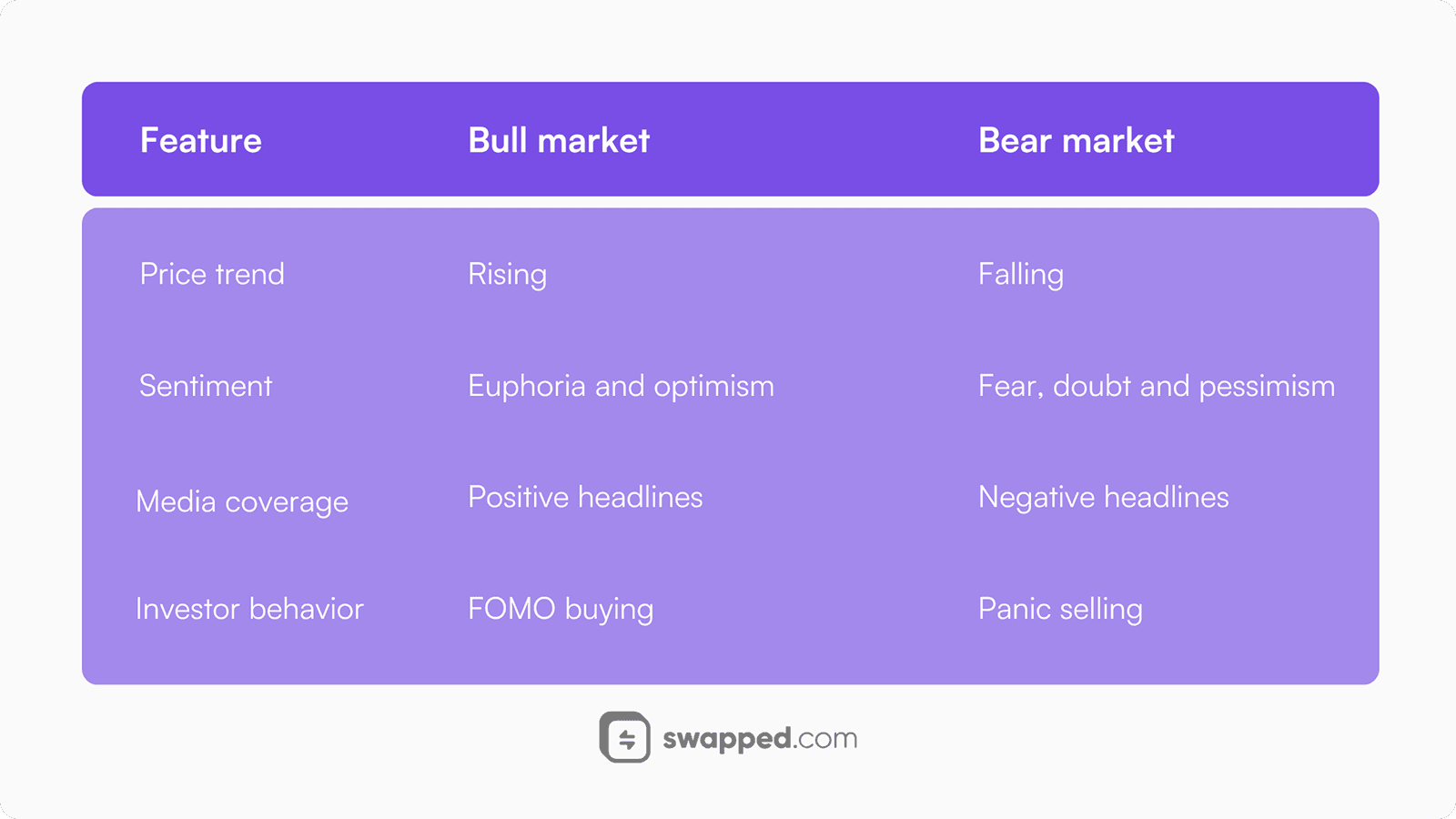
Market phases describe history; individual outcomes still depend on the asset.
Duration and Recovery
There is no fixed length for a bear market. The answer depends on the selected market and definition, while the time to recover a previous high is a separate measurement. Some assets never recover their earlier value.
Learning From Earlier Periods
Historical comparisons are useful when their data and boundaries are stated. Compare market structure, liquidity and asset composition as well as price. DTCC Trading’s glossary uses the term for education and does not claim that a current market bottom or future recovery has been identified.
Related Concepts
FAQs about Bear Market
How is a bear market different from a short dip?
The term usually refers to a sustained, broader decline, but the chosen market, horizon and threshold must be stated. A short decline cannot be classified with certainty from its first few observations. Later data often changes how a period is described.