Bagholder is informal language for someone still holding an asset after a substantial decline. The label does not explain the asset’s prospects or the holder’s circumstances.
Bagholder is market slang for a person left holding an asset after its value has declined substantially. The term can be dismissive, and it often hides more than it explains. A useful discussion examines the position and evidence without treating the label as a diagnosis.
What the Term Means
A bag informally means a holding of a coin or token. Bagholder usually adds the idea that the holding has performed poorly and is still retained. There is no standard percentage loss, duration or minimum amount that defines it.
The word does not establish why the position remains open. A person might have a continuing thesis, face transfer restrictions, lack liquidity or simply avoid reviewing the decision. Those situations require different explanations.
How a Position Becomes Stuck
A falling price can coincide with thinner liquidity or fewer available venues. The displayed value of a balance can then differ from the amount obtainable through an actual sale. Understanding that difference is more useful than repeating the original purchase price.
Operational restrictions can matter too. Tokens may be locked, a venue may suspend withdrawals or a contract may limit transfers. Separate those practical constraints from a voluntary choice to continue holding.
Cost, Value and Recoverability
The cost basis records what was paid under a particular accounting method. Current market value estimates what the asset is worth now, while realizable proceeds depend on execution and access. These figures answer different questions and should not be substituted for one another.
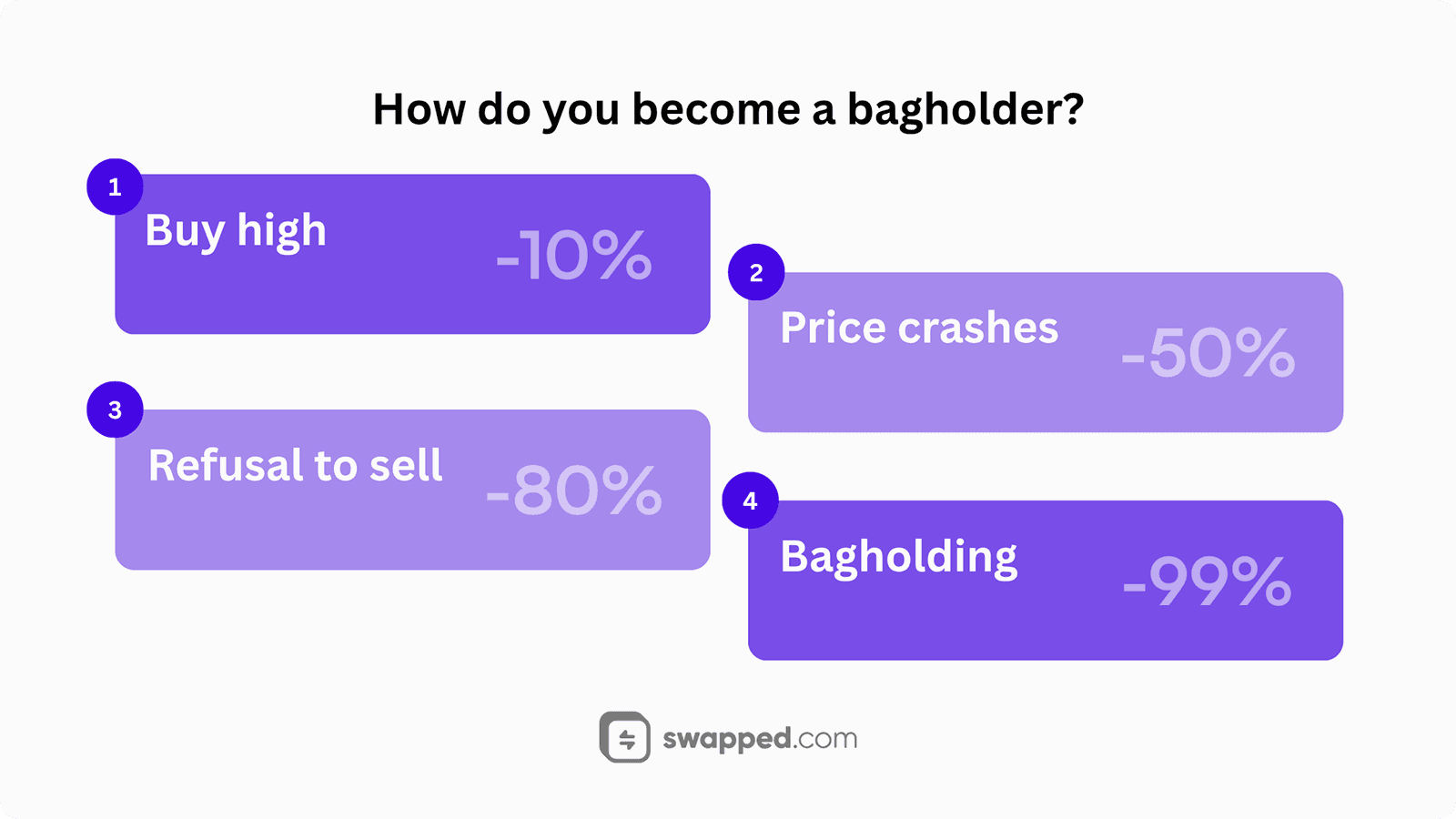
A purchase price is a historical fact, not a promise of future recovery.
The Original Reference Point
People often compare every new price with their entry price. That comparison measures the position’s performance but does not establish fair value. A market is not required to return to the level at which a particular holder entered.
A Changing Investment Thesis
A thesis should describe evidence and conditions, not merely a hope to break even. If project activity, token rights or market structure changes, the reasoning needs to be revisited. An old forecast does not become stronger because the position has been held longer.
Avoid reading community loyalty as evidence about the underlying asset. Supportive discussion can coexist with unresolved financial or technical problems. Look for verifiable developments and distinguish them from promises, slogans and selective price charts.
Reviewing the Present Position
A current review identifies the exact asset, remaining access, available liquidity and relevant obligations. It also records what has changed since the original decision. This creates a factual basis for evaluation without prescribing a buy, sell or hold action.
Check the Available Evidence
Use primary project records, contract state and venue information where relevant. If a quoted balance cannot be transferred or sold, describe that limitation. An unsupported price estimate should not be presented as accessible cash.
Separate Emotion From Facts
Regret, embarrassment or a wish to recover a previous loss can influence how new information is interpreted. Writing the current facts and uncertainties separately from those feelings can make the reasoning easier to inspect.
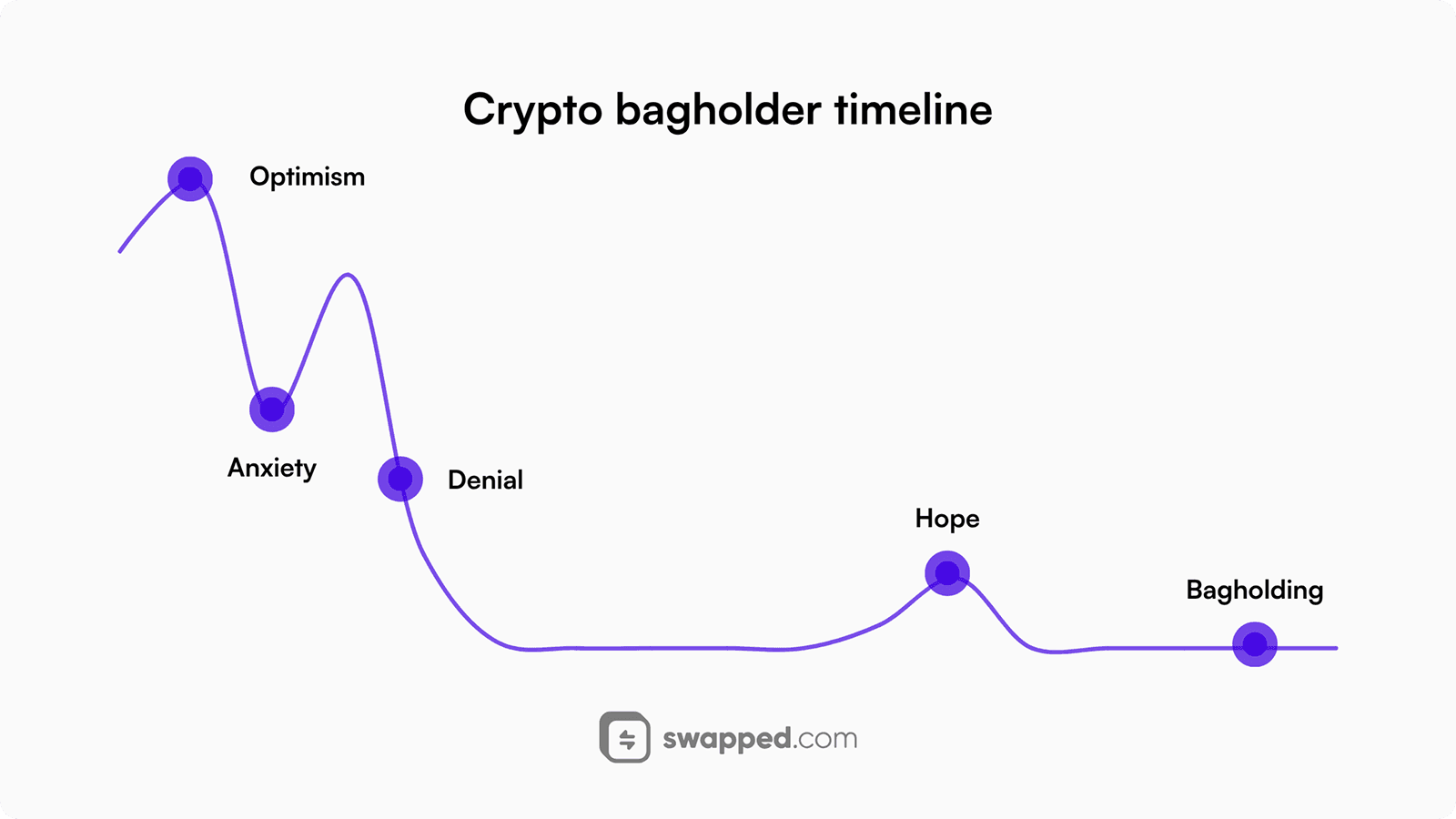
A useful review distinguishes current evidence from the desire to break even.
Long-Term Holding and Inertia
Holding for a long period does not automatically make a position well researched or poorly judged. The relevant distinction is whether the reason for holding remains supported, understood and consistent with the holder’s actual circumstances.
Similarly, a price decline alone does not prove that recovery is impossible. It also does not prove that recovery is likely. The asset’s claims, operations and market conditions need to be evaluated without assuming a guaranteed return to an earlier level.
The term bagholder is best understood as informal market language. DTCC Trading uses this glossary to clarify the language, while leaving individual financial decisions to a fuller assessment of evidence, constraints and personal circumstances.
Related Concepts
FAQs about Bagholder
Can a heavily declined asset recover?
Some assets recover and others do not. The size of a past decline does not determine the future result. Examine the current asset, market and access conditions rather than assuming either a guaranteed rebound or a permanent loss of all remaining value.